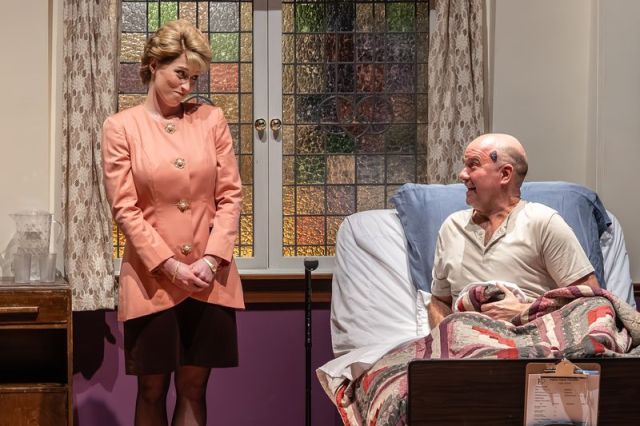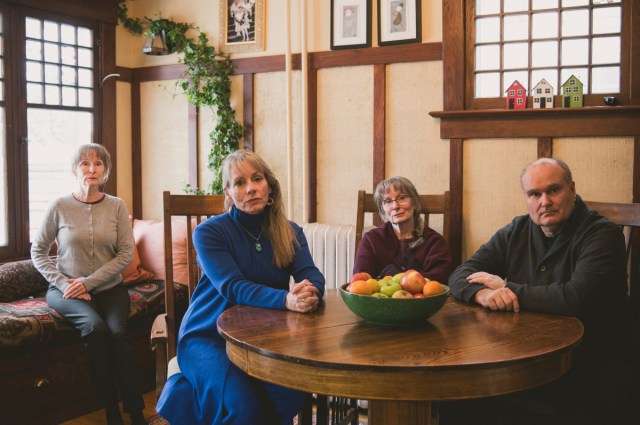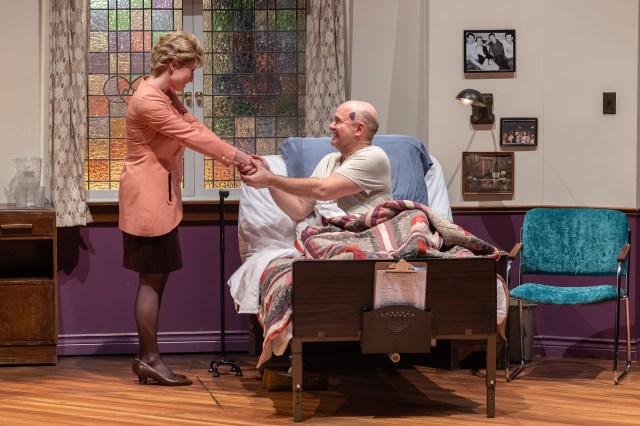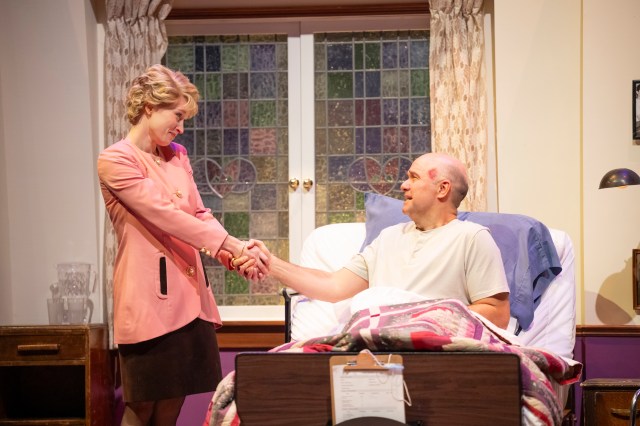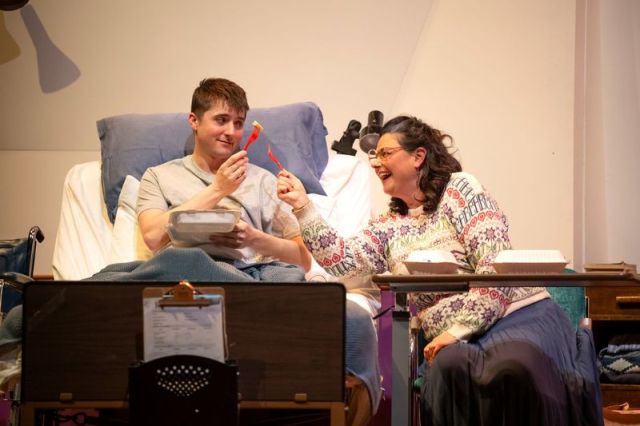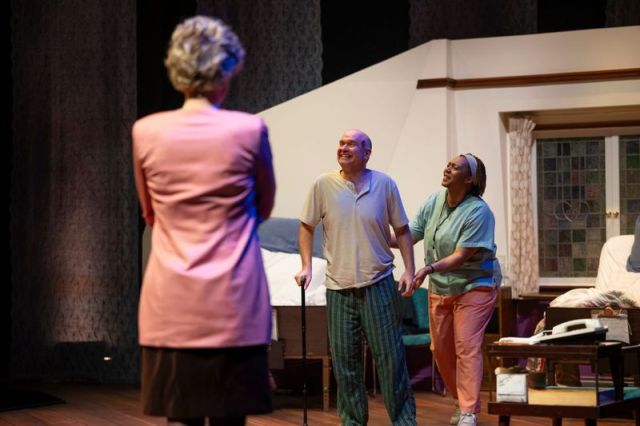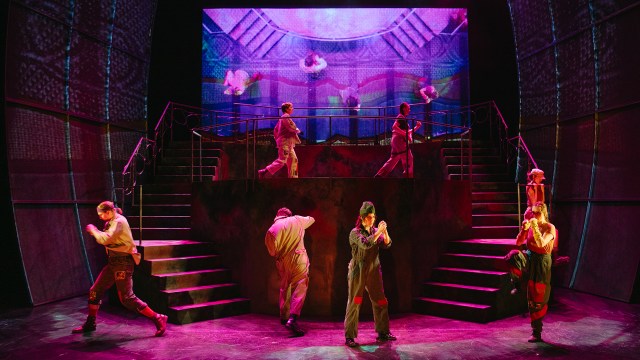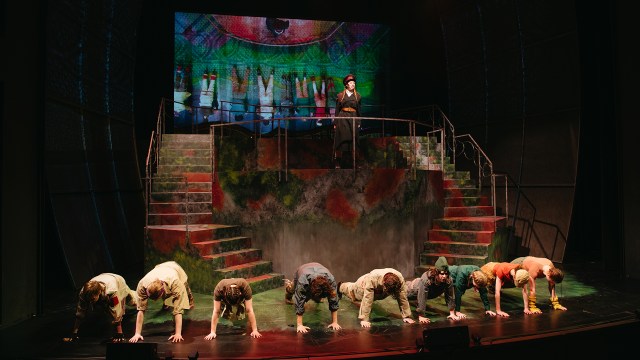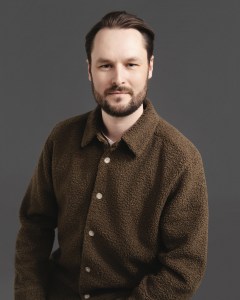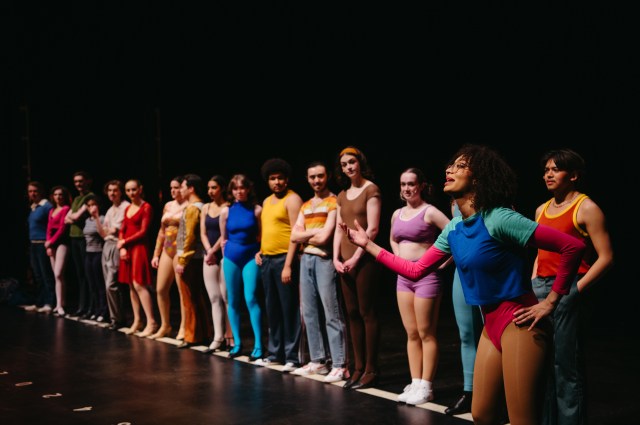
Ray: a little tribute to a great theatre lover

Ray Christenson, 1931-2025

By Liz Nicholls, 12thnight.ca

With the passing of Ray Christenson this month, at 93, Edmonton theatre and its community of artists have lost someone essential to what they do, how they create — and, especially, why.

To help support 12thnight.ca YEG theatre coverage, click here.

The live theatre isn’t alive, after all, without an audience. And Ray (as he was known to everyone, of every age, in his expansive circle of friends and acquaintances), was the ideal audience, the theatre lover every artist loves (or should): curious, open-minded, receptive to new experiences on any evening, eager to discuss.

If Ray asked you what you thought of a production, and the two of you disagreed, he was fine with that. If you were resistant to a show (there’s diplomatic reviewer talk for you), and the word “excruciating” came unbidden to your critic’s brain, Ray was there to remind you of a bright performance in a small role, perhaps, or something special about a scene, or a telling line of dialogue.

Chatting to Ray at intermission or post-show, or running into him at the Fringe, was always a reminder that for the audience there’s invariably something positive, discussable, challenging, in every creative experiment, no matter how imperfectly realized or out-and-out screwed-up onstage. What a valuable lesson that is for any theatre reviewer.

No matter how extreme the point of view in a show, how harsh and ugly, or confrontational, anti-social, or self-indulgent for that matter, Ray was remarkably non-judgmental and open-hearted. He remained outward-looking, optimistic, ready to be delighted, to listen and entertain other points of view, to see the world through other eyes.

He had tickets and subscriptions to a wild assortment of theatre companies in town, big-budget theatre, indies, student shows, church basement productions…. Until he was physically unable to venture forth, he happily sat through every kind of Edmonton theatre, including of course Catalyst productions created by his son Jonathan Christenson, the company’s artistic director. And then when his eyesight began to fail, Ray bore the affliction with patience and exemplary fortitude; as his vision dimmed, his impish smile did not. Ray’s final exit came “just shy of his 94th birthday,” says the Park Memorial obituary. It will be the only time that “shy” and “Ray” ever appear in the same sentence.    

Ray wasn’t an artist; he was a champion of artists who wasn’t a pushover.  And he transcended, effortlessly at every age, the stereotypes of chronology and career. He was a pastor and university chaplain who was pretty much unshock-able; an arts lover who, like his great friend director/actor Jim DeFelice, got a big kick out of hockey and back in the day Trappers baseball. You’d run into the two of them in Strathcona cafes or on Whyte, in intense, incomprehensible pre-game confabs about sports stats.

We track artists; we follow their careers, their creative initiatives. But how often do we acknowledge the contribution to theatre of audiences, who are inspired to connect, ready to buy into a whole variety of mind- and heart-expanding experiences? In rooms they share with a community of other people, in house seats and onstage? It’s the moment to appreciate a quintessential appreciator.

Every encounter with Ray was not only fun, but made me understand that rapport better. And the Ray-less theatre world seems diminished.

Posted in Features, News/Views | Tagged , , | Comments Off on Ray: a little tribute to a great theatre lover

A new (and all-Canadian) season at L’UniThéâtre launches with Le Palier

By Liz Nicholls, 12thnight.ca

In the play that launches the new, all-Canadian season tonight at L’UniThéâtre, Alberta’s only professional francophone theatre company, an unlikely friendship blossoms, fast, in an unlikely place.

To help support 12thnight.ca YEG theatre coverage, click here.

As director Steve Jodoin explains, Le Palier opens with 11 quick scenes, “and no talking” — on the third floor landing (le palier) of an apartment building. The 2005 play, a touching two-hander by Quebec’s Réal Beauchamp and Jean-Guy Côté, chronicles an unexpected, intergenerational, bond between neighbours: “a lady nearing the end of her life and a young university student who doesn’t know what to do with his…. The whole play happens in a year and a half.”

Neighbourly connection, friendship, loneliness, compassion: Le Palier embraces them all, says Jodoin, L’UniThéâtre artistic director. “Laughter and hard reality.” His production (in French with English surtitles), starring Ève-Marie Forcier and Gabriel Gagnon, is the first of four shows (and the return of an annual festival) in the 2025-2026 season at the 33-year-old company. It’s attracted a top-drawer design team, including Paul Bezaire (set), Scott Peters (lighting), and Dean Stockdale and Ryder J. McGinnis (sound).

Le Palier runs at the Servus Credit Union Theatre at La Cité francophone (8627 91st St.) tonight through Sunday. Tickets: lunitheatre.ca.

Bouée, a buoy or a lifeline in English, by Céleste Godin, takes L’UniThéâtre audiences for the first time across the river to Theatre Network’s Roxy Theatre. A six-actor touring production from Satellite Theatre in Moncton N.B., it’s “cool and quirky, very physical,” as Jodoin describes. “It explores the ‘what’s next’,” he says. “Sci-fi meets everyday life,” in an absurdist, highly theatrical experience, as a group of scientists sets about updating the received portrait of humanity. It touches down in March 6 and 7 at the Roxy, 10708 124 St.

The season includes the premiere of a new play by Edmonton theatre artist Sophie Gareau-Brennan, set in Alberta. Bouanderie/ Boulangerie, a rom-com as Jodoin describes, is named for the two businesses, a laundromat and a bakery, next door to each other in a small Alberta francophone community. Among its quartet of characters is an a complex geometry of friendship and love, reunion and rediscovery. Part of the annual Theatre 8-Pack initiative that includes eight productions from eight different Edmonton theatres, the production co-directed by Jodoin and Gareau-Brennan runs May 21 to 24 and 28 to 31 at the Servus Credit Union Theatre in La Cité francophone.

In alternating seasons, L’UniThéâtre and their Vancouver counterpart Théâtre La Seizième take turns producing a kids’ show that tours in Alberta and B.C. It’s a long-time collaboration that counts as a bona fide Canadian theatre success story. This season the show is Petite Ondine, written by Anaïs Pellin and inspired by Hans Christian Andersen’s Little Mermaid, a co-production between Vancouver partners Théâtre La Seizième and Kleine Compagnie. And its particular aesthetic is miniature and found objects, a puppetry that happens directly onstage amplified by live video (and accompanied by the songs of Nina Simone). Jodoin plans a public performance here for this touring show at the end of May.

The L’UniThéâtre season also includes the return of an annual theatre festival for junior and senior high school students.

The L’UniThéâtre season happens in French, with English surtitles. Tickets and subscriptions: lunitheatre.ca.

Posted in News/Views, Previews | Tagged , , , , , , , | Comments Off on A new (and all-Canadian) season at L’UniThéâtre launches with Le Palier

Vinyl Cafe: The Musical. Stuart McLean’s beloved characters come to life in the Citadel’s new holiday musical, a preview

Vinyl Cafe The Musical, Citadel Theatre. Photo by Nanc Price Photography

By Liz Nicholls, 12thnight.ca

In the new Canadian holiday musical that premieres next week at the Citadel, characters we know well do something they’ve never done before. They step out of the radio and off the page — and, for the first time ever, onto the stage, 3-D. To breathe the air of live theatre, and speak and sing for themselves.

To help support 12thnight.ca YEG theatre coverage, click here.

Vinyl Cafe: The Musical taps into the much-loved quintessentially Canadian CBC Radio story collection created over 20 years by the late great Stuart McLean. It’s inspired by the stories of the Toronto couple Dave and Morley, their kids, their neighbours, their ‘hood, and in particular two of the archive’s holiday classics, Dave Cooks The Turkey and Rashida, Amir and the Great Gift-Giving.

Five years in the development, Vinyl Cafe: The Musical is the bright idea of Citadel artistic director Daryl Cloran, who directs the premiere production that starts previews Saturday. And it’s been on his mind for a decade at least, since his time as artistic director of Western Canada Theatre in Kamloops.

“I reached out to the Vinyl Cafe team (led by Jess Milton, the long-time Vinyl Cafe producer, podcaster, and the executor of the McLean estate). They always considered it would make a good musical but didn’t have time to pursue it.” Not till 2020, that is, “when Jess and I built a fast friendship, and started to build the team…. We had similar ideas of what this could be, what it would look like as a musical.”

Citadel Theatre artistic director Daryl Cloran. Photo supplied

Musical theatre isn’t an outlandish destination for The Vinyl Cafe, of course. Far from it. “Music was such a big part of Stuart’s radio shows (and his live touring concert/shows),” says Cloran of the signature McLean format, with musical interludes featuring the hippest bands across the country. And after all, Dave is the owner of a vintage record shop.

“We started with the music,” Cloran says. And after considering submissions by a variety of artists, he and Milton went with the Canadian composer/lyricist duo Colleen Dauncey and Akiva Romer-Segal. “They’re quite something,” Cloran says, pointing to The Louder We Get (formerly The Prom Queen, book by Kent Staines), which premiered at Theatre Calgary during COVID, and Grow, a new musical comedy about a couple of green-thumbed Amish kids in partnership with a cannabis dispensary, slated for a 2026 premiere at Montreal’s Segal Centre. “They write a great contemporary pop musical, super-catchy tunes. Definitely you’ll be singing the songs as you leave the theatre.”

“In the sense that the characters sing their feelings as part of the story, it’s a traditional musical ” says Cloran. As an example he points to the song I Am A Train. Dauncey and Romer-Segal wrote it as a musical response to Morley’s line, in Dave Cooks The Turkey, where she describes the unending to-do list attached to being a mother at Christmas.

Stuart McLean, creator of The Vinyl Cafe. Photo supplied

The book was a challenge for theatre, as Cloran describes, not least because the voice of McLean, with its signature cadence, pauses, and intonation, is so inextricably built into his stories. He’s a storyteller. In his radio and live shows “he doesn’t play a bunch of characters,” the way Farren Timoteo does, for example, in his solo show Made In Italy, or Rod Beattie does in his Wingfield series. “So it’s quite something to see them come to life,” Cloran says of Dave and Morley and the rest onstage.

“How do you take a story and make it something that leans into the power of theatre?” That was the question that propelled the development of The Vinyl Cafe: The Musical. “We made a conscious decision not to have a narrator or a narrative voice, not to have somebody pretending to be Stuart.” Instead, two of the most popular Dave and Morley holiday stories (Dave Cooks The Turkey and Rashida, Amir and the Great Gift-Giving) “are intertwined into a narrative musical…. For the first time the characters are being embodied.” The musical isn’t “telling” the stories, as Cloran says. As a piece of theatre, it “leans into action and dialogue.”

The book for the new musical is written by Mexican-American playwright/librettist Georgina Escobar along with Milton. “We wanted someone with experience writing musicals, someone with a unique take on it,” says Cloran. Citing Milton, he says “there’s an inherent nostalgia about these stories and the tone of The Vinyl Cafe…. Jess knows these characters inside out. So she’s able to say ‘in this situation Dave would do this.”

The goal, says Cloran, was to honour the history of The Vinyl Cafe and speak to contemporary audiences.” In locating stories written 15 or 20 years ago in a contemporary setting, Rashida, Amir and the Great Gift-Giving was particularly apt, as he describes: “new Canadians who’ve moved into a neighbourhood as they take in all the neighbours’ wacky stress about this particular holiday.”

“Escobar was really able to tap into that experience…. We approached a whole bunch of writers, and Georgina’s take on it was the one that got the team the most excited.”

Damon Pitcher and Muhaddisah in Vinyl Cafe The Musical, Citadel Theatre. Photo by Nanc Price Photography

Vinyl Cafe: The Musical is heir to such Citadel musical premieres as Full Moon and Prison Dancer. With its $800,000 budget and 16-actor cast, led by Shaw Festival veteran Mike Nadajewski as Dave and Edmonton theatre star Patricia Zentilli as Morley — plus a six-piece band — it’s on a scale. And Cloran has hopes its appeal, its sense of humour, its Canadian-ness, will have appeal across the country and beyond. “Other (Canadian) theatres have been sniffing around about the show,” he says. And The Vinyl Cafe has always had American fans; the CBC Radio series was  picked up by some 80 public radio stations in the U.S.  

Meanwhile ticket sales have been “quite impressive,” as he puts it. So brisk, in fact, that  weeks ago, “unheard of for us, that early,” the Citadel announced an extension to the run. “If we do this right, there’s a good chance it will have a life after the run here.”

Canadians, Cloran among them, have a history with The Vinyl Cafe. “They feel a connection, not only to the stories themselves but the (family) ritual of hearing those stories on the radio every Sunday, and going to the live Christmas concerts.” His wife’s parents took the family to the Christmas shows in Toronto every year. “It’s been a big part of my life.”

Threaded through the radio broadcasts are McLean’s jocular “don’t get ahead of me” asides to audiences anticipating developments in the stories. At the workshops (there have been three since 2020) of the new musical, “people would be laughing at the jokes half-way through. Fascinating to see,” reports Cloran.

“As we navigate into previews making changes,” he and Milton have been at pains to create something for long-time fans (“with little Easter eggs”) and for Vinyl Cafe newbies who “just want a great night out….”

PREVIEW

Vinyl Cafe: The Musical

Theatre: Citadel Theatre, based on The Vinyl Cafe story collection by Stuart McLean

Book by: Georgina Escobar with Jess Milton

Music and lyrics by: Colleen Dauncey and Akiva Romer-Segal, respectively

Directed by: Daryl Cloran

Starring: Mike Nadajewski, Patricia Zentilli, Nadien Chu, Rain Matkin, Muhaddisah, Damon Pitcher, Kristin Johnston,  Jameela McNeil, Nick Boegel, Benjamin Hill, Cooper Nash Rajotte, Leon Willey, Sheamus Swets, Andrés F. Moreno, Kristel Harder, Koko

Running: Saturday (in preview) through Dec. 7

Tickets: citadeltheatre.com, 780-425-1820

Posted in Previews | Tagged , , , , , | Comments Off on Vinyl Cafe: The Musical. Stuart McLean’s beloved characters come to life in the Citadel’s new holiday musical, a preview

Opening the doors into the past: Ecos, a multi-generational dance/theatre piece from Common Ground. A review

Tatiana Duque and Alexandra Lainfiesta in Ecos, Diaspora Diaries Collective, Common Ground Arts. Photo by Mat Simpson

By Liz Nicholls, 12thnight.ca

In the opening scene of Ecos, a woman arrives onstage to build, piece by piece, an altar of tiny objects — bottles, a wine glass, flowers, a little cake, picture frames, salt, a dead plant.…

A funeral tribute collection? A shrine? We wonder about that. “I need this to work,” says Amaya (Tatiana Duque). “I am so lost…. I don’t know who I am.”

As we learn in this lyrical bilingual (English and Spanish) dance/theatre piece by Elisa Marina Mair-Sánchez, Amaya is an immigrant who left her home and her family of immigrants 15 years before, and hasn’t returned. And she hopes to “open the doors to the past,” ever-receding in time and memory: “how hard it is to remember everything; how hard it is to remember anything.”

And “la ofrenda,” the offering she’s assembled, is her way of conjuring her past, her immigrant parents and their immigrant parents worlds away — and their dreams, motives, and regrets about changing their lives. “Coming to Canada was easy,” says Amaya. “Now I don’t know if it was the right thing to do.” The question that haunts her, and propels Ecos forward, dead plant included, is “Can I still grow if I have no roots?”

Tatiana Duque and Alexandra Lainfiesta in Ecos, Diaspora Diaries Collective, Common Ground Arts. Photo by Mat Simpson

Ecos, a bilingual word if ever there was one, is a ghost story of sorts. And the first to arrive on the scene through the curtains that separate present and past (designers: Even Gilchrist and Whittyn Jason) is Eli (Alexandra Lainfiesta), a bright bold-outlined figure from Amaya’s childhood, demanding to know “why we are here.” Whether she’s a sibling, a friend, a young version of Amaya, an incarnation of the playwright, is up for grabs. But Eli is here to challenge Amaya to confront her motives and doubts full-on.

After that, the multi-generational stories come to life, in the play first developed at Common Ground Arts’ Found Festival (as El Funeral). Amaya and Eli host a sort of memory pageant. In Andrés F. Moreno’s evocative Diaspora Diaries Collective production, the finale of Common Ground Arts’ new Prairie Mainstage Series, characters appear and disappear through sliding curtains at either end of the stage, in atmospheric scenes. And sometimes they’re shadows in motion, visible echoes of the past. The lighting is evocative.

Fernando Garcia Reyes and Phany Peña, Tatian Duque and Alexandra Lainfiesta in Ecos. Photo by Mat Simpson.

The grandparents on one side of the family, who moved from the U.K. to Mexico (Phany Peña and Victor Snaith Hernandez), glide into view dancing, a love story that becomes a triangle. The grandparents on the other side (Ana Mulino and Fernando Garcia Reyes), who moved from Spain to Argentina, are a love story, too — one that begins to bend and crack under the stresses. Amaya’s parents (Reyes and Peña), who left Argentina for a life in Mexico, arrive too. As choreographed by Jason Romero and costumed in a time-travelling way by Gilchrist and Jason, they are vivid ghosts who seem to slide in and out of memory. The clarity of the storytelling, and Moreno’s production, are bona fide achievements.

The scenes are framed by a chorus of much-repeated self-doubting questions from Amaya — “was leaving the right thing to do?” or “what am I supposed to do?.” And they come to seem rather long on self-analysis, and grow unnecessary, not least because Duque is such an appealing, expressive actor, eminently able to convey doubt without words. And her counterpart, Lainfiesta as Eli, is charismatic, too. The look is beautiful; Nano Uribe’s  soundscore, after suspenseful opening riffs, seems a bit generically melancholy.

This six-actor indie production by a playwright mining her own past as a immigrant, is a welcome insight. It’s a rich and fulsome reminder, in this country of immigrants, that new Canadians move here for many reasons, bravely setting forth, leaving lives-in-progress, and bringing with them fascinating, dramatic pasts. They gain something, as we’re fond of reminding everyone, but they give up things too. They make big changes in their lives; they adapt; they regret; they sacrifice for love.

REVIEW

Ecos

Theatre: Diaspora Diaries Collective, Common Ground Arts Society

Written by: Elisa Marina Mair-Sánchez

Directed by Andrés F. Moreno

Starring: Tatiana Duque, Alexandra Lainfiesta, Ana Mulino, Victor Snaith Hernandez, Phany Peña, Fernando Garcia Reyes

Where: Mile Zero Dance, 9931, 78 Ave. 

Running: through Nov. 9

Tickets: commongroundarts.ca 

Posted in Reviews | Tagged , , , , , | Comments Off on Opening the doors into the past: Ecos, a multi-generational dance/theatre piece from Common Ground. A review

How tough do you have to be? Surviving trauma: Tough Guy gets a visceral premiere production, a review

Tough Guy by Hayley Moorhouse, Persistent Myth Productions at Edmonton Fringe Theatre. Photo by Mat Simpson.

By Liz Nicholls, 12thnight.ca

In Tough Guy, an exhilarating new play by Hayley Moorhouse, a queer up-and-coming filmmaker tries to justify turning their camera on their friends, survivors of a shooting in queer nightclub mere days before, and reeling from the death of one of their circle.

To help support 12thnight.ca YEG theatre coverage, click here.

Emerson (Autumn Strom) has arrived back home too late for the funeral (“I lost track of time”). Their artistic concept, in progress, is a film capture of “queer joy,” something visceral and powerful (also words in the Emerson lexicon). They’re arguing for the idea of art, self-expression, the compelling need to put the queer story out there in the world and thereby restore “agency” to the queer experience. And their friends, shattered in various ways, aren’t buying.

They accuse Emerson variously of pretentiousness, of “trauma porn,” of putting career and “a vanity project” ahead of friendship. They have no patience with phrases like “an unmistakeable fragility,” or Emerson’s argument that the concept is more “a reflection, a meditation” than a documentary. “But who is it for?” demands Ella (Michelle Diaz).

It takes a tough guy of a playwright, one with chutzpah and wit, to enfold this acidic kind of artistic self-reflection into her own play, and invite us to consider it. Tough Guy is brave that way, with its multiple frames and angled mirror reflections of friends splintered by trauma. And the production, directed and choreographed by Brett Dahl, premiering in the Fringe Theatre season, explodes onstage, no holds barred. It’s riveting, a sensational barrage of visceral (I know, that word, right?) movement, a pounding Kena León score that’s nightclub fabulous and rib-rattling — and acting from a five-member cast who don’t just inhabit the characters but live them.

Jasmine Hopfe in Tough Guy by Hayley Moorhouse, Persistent Myth Productions at Edmonton Fringe Theatre. Photo by Mat Simpson

They all process horror and grief in their own way, starting with Strom as the filmmaker character who brings their own complicated trans history to their filmic exploration of queer joy. There’s Quinn (Jasmine Hopfe), who’s the reason there’s a punching bag centre-stage in Lieke den Bakker’s set design, strikingly lighted to invoke both a nightclub and a boxing ring. In a flashing, thrashing world, Quinn is a taciturn boxer, who communicates with blows not words. “You wanted to talk,” they say to Emerson, landing a punch on the bag. “This is me talking.”

Ella (Diaz) habitually takes the teaching-moment outreach position. “I don’t have time to be traumatized,” they say. “People are counting on me…. How can we make change if we don’t step outside our echo chamber?” Ella is the one who sets up the memorial wall, the one who takes the trouble or the risk to post on social media, who’s a bit conciliatory about the conservative, religious parents who signally failed to even mention the queerness of their murdered daughter Jamie (Mel Bahniuk) at the funeral.

“They’re old-school,” says Ella, much to the outrage of the sardonic Sutton (Marguerite Lawler), the wiseass of the bunch, who survived the shooting with a gunshot wound.

Marguerite Lawler and Michelle Diaz in Tough Guy by Hayley Moorhouse, Persistent Myth Productions at Edmonton Fringe Theatre. Photo by Mat Simpson

And since Moorhouse’s play flips back and forth between the present and assorted, incremental moments in the pre-event past, Jamie is a presence, both alive and dead, in Tough Guy. They’re only a year out of the closet, “a baby queer,” as they say, a new and happy addition to the circle of friends we see — in Emerson’s queer joy footage dancing the night away at the fateful club Aria, or just hanging out, camera-free, making each other laugh in the garage with the punching bag.

Rage and humour are rarely stage roommates; here they’re in bed together. “Being sad all the time, it’s the most lesbian thing you can do,” says one of the characters, and it’s a big laugh line.

How tough do you have to be to be authentically queer in a stressful world of homophobic and transphobic violence, where a queer club is targeted by a shooter and then the memorial wall in honour of the victims gets graphically vandalized? How tough do you have to be to not go it alone? To admit need, as a way to not be paralyzed at a moment that seems to freeze time? The characters are in motion, trying to find that out.

Moorhouse’s intertwined dialogue, which dispenses with narration and exposition, is muscular, staccato, and believable. And the performances are inflammatory.

REVIEW

Tough Guy

Theatre: Persistent Myth Productions at Edmonton Fringe Theatre

Written and produced by: Hayley Moorhouse

Directed by: Brett Dahl

Starring: Mel Bahniuk, Michelle Diaz, Jasmine Hopfe, Marguerite Lawler, Autumn Strom

Where: Backstage Theatre, Fringe Theatre Arts Barns, 10330 84 Ave.

Running: through Nov. 8

Tickets: tickets.fringetheatre.ca

Posted in Reviews | Tagged , , , , | Comments Off on How tough do you have to be? Surviving trauma: Tough Guy gets a visceral premiere production, a review

An activist crime caper? Nicole Moeller’s Wildcat at Workshop West, a review

Michele Fleiger and Maralyn Ryan in Wildcat, Workshop West Playwrights’ Theatre. Photo supplied.

By Liz Nicholls, 12thnight.ca

Timeliness? Irony? The world provides, and sometimes theatre just nails it.

To help support 12thnight.ca YEG theatre coverage, click here.

There’s something downright uncanny about the arrival onstage of Wildcat in a week that will live in infamy in Alberta labour history. Workers’ rights, injustice, resistance and retaliation, the connection between people that ignites change … these motifs thread their way through the long set-up and many, sometimes confusing, complications of this new “crime caper” by Nicole Moeller, premiering in a Workshop West production directed by Heather Inglis.

Wildcat, which lives up to its name in several ways in the course of a couple of hours and two acts, is set, in recognizable detail, in Edmonton in 2025. It’s very likely the only play of the season where Kingsway and the old Gainers plant on 66th get mentioned. And it will almost certainly be the only play you’ll see this season you could call an activist crime caper. Moeller’s plays, never skimpy, notably live at the intersection of the intimate and the bigger world of socio-political engagement. And so it is with Wildcat.

In this Moeller experiment, we meet Dot (Michele Fleiger), a union negotiator and shop steward of old, an aging veteran of the anti-government rallies, protests, strikes on behalf of workers’ rights of the ‘80s and ‘90s, during the Klein era.

Thirty years on (and a stroke and bad knees later), “Dottie with the bullhorn” has gradually isolated herself from the world, and her own sense of social outrage. It’s Alberta, for god’s sake, so there’s more to protest than ever; Alberta Next and the health care fiasco instantly come up in Wildcat. But Dot feels past her best-before date, “alone, depleted,” exhausted by doing nothing. And Fleiger, brusque and sardonic, captures wonderfully the prickly fortifications and vulnerability of a character whose sense of absurdity is directed at her own life.

Barricaded in her own kitchen, alone and in full retreat, talking to her deceased houseplant (and to us, in temporary asides from first-person narration), Dot has somehow “lost the ability to leave the house,” as she puts it. And she’s highly resistant to taking calls and returning messages. So it’s a surprise when Pearl (Maralyn Ryan), an old friend and fellow relic from the glory years, makes contact. “I don’t really like to re-hash the old days,” Dot tells her. “I’m not that person any more.”

Memories of Dot’s adrenalized days as a resistance fighter, participating in marches 10,000 strong, handcuffing themselves to cop cars, barricading the gates at Gainers, making the front page in an era when there was real media covering real local news … these are as wispy as Pearl, who has a quavery sweetness and a certain intriguing vagueness in Ryan’s performance.

Dot is resentful about the ministrations of her daughter Gloria (Melissa Thingelstad), a busy but not-uncaring lawyer who squeezes in time she doesn’t have in order to be briskly parental about her aging mom. Gloria oversees Dot’s bills, taxes, passwords, groceries, medications, appointments — and encounters resistance at every turn for her pains. Grown-ups with parents who are hovering on the frontier of old age will recognize the syndrome.

Anyhow, things are not going well in the mother/daughter relationship. Dot hangs out somewhere on the spectrum from tetchy to surly; Gloria is exasperated. “If you don’t start talking to people, you’ll go insane,” she says to Dot. “Too late,” snaps her mother.

Capers and cons do have to be set up gradually, true; the concept of routine plausibility has to be floated, after all. But the setup of Wildcat presses its luck by taking an entire, rather lengthy, first act to let the self-imposed dullness and unexciting inertia of Dot’s life play out: the regular repetition of Dot’s deflections of Gloria, Dot half-heartedly and ineffectually making the acquaintance of Google, Dot’s reluctant exchanges with poor old Pearl. And I’m afraid you do feel its length; it’s something to be got through despite convincing performances from Fleiger, Ryan, and Thingelstad, and dialogue from Moeller that feels real. So surreptitious is Wildcat that Dot sticking a cig, unlit, into her mouth to fake-smoke a Marlboro, a kind of half-assed screw-you to Gloria, counts as an event.

A lot happens at intermission. By the time we’re back for Act II, the crime caper that ensues is an object lesson in how isolated older people become vulnerable to internet scams, for one thing. And how they could use their life experience, and an arsenal of skills no one (including themselves) realize they have in order to fight back. Honestly, I don’t quite understand the machinations of the seniors revenge plot, and I don’t want to tread into spoiler territory. But Act II is where there’s an adventure and Graham Mothersill enters, in full-throttle, as … well, you’ll have to see for yourself. Jason Kodie’s crime caper sound design is a tip-off.

Heather Inglis’s production happens with the audience wrapped around the stage. Ami Farrow’s design doesn’t really have much of a pay-off, except aisles for stage exits and a pack of Marlboros in close-up, in Act I. But it comes into its own with playful moving parts and mid-century kitchen chairs in Act II. Payal Jotania’s costumes, which have a lived-in look for Dot and Pearl (who seems to be wearing a whole closet of old clothes), leave us perplexed in the case of Gloria. The play (and the always terrific Thingelstad) says she’s a high-powered lawyer who travels the country. Her baggy clothes and plastic purse say she’s eccentric thrift shopper, huh?

Revenge is sweet, though, and the revenge of undervalued seniors even sweeter. And if you hang in, you’ll have the rare experience of seeing a play with a topical, even political, edge with enough chutzpah to get wacky. In these disheartening times, when it’s easy to slide into the slough of despond — authoritarians count on this — the old-fashioned Dot spirit of yore, that change is possible if we fight back, collectively, is pretty inspirational (yay, teachers!). Fighting back, collectively: that’s at the heart, in the end, of a messy, somewhat trying, two-part play that, like Dot herself, takes a while to get going.

“We can’t lose each other,” say mother and daughter late in Wildcat. And there it is, activism in a nutshell.

REVIEW

Wildcat

Theatre: Workshop West Playwrights Theatre

Written by: Nicole Moeller

Directed by: Heather Inglis

Starring: Michele Fleiger, Maralyn Ryan, Melissa Thingelstad, Graham Mothersill

Where: The Gateway Theatre, 8529 Gateway Blvd.

Running: through Nov. 9

Tickets: workshopwest.org (all tickets are pay-what-you-will


Posted in Reviews | Tagged , , , | Comments Off on An activist crime caper? Nicole Moeller’s Wildcat at Workshop West, a review

A week of bounty in Edmonton theatre, a 12thnight survey

Simon Abbott, Cameron Kneteman, Mhairi Berg, Maureen Rooney in Morningside Road, Shadow Theatre. Photo by Marc J Chalifoux.

By Liz Nicholls, 12thnight.ca

It’s a week of bounty in Edmonton theatre (your biggest problem is choice). Much-awaited new plays are premiering and so is a full-bodied multi-generational dance/theatre extravaganza. A gem of a new musical continues its run. Continuing too is an involving, heart-warming and funny show invites us to think about the stuff we just can’t throw away. A Canuck classic lands once more. And, hey, stories from our own dark history return from the grave, as cues in improv.

To help support 12thnight.ca YEG theatre coverage, click here.

The theatre, my friends, can be a magical place. And you should be there.

Michele Fleiger and Maralyn Ryan in Wildcat, Workshop West Playwrights’ Theatre. Photo supplied.

Wildcat, Nicole Moeller’s much-anticipated new crime caper (an intriguing pairing of playwright and genre in itself), finally opens at Workshop West Playwrights’ Theatre.

The premiere at the Gateway Theatre comes after an eerie and mysterious chain of theatre technology breakdowns. Not only that, opening night happens in an appalling week in Alberta labour history. Which gives Moeller’s caper (lighter than usual for her, she tells 12thnight) an added edge, you’d think, since the protagonist Dot (Michele Fleiger) has a personal history in the labour movement, the strikes and protests of the ‘80s and ‘90s.

The heavy-hitter cast of Heather Inglis’s production is led by veteran theatre stars Fleiger and Maralyn Ryan, with Melissa Thingelstad and Graham Mothersill. Have a peek at the 12thnight interview with the playwright here. It runs through Nov. 9 at the Gateway (8529 Gateway Blvd), Tickets (all pay-what-you-will): workshopwest.org.

Cast of Tough Guy by Hayley Moorhouse, Persistent Myth Productions at Edmonton Fringe Theatre. Photo supplied

•The ignition of Hayley Moorhouse’s new play Tough Guy, premiering in the Fringe Theatre season Thursday (a Persistent Myth production) is a tragedy: a shooting at a queer nightclub. In a world that’s tough and getting tougher all the time, it chronicles the lives of a circle of queer friends, and the amazing resilience of queer joy as they grapple with the emotional fallout. Brett Dahl’s production at the Backstage Theatre in the Fringe Arts Barns (10330 84 Ave.) runs Thursday through Nov. 8. Meet the playwright in a 12thnight preview here.

Elisa Marina-Sanchez, Ecos, Diaspora Diaries Productions. Photo supplied.

•It’s a big week for Common Ground Arts. Tough Guy was developed there, in the RISER initiative. And so was Ecos (formerly El Funeral), a journey from the Found Festivals of 2021 and 2023 to their new Prairie mainstage Series. It’s the work of Edmonton playwright Elisa Marina-Sánchez. The Diaspora Diaries Collective production directed, in both Spanish and English, by Andrés F. Moreno and Jenna Rogers, features a seven-artist cast of Latin-American heritage: Tatiana Duque, Victor Snaith Hernandez, Alexandra Lainfiesta, Ana Mulion, Phany Peña, Fernando Garcia Reyes, and Jason Romero. Ecos, a co-presentation of Common Ground and Mile Zero Dance, runs at the latter’s headquarters (9931 78 Ave.) Thursday through Nov. 9. Tickets: fringetheatre.ca.

Naomi Snieckus and Matt Baram in Big Stuff, Baram and Snieckus at Citadel Theatre. Photo by Nanc Price.

•Ever since I saw Big Stuff in the Citadel’s Rice Theatre I can’t stop thinking about it. The married comedy duo Matt Baram and Naomi Snieckus with director/co-creator Kat Sandler have created something irresistibly funny and touching — and entirely original in the way the show wraps around their own unfolding love story and embraces, in a specially welcoming kind of improv with us, our own stories of people we’ve lost and the connections we value, through toasters we don’t need and oddball objets d’art … you know, stuff. Theatre is full of stories of people who arrive in relationships with “baggage.” Big Stuff, though, is about … stuff, the stuff we accumulate, the stuff, no matter how small and useless we can’t bear to part with because it’s embedded in memory and wrapped in emotional connection. What are we supposed to do with all our stuff? 

It’s a lovely show, funny, warm-hearted, insightful, and I loved it. Read the 12thnight review here. And 12thnight talked to the pair in a preview here. It continues through Nov. 9. Tickets: citadeltheatre.com.

Mhairi Berg and Maureen Rooney in Morningside Road, Shadow Theatre. Photo by Marc J Chalifoux.

•There’s a “new Canadian Celtic musical” at Shadow Theatre. And if you haven’t seen Morningside Road yet, you really should. By Mhairi Berg with music by Simon Abbott, it takes a cast (and a live band) of three into a story about stories, and a kind of haunting. A Canadian girl (Berg) is fascinated by the romance of her grandmother’s stories about growing up in Edinburgh on that road, before, during, and after the war. And gradually, as Granny’s memory gets eroded by dementia the layers of her story multiply.

The ways the past inhabits the present, as remembered and as imagined, are intricate, and surprising. And Lana Michelle Hughes’ production, starring Berg, Maureen Rooney, and Cameron Kneteman, weaves a spell. The music by Berg and Abbott is terrific. The 12thnight review is here. And a preview interview with Mhairi Berg is here. Morningside Road runs through Sunday at the Varscona (10329 83 Ave.). Tickets: shadowtheatre.org.  

Steven Greenfield in Billy Bishop Goes To War, Edmonton Repertory Theatre. Photo supplied.

•A new company, Edmonton Repertory Theatre, launches its first season with a production of a Canadian classic, the 1978 two-hander musical Billy Bishop Goes To War, by John MacLachlan Gray in collaboration with actor Eric Peterson. Its wry view of what “hero” means in Canadian terms, is built into its chronicle of the young, self-deprecating, accident-prone underachiever who becomes a World War I flying ace, his quixotic relationship with his colonial masters across the sea, and his darkening views of what war is all about. Gerry Potter’s production, starring Steven Greenfield and Cathy Derkach, lands the musical at a moment when this country is under siege. Have a look at the 12thnight preview with the director here, and the review here. You’ll find the show at a newly discovered theatre, the Biederman, in the Lifestyles Options Retirement Community (17203 99 Ave.). Tickets: eventbrite.com.

•Speaking as we are of phantoms and the thin veil that separates us from the Great Beyond, it’s the last week (Thursday through Saturday) for Ha-Ha-Haunting. Rapid Fire Theatre’s highly original seasonal co-opting of horror stories from the dark vault of our own history (researched by Dead Centre of Town resident playwright Megan Dart) lets a crack cast of improvisers loose on them. A nefarious comic agenda, am I right?  Who would do that (unnecessary question of the week)? Opening night was riotous (read about it here). Tickets: rapidfiretheatre.com.

Posted in Features | Tagged , , , , , , , , , , , | Comments Off on A week of bounty in Edmonton theatre, a 12thnight survey

Tragedy and queer joy: Hayley Moorhouse’s Tough Guy, a preview

Cast of Tough Guy by Hayley Moorhouse, Persistent Myth Productions at Edmonton Fringe Theatre. Photo supplied

By Liz Nicholls, 12thnight.ca

Do you remember where you were when you heard …?

To help support 12thnight.ca YEG theatre coverage, click here.

There are moments in life when you know your answer will be instantly available in your memory, forever. Hayley Moorhouse, whose new play Tough Guy premieres Thursday in a Persistent Myth production directed by Brett Dahl (part of the Edmonton Fringe Theatre season), distinctly remembers driving to work one morning in 2016, listening to the radio. En route the news came on: a horrific mass shooting in Pulse, a queer nightclub in Orlando. “I’m not normally a big emotional kinda guy,” says Moorhouse, who indeed has a brisk, articulate sort of thoughtfulness and good humour in conversation. But they found themself “sobbing so hard I couldn’t see and had to pull over. It hit me so hard.”

“I didn’t start thinking about (writing Tough Guy) right there, but it stayed with me,” they say. “The impact of that nightclub shooting was really hard, for many people,” Moorhouse among them. “It stayed with me… But the seeds of the play were planted over many years, if I go way back as a queer person.” There’s been progress, yes, but “things are starting to feel different, scarier these days…. Queer people, trans people especially, are constantly de-humanized and threatened and oppressed, not only by people, but by government institutions in ways that are really quite frightening.”

The five characters in Tough Guy are 20-something friends, grappling to navigate the emotional fallout of a mass shooting in a queer club. And upping the ante is the arrival of another friend, an indie filmmaker back home to shoot a documentary about the fatal  incident.

As Moorhouse was developing the play, the image of a boxer lodged in their mind. “There’s something so visceral and sweaty and alive in that image … a cool way to talk about how we embody our experiences of trauma: we don’t just think them or talk about them, we really feel them in our bodies.” The action of Tough Guy happens in an urban garage, a hang-out space where the friends, including one character who’s a boxer, meet and party. And a punching bag has pride of place.

Playwright Hayley Moorhouse

Two years ago, Moorhouse enthusiastically signed up for RISER, Common Ground Arts’ program of mentorship for the crazily multi-faceted demands of being a theatre producer. “I wanted to produce my own work, things I want to say about the queer experience now. And people have been so supportive and gracious in the theatre community. Everyone I speak to is willing to offer advice or mentorship; the generosity and support are so great!”

A 2018 U of A theatre school acting grad — Edmonton audiences saw Moorhouse in Shadow Theatre’s Robot Girls, Stars on Her Shoulders at Workshop West, Little Women at the Citadel — they have been writing “pretty much my whole life, since I was a little kid,” they say. “I’ve been a writer way longer than I’ve been an actor. It was my first love.”

And Tough Guy, the winner of the 2025 Alberta Playwriting Competition and Westbury Family Fringe Theatre Award, isn’t the first time Moorhouse the writer has been drawn to explore the reverb from trauma. Suspension, which they produced at the 2019 Fringe — “a fly by the seat of your pants experiment” in producing and directing — and then, in a podcast version the following year for the Alberta Queer Calendar Project. They describe it as “a surreal absurdist play with two characters who meet each other in a deserted suburban backyard.” Above them is a plane crash about to happen; “the plane is frozen mid-air and they have time to figure out how to respond.”

Says Moorhouse “I’m very interested in my writing by how people respond when something horrible happens? And how do we tell the story of events like these?” The filmmaker character in Tough Guy wasn’t actually present at the violent event in the nightclub. “But they want their friends who were there to mine their emotions, go back, dig deep. And I’m interested in exploring the ethics, and the cost” of that re-creation.

“In theatre, we are storytellers. And sometimes we tell really hard stories.” It’s “the cost of the story vs what it gives us,” Moorhouse thinks. “Are we telling stories just because they’re sensational or shocking? Or is there something of value we get?”

These are questions that resonate particularly, and often, vis-à-vis “the tradition of telling queer stories that are really sad,” as Moorhouse puts it. “It’s the ‘bury-your-gaze’ trope”: how often does it happen in movies, TV, or plays that a queer character is introduced … “and then they die”?

“Hey, that’s not an accurate summation of the queer experience,” Moorhouse sighs. “Our lives aren’t only sad and only difficult…. I’m curious about finding that balance, really grappling with a story, really diving into it, and also seeing ‘what else is there?’. Making these characters’ lives as three-dimensional and as full and contradictory as possible.”

Jasmine Hopfe in Tough Guy by Hayley Moorhouse, Persistent Myth Productions at Edmonton Fringe Theatre. Photo supplied

They’ve been at pains in Tough Guy to show characters “in the depths of the worst day of their lives, and also show them at their most exuberantly joyful.” So Moorhouse has the play “slip between different time lines. Half takes place in the days after the shooting when everything is really difficult. And half the scenes take place at a party six months prior when all the characters are together, being ridiculous, goofy, drunk, and joyful.”

Moorhouse’s five characters respond to trauma and grief in individual ways. “It’s human nature to avoid pain at all costs. When people go through something traumatic, they brush it off, they make jokes, they pretend it’s not happening. Or they deflect and focus on work or solutions….”

Is Moorhouse finding the full experience of queer-ness in the theatrical storytelling they see at the moment? They consider the question. “We see sparks of excellent theatre that grapples with all the realities of the queer experience. It’s not that it’s not out there; I just wish there was more.” Stories that reflect queer joy, “the silly ones that remind us how joyful it is to be queer,” are at a premium. It’s no accident that one of Moorhouse’s favourite theatre companies is the queer sketch comedy troupe I Hardly Know Them (their very funny TikTok videos revel in the ridiculous and the absurd). Queer comedy, they think, is “a rebellious act in its own way; I love that group so much!”

Michelle Diaz in Tough Guy, Persistent Myth Productions at Edmonton Fringe Theatre. Photo supplied.

“It’s really exciting to show queer people, and queer characters, in a kaleidoscopic way…. To have as many voices and textures and ideas as possible — all with a queer lens.”

As a queer artist Moorhouse admits to being “shocked by the political moment we’re in.  “Maybe I was naive. But 10 years ago I would never have seen it coming, the government making life unbearable for trans and gender-diverse kids,” they sigh. “It’s a frightening, heartbreaking moment. But we’re still here, and we’re still alive, still kicking, still fighting to create change and make things better….”

“I’m heartened by the Edmonton theatre community,” they say. “It’s all our job to be really loud!”

PREVIEW

Tough Guy

Theatre: Persistent Myth Productions at Edmonton Fringe Theatre

Written and produced by: Hayley Moorhouse

Directed by: Brett Dahl

Starring: Mel Bahniuk, Michelle Diaz, Jasmine Hopfe, Marguerite Lawler, Autumn Strom

Where: Backstage Theatre, Fringe Theatre Arts Barns, 10330 84 Ave.

Running: Thursday through Nov. 8

Tickets: tickets.fringetheatre.ca

Posted in Previews | Tagged , , , , , , | Comments Off on Tragedy and queer joy: Hayley Moorhouse’s Tough Guy, a preview

‘A life to live, a death confronted’: Billy Bishop Goes To War, a review

Steven Greenfield and Cathy Derkach, Billy Bishop Goes To War, Edmonton Repertory Theatre. Photo supplied.

By Liz Nicholls, 12thnight.ca

Frequent flyers might think of the Toronto Island airport before the man. But the much-loved two-hander musical that Edmonton Repertory Theatre has chosen for its inaugural season returns to us another frequent flyer, a medal-bedecked World War I fighter pilot from Owen Sound, Ont., to tell his own story.

That it is the story of an underachiever and self-confessed screw-up — “on record the worst student ever at the Royal Military College,” as our hero says brightly — gives Billy Bishop Goes To War an appealing Canadian-ness.   

The 1978 two-hander musical, by John MacLachlan Gray in collaboration with the actor Eric Peterson (its original stars), is an original fusion of self-deprecating humour and satirical edge, spun from a real-life Canadian memoir. It’s travelled the country, crossed the pond to the West End, played New York on Broadway and off- in its heyday. Now it lands on a hitherto undiscovered theatrical airstrip, the Biederman Theatre on the third floor of a west end “retirement community,” starring Steven Greenfield and Cathy Derkach and directed by Gerry Potter, whose Workshop West production of the early ‘80s starring David LeReaney toured Canada.   

It’s one of those homegrown classics whose edge and sense of humour are honed by the times, and the particular strengths of two actors: one taking on some 17 characters; the other in support, musical and narrative, at the keyboard. Both are excellent.

Billy Bishop is part of an international theatre repertoire that’s not short on either anti-war satires or plays that address the glory of struggle and the high human cost of war. This new production, handsomely set forth (designer Jaimie Cooney, lighting by Nic Juba) on the shallow stage of the intimate low-ceilinged space, arrives at a particular moment when Canada is getting smacked around and bullied as a sovereign country. And given our situation, a land under siege, there’s a particularly cheering feistiness about reviving the story of a renegade colonial misfit who’s a natural subverter of another country’s military authority.

Steven Greenfield in Billy Bishop Goes To War, Edmonton Repertory Theatre. Photo supplied.

Like his countrymen, Billy is co-opted into a war effort a world away. And by an unlikely series of encounters and a random selection of his skills, he ends up in an elite airborne outfit, the suicide squad (average life span 11 days). Eventually, he chalks up a staggering number of “kills,” some 72, to his credit. Which will propel him into the absurd position of getting yanked from official fighter pilot duty because he’s too good (he threatens the record of a Brit war hero).

I haven’t seen it for many years, not I think since James MacDonald’s excellent 2010 Citadel production starring John Ullyatt and Ryan Sigurdson. I do remember seeing Peterson and Gray a couple of times as older characters looking back with a sort of nostalgia and ruefulness on their younger selves.

This new production isn’t like that. The appealing Greenfield is prime Billy, energetic, ebullient, amused and delighted by his own wayward improbability in rising to military stardom. Derkach, a rare example of a female actor in a Billy Bishop production and always a warm, engaging presence onstage, is already at the piano when Billy appears out of the darkness of the theatre without explanation and arrives onstage to sing “We were off to shoot the Hun, it looked like lots of fun….”

It’s a sassy, boisterous performance. And Potter’s production doesn’t bother with the theatrical trappings that would explain why exactly he’s onstage recounting his career arc to us. There they just are, Greenfield and Derkach, both actors with top-drawer musical skills, telling and singing a hero’s tale. It’s Canadian-style music hall with an underdog narrative.

Billy’s story puts you in mind of Groucho Marx’s celebrated declaration that he didn’t want to belong to any organization that would accept him as a member. The Brit military mucky-mucks and the war effort brain trust must be totally hooped, figures Billy, if a soldier like him, “a convicted liar and a cheat,” can rise through the ranks and be, first a cavalry officer, and then a pilot. “They were scraping the bottom of the barrel.” There’s something disarmingly Canadian about a self-deprecating hero. At critical early career junctures, explains Billy, “I get sick, I get injured, or I get into a lot of trouble.” And sure enough….

Steven Greenfield in Billy Bishop Goes To War, Edmonton Repertory Theatre. Photo supplied.

Greenfield presents with considerable  comic zest a gallery of grotesques, his superiors first in the cavalry and then in the airborne squadron. Lady Helier, or rather Billy’s re-creation of Lady Helier, the dragon blue-blood who’s his unexpected benefactor, is a riot. He didn’t have any qualifications to be a pilot, Billy admits. Or maybe he did, who knows?, since the authorities who are interviewing him don’t know what the qualifications are, anyhow.

In Greenfield’s performance, Billy is a great appreciator of the absurdity of the class system (he’s a “colonial dignitary”), and of every military decision, including the one to divest his plane of all guns to lighten the load so his plane could actually take off. “It’s hard to keep your confidence in war without a gun,” he smiles and rolls his eyes. It confirms all his worst suspicions.

There are key moments in Billy’s story, nailed with precision by Potter’s production.  When Billy looks up, from the cold mud of the trenches, and sees salvation and a future in the sky, his fortunes seem to levitate: that’s one. As captured by Greenfield, armed with miniature models of planes in various scales, Billy is giddy with delight in his initial solo departures from terra firma.

There’s a turning point, identified in Greenfield’s impressive performance, when Billy discovers he’s somehow acquired a lust for risk, an appetite for the kill. When he takes on a German aerodrome single-handedly in his pajamas, the dog fight, as acted out solo, is an adrenalin junkie’s hallucination. “I never had so much fun in my life!”

Gradually, in Act II, Billy’s relish for flying darkens into something more ruminative, an awareness of horror and the human price tag on military adventures (the young as cannon fodder for the old). The song In The Sky, beautifully sung by Greenfield and Derkach, memorably captures the strangely lyrical dance macabre of aerial warfare, “one the hunter one the hunted together in the sky.”

It’s an odd musical — the much-abused word “quirky” doesn’t go amiss — that demands heroic virtuosity and stamina from the actor who plays Billy and a dozen and a half other characters through Billy’s eyes. And, as you’ll see from this production, it’s still funny and affecting after nearly half a century. Gray’s score has an assortment of original period pieces: jaunty music hall ditties, military pastiches, G&S-type patter songs, a slinky Kurt Weill-esque number delivered by a French chanteuse as conjured by Greenfield, who drapes himself in a boa and an accent for the number. There’s a song that touches on the Canadian resistance to stardom. There’s an ode to the bright blue Canadian sky, for which Billy eventually longs. There’s even a rhymed spoken-word poem that pits glory against survival.

“The British like their heroes cold and dead,” he tells us. Well, we Canadians like our heroes lively and flawed. This Canuck classic couldn’t come at a better time. Start your engines, people.

REVIEW

Billy Bishop Goes To War

Theatre: Edmonton Repertory Theatre

Created by: John MacLachlan Gray in collaboration with Eric Peterson

Directed by: Gerry Potter

Starring: Steven Greenfield and Cathy Derkach

Where: Biederman Theatre, Lifestyles Options Retirement Community, 17203 99 Ave.

Running: through Nov. 8

Tickets and full schedule of performances: eventbrite.com


Posted in Reviews | Tagged , , , , , | Comments Off on ‘A life to live, a death confronted’: Billy Bishop Goes To War, a review

The magic of … stuff and a lovable show about that: Big Stuff at the Citadel, a review

Naomi Snieckus and Matt Baram in Big Stuff, Baram and Snieckus at Citadel Theatre. Photo by Nanc Price.

By Liz Nicholls, 12thnight.ca

There’s magic in … stuff. In the way it accumulates, for one thing. In the way it shrugs off mere utility like lint off a lapel. In the emotional alchemy that transforms junk — old pens, egg slicers, needlepoint portraits — into important treasures, according to a secret formula that’s a helluva lot closer to your heartbeat than any PIN.

And there’s magic in a show, now welcoming (and I use the word advisedly) audiences into the Citadel’s Rice Theatre, that’s all about that.

Big Stuff, by the married comedy duo Matt Baram and Naomi Snieckus with director Kat Sandler, is an original kind of fantasia on our connection to people, moments, punch lines and human motifs we’ve lost — to the past, to memory. In a larger sense, it’s about where we find meaning, and human connection, in a world crucially short of both. You can’t help wondering if Vladimir and Estragon would have felt so unanchored to meaning in the world as they waited near a tree on a road, if only they’d had some stuff — a chipped mug, maybe, or an unravelling toque, or a lopsided bowl from an ill-fated ceramics course.

But wait, I’m thinking about myself. And that’s the other thing about the magic of Big Stuff: the way that Baram and Snieckus invite us into a play, part memoir part improv, where you can’t help doing that. Big Stuff is where your stories about your people can easily mingle with their stories about their people, without getting dressed up or putting on the dog.

‘Sharing’ in theatre is oft-referenced, seldom actually achieved. And somehow, this warm and funny pair is brave and relaxed enough to share, first, their affection for each other, their amusement, their frictions and idiosyncrasies. And then, to share their appreciation for us, our stories, and the oddball particularities of the stuff that comes attached to them.

Naomi Snieckus and Matt Baram, Baram and Snieckus at the Citadel Theatre, Photo by Nanc Price.

It starts when you enter the theatre: the stage is dominated by a wall, no a veritable altar, of cardboard boxes (design: Michelle Tracey). Between the cracks there’s stuff: lamps (the lighting sources of Emilie Trimbee’s design are a narrative track in themselves) , unidentifiable objets d’art, a toaster, a phonograph….

On every seat is a little card with an invitation to “write down an item you have at home that reminds you of someone close to you.” And then somehow, in the course of their story about a return road trip from L.A. back to Toronto with a U-Haul cube van full of their stuff, this expert pair of improvisers invites people to expand, if they’re feeling it, on their chosen item and explain the connection.

The lively dynamic between Baram and Snieckus established by the play is the tension between what to keep, what to toss. As stuff accumulates, the latter can’t bear to part with her grandmother’s crochet hook, for example, even though she does not, and will never, crochet. And question not the need, as Baram does, for six toasters just because they don’t eat bread. Baram, who’s evidently an appreciator of cosmic absurdity, argues for getting rid of his dad’s wildly original collage as moving on, not getting bogged down in grief even though he feels it. He lobbies for a culling of the stuff collection. Should they just leave a whole storage unit of stuff, collected in the course of five years in L.A.? Husband and wife do not agree.

Naomi Snieckus and Matt Baram in Big Stuff, Baram and Snieckus at Citadel Theatre. Photo by Nanc Price.

Since the show is fuelled by the powerful way objects conjure memories of parents lost, the audience is bound to side most often with Snieckus, who asks questions like “what was she like, your mom?” when she’s talking to people who have contributed an item. On opening night, The People rose to the occasion in startlingly beautiful and funny ways, mainly I think because the atmosphere was so un-pressurized, so safe and fun and casual. Baram and Snieckus are delightful people to talk to and with. They don’t humour the audience;  so they/we are free to feel usefully part of the show.

This is, in short, a very unusual show. It is a play, and artfully constructed from personal stories about Baram and Snieckus, their lives now, their lives growing up, their parents. It’s also a play that’s partly improvised from cues, signals, and stories from the audience that recur as motifs. These are improvisers who listen, and remember. On the night I saw the show, a widow was asked to recall how she’d met her late husband. “On a farm,” she said. How is that possible? wondered Snieckus. The woman, naturally funny, recalled the circumstances, a happy memory shaded by loss, and, I would think, she really enjoyed the experience and our collective appreciation of her, led by the performers onstage. Someone else endeavoured to sing a song her dad had always sung to her, and we all spontaneously sang along.

In a long history of cringing in the back row of theatres, pretending to be short, as volunteers are pried from the audience for the participation bits, I can honestly tell you this was dramatically different. The rapport in the room was multi-dimensional and heart-warming; stories connect us. How often do you get to call a show “lovable”? You leave with tears in your eyes and a smile on your face.

Have a peek at 12thnight’s preview interview with Matt Baram and Naomi Snieckus, here.

REVIEW

Big Stuff

Theatre: A Baram and Snieckus Production in the Citadel’s Highwire Series

Created by and starring: Matt Baram and Naomi Snieckus

Co-created and directed by: Kat Sandler

Running: through Nov. 9

Tickets: citadeltheatre.com, 780-425-1820

Posted in Reviews | Tagged , , , , , , | Comments Off on The magic of … stuff and a lovable show about that: Big Stuff at the Citadel, a review