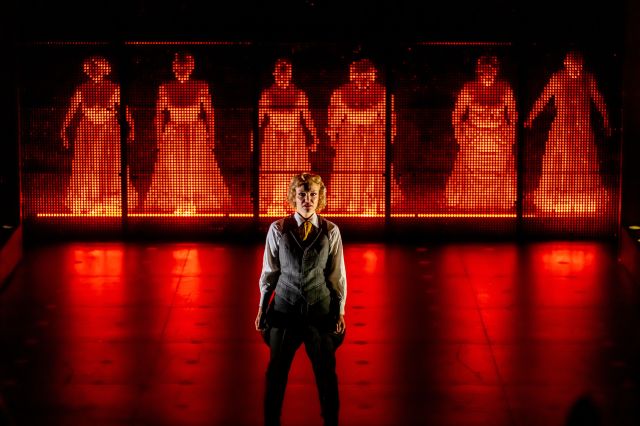
Survival through laughter, a true-life story: Basic Training at Edmonton Fringe Theatre

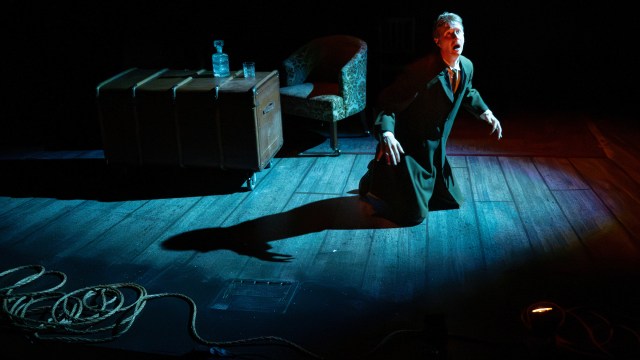
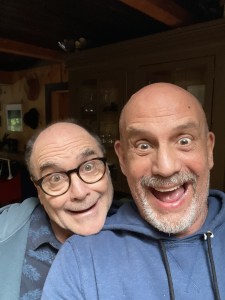
Kahlil Ashanti, creator and star of Basic Training. Photo supplied

By Liz Nicholls, 12thnight.ca

The 23 characters who we meet at the Fringe’s Backstage Theatre Friday in Basic Training — conjured by a particularly agile playwright/ performer/ comedian have taken an unusually circuitous route to get here.

They’ve crossed borders, continents, oceans. Like their engaging creator they know, in a vivid way, the value of laughter. The characters who populate Kahlil Ashanti’s hit solo show live in a real-life story, on a spectrum that includes hilarity and heartbreak, violent abuse and redeeming creativity.

To help support 12thnight.ca YEG theatre coverage, click here.

“Survival,” says Ashanti succinctly of his entry point into showbiz, which came via Tops in Blue, the elite U.S. Air Force entertainment troupe. On the phone from Vancouver, his home base, he explains that his was the peripatetic childhood of a kid in an American military family. Born in Germany, where he lived till age three, he was in Japan till he was 11 or 12, and after that, he grew up in Davenport, Iowa.

“For a lot of American kids who aren’t rich, college isn’t an option,” he says of his younger self. “In the U.S. a university education is at least 10 times what it is in Canada.” Besides, “the military was the family business,” and signing up “was a way to make my dad proud.”

The night before he left for basic training, Ashanti’s world fractured. t“I have my escape plan. It’s 1992. It’s Davenport, Iowa. And six days after high school graduation I’m finally leaving!” And that’s when it happens. “My mother sees fit to let me know, ‘by the way the guy who’s been beating the shit out of you for as long as you can remember isn’t your real dad. I told you before; you probably just forgot’…. And that’s the beginning of the show!”

Ashanti hadn’t been a ‘performing arts kid’, he says. “That stuff costs way too much…. I played football, I ran track, but I was never really great at sports. Which is decidedly inconvenient when you’re Black and in Davenport, Iowa.” So, to return to his origins as a performer, “survival!” was the operative concept.

He describes being made to stand at attention overnight with his little brother, a belt across their feet, as their step-dad slept on the couch. “Because we’d done something wrong.” Like “I’d forgotten to paint the bottom of the rocks green.” The stepdad as an army man “insisted that everything be uniform. So the rocks around the edge of the lawn had to match the colour of the grass. That was one of my jobs.”

“If we were to move, the belt buckle would make a noise and we’d get a beating…. Crying was the ultimate betrayal. So if my brother started crying, I’d do impressions of my step-dad. Quietly. To make him laugh. Quietly.”

Though he can’t have known it at the time, a career was getting planted in this thorny home soil. “Helping other people forget about their pain was the first time I remember having a feeling of self-worth,” Ashanti says. And that feeling was duplicated at school in the ‘80s. “People would be in pain and I’d do my Eddie Murphy impression…. And then I got invited to do a talent show at school.”

Kahlil Ashanti, creator and star of Basic Training. Photo supplied

There was no conventional theatre education about this, needless to say, Ashanti laughs. When the Funny Bone Comedy Club opened in Davenport, “I was able to take this weird talent I have (forward)…. I got the opportunity to open for people like Jamie Fox,” and other alumnae of the In Living Color sketch comedy show, he says. “That was my high school job, performing at the Funny Bone, and I was able to hone my craft in a real way that wasn’t a performing arts school…. My friends weren’t old enough to get in because they served alcohol.”

Another eye-opener was “growing up seeing Eddie Murphy…. What? Comedians can be actors?” A revelation, and it came “much to the chagrin of my mother,” who’d envisaged her kid, who had a knack for drawing, becoming an architect, with all the perqs. But “the performing bug had caught me.”

Kahlil Ashanti (right) and a Tops in Blue cohort “somewhere on tour.” Photo supplied.

When Ashanti got out of the military, he performed as a magician, in Japanese, at Caesar’s Palace in Las Vegas for three years. And then, “lo and behold,” he moved to L.A. And he did what showbiz hopefuls have always done, he took an acting class. What we’re going to see, in Basic Training, Ashanti says, is “the result of a storytelling exercise in Jeffrey Tambor’s acting class . where you’d have to come onstage and tell a story, the only stipulations being that the character leaves the story knowing something they didn’t know at the beginning.”

The early version of Basic Training “was just the funny parts; I didn’t have any of the abuse in there, the domestic violence,” Ashanti says. “Jeffrey pushed me to remind people, through my writing, the price I’d paid….”

“So I was living in L.A. And I couldn’t get hired to save my life,” he says. “I was going to have to figure it out on my own, and create my own opportunities. Of necessity.” And that’s where the Canadian Fringe circuit enters the Ashanti story, thanks to one of his classmates in Tambor’s acting course.

He took Basic Training, then called Father’s Day, to the Montreal Fringe in 2004, where it scooped up an impressive assortment of awards and ticket sales stats, and closed on … Father’s Day. And it played the Vancouver Fringe, too, an experience that comes with its own network of connections. Ashanti has remained a close friend of the Canadian Fringe stars master storyteller T.J. Dawe, and soloist Charlie Ross (of One-Man Star Wars Trilogy fame).

Ashanti has since taken Basic Training to the Off-Broadway Barrow Street Theater in NYC; he’s taken it to Australia; he’s taken it to the Edinburgh Fringe twice. And he’s signed a movie deal, too. Meanwhile he moved to Canada, to Vancouver. “It always seemed to come up in any of the lists of the five best places in the world to live” that he researched in the library. And, as he says, it was lot more accessible than Auckland or Bern.

The Fringe experience has inspired Ashanti in practical ways, too. He’d started Javascript coding in 1998 to support himself, and turned this expertise to creating “a digital pay-what-you-want solution for the arts” in 2018, an app he called We Show Up. “We’re growing up with a generation who have entertainment at their fingertips. And it’s never been harder to get your kids, or anyone under the age of 15, to care about theatre. Their spending habits reflect that…. And I don’t know if theatre can survive it.”

“This generation is used to controlling the narrative. They get to pick what series they’re going to binge today, as many episodes as they want for one price. And I decided to try that with theatre.” The idea of We Show Up (he shut it down when the pandemic descended) is that “you pay a couple of dollars up front, you come and see the show, and as you leave you get a text asking how much you thought the show was worth.” Fringe festivals, he says, “did not pick up on it.”

“I always stand at the exit after the show, and thank everyone who came to see it. And they tell me ‘I would have paid more for that!’.”

PREVIEW

Basic Training

Theatre: Edmonton Fringe Theatre

Created and performed by: Kahlil Ashanti

Where: Backstage Theatre, Fringe Arts Barns, 10330 84 Ave.

Running: through April 27

Tickets: fringetheatre.ca

Posted in Previews | Tagged , , , , | Comments Off on Survival through laughter, a true-life story: Basic Training at Edmonton Fringe Theatre

Back to our alma mater, for a class reunion at Rydell High. Grease at the Mayfield, a review

cast of Grease, Mayfield Dinner Theatre. Photo by Marc J. Chalifoux

By Liz Nicholls, 12thnight.ca

We all went to Rydell High. And none of us ever graduated.

To help support 12thnight.ca YEG theatre coverage, click here.

That’s the thing about Grease: every production of the 1972 musical by Jim Jacobs and Warren Casey is a class reunion, so to speak. Face it, You’re The One That I Want and Summer Nights have taken up permanent residency in your brain in a way that the periodic table, the subjunctive, or the plot of Beowulf never did.

“Grease is the time, is the place, is the motion,” as one of the opening numbers declares in the revival directed by Kate Ryan that’s currently running — and also leaping, bouncing, hand-jiving, twisting, doing back flips, all at a sensational rate — on the Mayfield stage. That, incidentally, is a location where it hasn’t been seen for the last 31 years. And Ryan’s cast of 18 is making up for lost time, in a go-for-the-gusto way.

Grease was always nostalgic, from its modest moment of origin (in a Chicago nightclub). And it’s a celebration and amiable spoof of the ‘50s that’s only gotten spoofier every decade since, especially after the John Travolta/ Olivia Newton movie of 1978. In the high-spirited Mayfield show, two competing planes of nostalgia intersect in the design by Lieke Den Bakker and Ivan Siemens, animated by Matt Schuurman’s cunning video design.

One is set in motion when the “kids” arrive — well, explode, dancing up a storm — into a brick inner-city courtyard, to announce that summer’s over and school’s back in. There’s urban grit in the look, but West Side Story this isn’t designed to be. The other is the fantasy that the famous soundtrack, with its heady nostalgic topnotes of young romance and angst (Raining on Prom Night), is coming at us direct from the giant car radio that dominates the stage. And it’s equipped with its own urbane conjuring genie, radio announcer Vince Fontaine (Vance Avery), with songs and worldly advice like “first day of school, play it cool.”

The costumes by Deanna Finnman are a riot of colour and crinolines, tight capris and pink satin bombers, black leather, pumps and saddle shoes. The spirit of showbiz, ‘50s nostalgia department, lives in these clothes; they’re always fun to look at. And when you see Ryan’s the cast dance and move in them, they really come into their own.

cast of Grease, Mayfield Dinner Theatre. Photo by Marc J Chalifoux

Julio Fuentes’ sexy, inventively athletic choreography — a departure from the long line of Grease productions which are considerably less demanding — captures the combination of brash exhibitionism and retreats that pretty much cuts to the chase in Grease. The plot, after all (to speak solemnly of something pretty blithe and airy), is based on the way its teen characters are torn between being their own individuals who “take no crap from nobody” (as Mark Sinongco’s Sonny LaTierri puts it) and the comfort of being part of a gang, like the T-Birds or the Pink Ladies. The choreography of peer group pressure, both the resisting of it and the succumbing to it, is the keynote of Ryan’s stagecraft too.

Take the principal love story, between hipster Danny Zuko (Kory Fulton) and the new girl in school, wholesome Sandy Dumbrowski (Kate Blackburn). Fulton’s performance is full of swagger, and uncertainty, confidence and ruefulness. His ventures into romance are always one step forward two back, with quick looks over his shoulder to make sure no one is looking.

Louise Duff (centre) and the cast of Grease, Mayfield Theatre. Photo by Marc J Chalifoux.

Uncertainty only comes later for the sardonic, apparently invincible tough cookie Rizzo, who makes even her Pink Ladies cohorts a bit nervous. She’s played with a range of mocking grins by Autumn-Joy Dames. And Trevor Coll is very funny as tough guy Kenickie, proud possessor of the broken down beater he’s christened Greased Lightning. He poses only at sharp diagonal angles and chews off every consonant like he was spitting tobacco.   

In a cast of strong singers and indefatigable dancers (Rydell is a high school of the performing arts?), the performances are fashioned in a comical mix of the cool and the sweetly earnest. May I single out Ryan Maschke as the moonstruck Roger and Jill Agopsowicz as the appealingly wide-eyed Jan, who serves Twinkies with Swiss Colony plonk because it’s “a dessert wine”? Chariz Faulmino as Frenchie, the dimbulb chronic drop-out, who got her name when she perfected “French inhaling,” is a hoot. Melissa MacPherson doubles as the cartoon purse-lipped teacher Miss Lynch, and a sultry Teen Angel who descends from the car radio to deliver her career counsel in Beauty School Dropout, surrounded by a chorus of angel cohorts in diner waitress (hey, it’s the ‘50s) uniforms.

The music values are, as always, high at the Mayfield, as led by musical director Jennifer McMillan and a band of five.

Consider if you will the hilarious manifesto of Grease authenticity: “we start believing now that we can be what we are.” Hmm. Think about that for a second or two, but not too hard. Do not ask why-y-y-y-y. It’s playful, yes, and nostalgic … about nostalgia. It good-naturedly spoofs its own kind of coming-of-age musical theatre, in an evening of high-spirited entertainment, expertly presented by a first-rate cast.

REVIEW

Grease

Theatre: Mayfield Dinner Theatre

Written by: Jim Jacobs and Warren Casey

Directed by: Kate Ryan

Starring: Kory Fulton, Kate Blackburn, Autumn-Joy Dames, Louise Duff, Vance Avery, Melissa MacPherson, Trevor Coll, Jill Agopsowicz, Ryan Maschke, Louise Duff, Ashley St. John, Mark Sinongco, Chariz Faulmino, Christine Desjardins, Cameron Chapman, Devin Alexander, Evan Taylor Benyacar, Sarah Dowling

Running: through June 16

Tickets: mayfieldtheatre.ca, 1-888-783-5076

Posted in Reviews | Tagged , , , | Comments Off on Back to our alma mater, for a class reunion at Rydell High. Grease at the Mayfield, a review

On the dark side of the fine art of storytelling: The Pillowman at Theatre Yes, a review

Brandon McPherson, Dayna Lea Hoffmann, Ruth Alexander in The Pillowman, Theatre Yes. Photo by Mat Simpson

By Liz Nicholls, 12thnight.ca

There’s a hooded figure, head bowed, waiting for us in a grim basement downtown. It’s a mysterious place we’ve never been before, and, ominously, it’s lined with plastic. Uh-oh.

With Martin McDonagh’s 2003 The Pillowman, Theatre Yes and director Max Rubin step up to a dark comedy with its own queasy brilliance. It’s a cunning set of interlocking stories — a veritable extravaganza of storytelling — each of them spring-loaded with horror, and with questions that seem to have answers. And then don’t.

To help support 12thnight.ca YEG theatre coverage, click here.

We are in an interrogation chamber in a totalitarian state (a completely convincing design by Heather Cornick). The prisoner, a writer (Dayna Lea Hoffmann), and her brain-damaged brother Michal (Kaden Forsberg) have been thrown in prison for reasons that elude her. True, you don’t really need a reason to get arrested in a police state; just ask Kafka. But there’s this: In the town, the horrifying child murders in Katurian’s (mostly unpublished) fables have been duplicated in real life. And a pair of menacing, and very funny, cops — the ‘good cop-bad cop’ team of Tupolski (Ruth Alexander) and Ariel (Brandon Mcpherson) — are toying with her before the inevitable execution. She can hear the sounds of her bro being tortured in the next room (hair-raising sound effects by Erik Richards).

Brandon Mcpherson, Dayna Lea Hoffmann, Ruth Alexander in The Pillowman, Theatre Yes. Photo by Mat Simpson

“I’m not trying to say anything!” Katurian argues on behalf of her gruesome stories, with their complement of severed toes, swallowed razor blades, premature burial. They’re not some how-to guide to murder. “Are you saying I shouldn’t write stories with child killings because in the real world there are child killings?”

“I don’t have themes,” Katurian adds. “Some poor little kid gets fucked up…. That’s your theme,” declares the jovial Tupolski, played with a hilarious and unsettling combination of good humour and hidden razor blades (so to speak) of exasperation by Alexander. Tupolski is constantly tussling with the more ferocious, cold-eyed Ariel, who’s itching to dispense with the prelims, and get to the torture. He’s played to a fine point of tension and danger by McPherson. Think of them as a vaudevillian pair, if you’re tuned to the key of dark.

And in the storytelling puzzle that is The Pillowman it turns out that the back stories of the two cops are germane, too. The literary ambitions of Tupolski are of maximum hilarity, masterfully delivered by Alexander.

Hoffmann, one of our most watchable young actors, is terrifically unsettling as Katurian. She argues, with some heat, for the vital importance of the imagination and storytelling, in life and in art. She’s willing to make any sort of deal, when the ultimate fate of her oeuvre comes up, a certain kind of literary fanaticism. The priority she places on her literary legacy, over everything including life, goes beyond mere dedication to craft, although the interrogation does make time for some judicious literary assessment. In this layered performance Hoffmann’s reassuring tone as a storyteller is both comical and sort of appalling. And as the child-like brother whose attention is constantly diverted, and whose great fear is boredom, Forsberg is touchingly wide-eyed and frightening in equal measure.  

Dayna Lea Hoffmann in The Pillowman, Theatre Yes. Photo by Mat Simpson

The plethora of grisly stories within the story, which get told, or re-told with crucial amendments, in some cases acted out in puppetry form, resist moralizing, to say the least. The title fable, which involves a soft, caring, and comforting childhood companion who counsels children towards suicide, so they can avoid the pain and suffering of the real world, is a leading example. There’s even a Shakespeare story that will make you laugh (OK, smile). The endings of these bedtime stories for insomniacs always have a malign screwball logic of their own, as you might expect if you’ve seen other McDonaghs (think of the fingers in The Banishees of Inisherin; no, try not to). Connoisseurs of being offended in the theatre will find a lot to work with here.

Have the last couple of decades diminished the shock value of McDonagh’s dark and disturbingly playful comedy? There’s a question to consider. And I’d have to say, as an audience member, it’s still a provocation in our moment, especially in the drift toward cultural fascism. The questions that get gleefully tossed up by The Pillowman continue to land just out of reach; it seems deliberately calculated to be a test case for all of them. Are artists responsible for the effect their work might possibly have on every possible audience? Are audiences not to be trusted to think what they think? Is prescriptive art a cop-out, or a bore, or an intrusion? Are true artists created by their own suffering?

You think you know what you know, especially about happy endings. And then you leave wondering.

REVIEW

The Pillowman

Theatre: Theatre Yes

Written by: Martin McDonagh

Directed by: Max Rubin

Starring: Dayna Lea Hoffmann, Ruth Alexander, Brandon Mcpherson, Kaden Forsberg

Where: Pendennis Building, 9660 Jasper Ave.

Running: April 11 to 21

Tickets: theatreyes.com


Posted in Reviews | Tagged , , , , | Comments Off on On the dark side of the fine art of storytelling: The Pillowman at Theatre Yes, a review

On the frontier between hilarity and horror: Martin McDonagh’s The Pillowman at Theatre Yes, a preview

The Pillowman, Theatre Yes. Photo supplied.

By Liz Nicholls, 12thnight.ca

Get your shudder muscles ready, Edmonton, for the (very) black and disturbing comedy that opens Thursday in a production from Theatre Yes. As in Yes, The Pillowman is coming for you.

To help support 12thnight.ca YEG theatre coverage, click here.

The 2003 play by the Brit playwright/screenwriter Martin McDonagh — the name is your tip-off that hilarity will come with a major flinch factor — begins in an interrogation. In an unnamed totalitarian state, a writer and her mentally challenged brother have been arrested and thrown in prison for questioning. In the town there’s been a rash of murders that bear an uncanny resemblance to those laid out in her memorably gruesome fables which lean into crimes involving children. Bedtime stories they’re not.

Max Rubin, the new co-artistic director of Theatre Yes (with his wife Ruth Alexander), has wanted to do The Pillowman for 15 years, long before the family relocated to Edmonton from the U.K. in 2017, with their theatre company Lodestar in tow. “It’s one of my favourite plays of all time,” he declares. “And it’s an incredibly uncomfortable play to watch in many ways.”

director Max Rubin. Photo supplied

“What I see in the play, at the centre, is that though all the characters do and say awful things at different times, they are all victims, or products, of their awful totalitarian environment.” Which puts us, the audience, in a bind when it comes to indulging our natural tendency to pick a side.

“I don’t really think the play is a political warning against extremism, although the results of that are evident on the stage. It has less to do with ‘content’ than what it confronts the audience with: all the characters are so deeply relatable,” says Rubin. “ It’s so skilfully written it’s almost impossible not to empathize with each of them.” And in a play that alights on

“At one moment you’re laughing, at something very human, the next… abhorrent cruelty.” Rubin says. “I think (McDonagh) never lets you settle on a point of view in the play. And I don’t think there are enough plays like this that genuinely challenge the audience to examine themselves in quite as direct a way. It’s that that excites me most about this play!”

Though issues around freedom of expression and censorship linger in The Pillowman, and in an age where authorities have returned to book-burning, how can they not? But Rubin argues that “it’s not in direct response to something that’s happened, it’s more universal than that.”

Our natural tendency, as Rubin puts it, “is to side with the good-ies. But we don’t have that privilege here… Our expectations are confounded constantly.” This is a play that makes you ask hard questions about what is wrong and what is right — in the play world, and our world too.”

“And at the same time it’s hilarious! Deeply funny and warm and tender. I’m just in awe of it as a piece of theatre writing,” says Rubin. The McDonagh signature — witness a canon of theatre and film that includes The Beauty Queen of Leenane, The Lieutenant of Inishmore, A Skull in Connemara, The Hangman, The Banshee of Inisherin — is to play along the treacherous, unstable frontier between the hilarious and the horrifying.

“He mixes comedy with unsettling content so skilfully. And nowhere in his work is it more on show than in this play,” says Rubin, “a cross between an early Pinter comedy of menace and a Quentin Tarantino or Guy Ritchie movie.”

Ruth Alexander in Dead in the Water, Lodestar Theatre and Theatre Yes. Photo supplied

When Rubin and Alexander jointly took on the artistic directorship of Theatre Yes in 2023, they started with Alexander’s original solo cabaret Dead in the Water. And last fall, for The Play’s The Thing, they invited 20 Edmonton stage companies, of every size and aesthetic, to perform one scene each from Hamlet, in their own signature house style. The result was a de-constructed re-constructed two-night production of Shakespeare’s most illustrious heavy-hitter.

The Play’s The Thing, Theatre Yes. Photo supplied.

So, as Rubin points out, The Pillowman is their first bona fide Theatre Yes production, “the first time we’re able to say Edmonton ‘this is our style. This is the kind of work we intend to make’.. And it’s a great vehicle for us because it allows us to be really inventive.”

The show “continues the Theatre Yes tradition of using non-theatre spaces,” says Rubin, who was delighted to discover the Pendennis Building, a renovated early 20th century hotel downtown which will eventually contain multiple venues, of many sizes and shapes. Theatre Yes, whose history includes producing plays in elevators, warehouses, a parkade,  opted for the basement (with seating for 50 max). “Vast, concrete feature-less … a perfect interrogation chamber,” Rubin says. “Creepy! So cool! It feels dank, oppressive, and claustrophobic!”

The Pillowman unfolds in a swirl of naturalistic scenes and scenes that replay, or at least conjure, Katurian’s horrifying fables, “that feel almost as if they’re dreams, or nightmares, or parts of he subconscious…. It’s been a thrilling challenge for us , how to tell these stories in a truly frightening and spectacular way with our tiny budget.”

“We’re really excited about the solutions we’ve found…. It’s all about economy and simplicity, about doing as much as we possibly can with as little as we possibly can.”

“We’re looking forward to sharing that with Edmonton,” the home, after all, of the mighty Fringe, where theatre gets made on a shoestring. “You don’t have to have a big budget, or any budget at all, to make something that’s truly compelling!”

Next up for Theatre Yes (either in November or next February, depending on venue availability), and in high contrast to The Pillowman, is An Oak Tree by the Brit playwright Tim Crouch. At each performance, an actor, who plays a hypnotist, is joined onstage by a second actor who has never seen the script and who doesn’t know the back story. “Ten performances, 10 actors of different genders, ages, ethnicities…. It will be fascinating to see how the performances are different and how they are the same,” says Rubin.

“We want to apply our style to a vast range of work, and keep our audience guessing!”

PREVIEW

The Pillowman

Theatre: Theatre Yes

Written by: Martin McDonagh

Directed by: Max Rubin

Starring: Dayna Lea Hoffman, Ruth Alexander, Brandon Mcpherson, Kaden Forsberg

Where: Pendennis Building, 9660 Jasper Ave.

Running: April 11 to 21

Tickets: theatreyes.com


Posted in Previews | Tagged , , , | Comments Off on On the frontier between hilarity and horror: Martin McDonagh’s The Pillowman at Theatre Yes, a preview

On the outside looking in: Candy & The Beast, a new Trevor Schmidt thriller at Northern Light Theatre, a review

Jayce McKenzie and Jake Tkaczyk in Candy & The Beast, Northern Light Theatre. Photo by Brianne Jang, BB Collective Photography

By Liz Nicholls, 12thnight.ca

It’s a dark and threatening world, a miasma of secret dangers and fear, in which we find ourselves in Candy & The Beast, a new and multi-faceted mystery thriller by (and directed by) Trevor Schmidt premiering at Northern Light Theatre.

To help support 12thnight.ca YEG theatre coverage, click here.

In the murk, a couple of dozen grotesque heads on long spikes leer down on us (a world designed by Schmidt and lighted eerily by Alison Yanota). This is the season’s only two-actor many-head thriller. And the Studio Theatre in the Fringe Arts Barns has never been foggier.

Welcome to the small prairie town of Black Falls, which is about as far from Grover’s Corners as you can get. A serial killer, species unknown, has been on the loose, picking off townspeople of a particular type — young, female, blonde, lower class.

“Some people are worth more,” concludes Candy Reese (Jayce McKenzie), a smart and snarly Goth kid from the poor side of town. Her eyes are open to both the selective habits of the mysterious (“his her their its”) monster)and the selective lameness of the official investigation. She and her little brother Kenny (Jake Tkaczyk), who’s been smeared with the nickname The Beast by the town bullies for his ungainly size (early onset puberty), live on the margins, where people mysteriously vanish, or get disappeared.

Wolves run in a pack (a chorus of howling that’s part of Dave Clarke’s eerie soundscore), and either kill dogs (do they do people?) or, in the case of upper-class canines like Reggie the poodle, recruit them.   

Candy & The Beast, starring Jayce McKenzie and Jake Tkaczyk Northern Light Theatre. Photo by Brianne Jang, BB Collective Photography

Played by the petite firecracker McKenzie, who gives off sparks, Candy is the fierce if reluctant guardian of her gentle giant bro. He’s played with a combination of tentative and slightly dazed by the statuesque Tkaczyk, as a little boy in a man’s body. And McKenzie’s performance is a smart capture of teenage alienation.  What are you going as on Halloween?” asks the guileless Kenny. “Same thing I am every day,” snarls Candy, “nothing.”

Candy & The Beast, starring Jayce McKenzie and Jake Tkaczyk, Northern Light Theatre. Photo by Brianne Jang, BB Collective.

Candy is determined that they be “seen” in a world that seems to prefer them invisible. Their clothes are costumes (by Schmidt); they appear in scary masks from time to time. Their parents, and authorities like the dismissive Sheriff Lau (“fingers, eyeball, or what-nots…”), are present onstage only as voices on a ghetto blaster.  If Candy and Kenny can catch the killer, thinks the former, their outcast status will change.

The scenes happen in a volley of oblique shafts, with sudden scary head-ons, in Schmidt’s strange, resonant, small-scale thriller. We get glimpses of life lived from the outside looking in. At Candy’s part-time job, at the Pine Cones ice cream shop, for example, she doesn’t get her own company polo-shirt. Hers has the name tag of the killer’s last victim, who did one shift there before she disappeared. Real estate agent matrons, on the other hand, can get blonde highlights with impunity.

Jake Tkaczyk and Jayce McKenzie in Candy & the Beast, Northern Light Theatre. Photo by Brianne Jang, BB Collective Photography.

In this exclusionary world, coming-of age and the disconcerting transformations thereof are a web of doubts for the characters. Candy, perpetually angry, battles increasing uncertainty; she thinks “maybe I’m the real monster.” Kenny has terrible dreams, and wonders if he’s actually a beast: is he turning into a werewolf (all that new hair)?

Suddenly he finds himself at a microphone singing about “a dreadful change … a turning of the page” to a rock beat that appears out of thin air. Later he’ll sing a song, to the same beat, about pain that “pushes your teeth into fangs” and “sharpens your nails into knives.” You could call Candy & The Beast a musical, maybe, but it’s an unconventional, impulsive one. The only character who sings does that suddenly, without warning, and exclusively at nightmare moments.

Jake Tkaczyk and Jayce McKenzie in Candy & The Beast, Northern Light Theatre. Photo by Brianne Jang, BB Collective.

The stylized staging by director Schmidt has the siblings at opposite ends of the stage for much of the time. They’re  together rarely, only when there are psychological interventions and they play each other’s nightmares or unspool each other’s fears.

It’s theatrical and meaningful in conjuring the fracture lines in a splintered life. If you’re looking for an escape from the stresses of the urban, it’s possible small-town life, prairie-style, is not the way to go.

Candy & The Beast is a mysterious, weird, and shivery little two-hand thriller, and you’ll find yourself oddly moved.

PREVIEW

Candy & The Beast

Theatre: Northern Light Theatre

Written and directed by: Trevor Schmidt

Starring: Jayce McKenzie and Jake Tkaczyk

Where: Studio Theatre, Fringe Arts Barns, 10330 84 Ave.

Running: through April 20

Tickets: northernlighttheatre.com


Posted in Reviews | Tagged , , , | Comments Off on On the outside looking in: Candy & The Beast, a new Trevor Schmidt thriller at Northern Light Theatre, a review

The gift of belief: unmissable Wonderful Joe, The Ronnie Burkett Theatre of Marionettes at Theatre Network

Joe and Mister in Wonderful Joe, Ronnie Burkett Theatre of Marionette. Photo by Ian Jackson, Epic Photography

By Liz Nicholls, 12thnight.ca

Something wonderful, and wonder-filled, happened last night at Theatre Network.

We found ourselves on Eileen Street, in a miniature urban neighbourhood on the wrong side of the tracks. Where the homeless are home, and the misfits and the oddballs of every age, colour, ethnicity, gender, point of origin, struggle to survive and dream on the margins, and quite literally hang out. And we were on “a grand adventure” there in the company of an old man and his old dog, who’d just been evicted that very morning from their apartment.

To help support 12thnight.ca YEG theatre coverage, click here.

The characters come to life first as hand puppets atop a theatre of magical transformations, where Sonny, the friendly South Asian building manager (in a tiny perfect puffer vest and ball cap), imparts the bad news about the tear-down of the building. And then they take over the stage below as marionettes, which is to say people, in a ‘hood teeming with raucous life.

With Wonderful Joe, the latest from the Ronnie Burkett Theatre of Marionettes, the master puppeteer/ playwright/ designer/ actor returns to Edmonton — and to Network, where we’ve seen seven of Burkett’s productions since 1990. And after nearly a decade in which he’s created wildly entertaining hit cabarets, Burkett and a cast of diminutive cohorts come this time with a real play, a funny, thoughtful, and deeply poignant one, that cuts to the heart of a multicultural city like the one we live in.

It’s a beauty of a piece, in its generosity of spirit and affection for the urban demimonde, imaginative in conception and creation, and impeccable in design and craftsmanship. Burkett’s formidable marionette technique is always, and precisely, in the service of the characters.

Young Joe in Wonderful Joe, Ronnie Burkett Theatre of Marionettes. Photo by Ian Jackson, Epic Photography.

The movement of the puppets onstage is uncannily expressive. Wait till you see old Joe’s stooped shuffle, his bent knees, his quizzical inclines of head, the way he leans into conversations when he’s curious. In an oeuvre that includes Happy with its pensioner hero, and the blind title character of Penny Plain in a boarding house at the end of the world, Burkett has always had a particular affection (and an unsparing eye) for the way old age hangs on the human frame, bending it, pulling flesh down. The tentative arthritic walk of the ancient canine Mister is a little choreographic symphony in itself, not to mention the way he shakes out his tangled fur.

This magic is materially assisted by costumes created by Kim Crossley, who evidently thinks nothing of making to-scale roll-up jeans, or an age-worn tweed sports jacket for Joe,  or a “white girl” plastic prom dress custom-made by an Indigenous dominatrix for herself. And then there are Camellia Coo’s heartbreaking miniature Crocs and Blundstones, or the little Fluevog-style pumps on a gender-fluid trans performer.

The eyes through which we experience the denizens of Eileen Street in Wonderful Joe belong to the old fellow of the title, with his special ability to see the human gold in a harsh and tarnished world. It’s not as if Joe asks for much for himself. He doesn’t mind sleeping on the floor with Mister, who’s too creaky to get up on the bed. “We take turns being the pillow.” Are you OK? Joe’s friends ask him. “No, I’m wonderful,” he invariably says.

This goes well beyond the pathos of “making the best of things,” as more banal advice would have it. Joe’s is an active capacity for wonder, a personal optic that transforms belief into reality and gives dimensions to the fantastical. That this transformation also speaks to the magical art of breathing life into exquisitely detailed, fully committed actors on strings pulled from above, gives the whole experience of Wonderful Joe an extra frisson of delight. Kudos to John Alcorn’s captivating and lyrical score, worldly but transporting, infiltrated by veins of humour.

In shadow at the top of theatre is the virtuoso string puller, God so to speak, who’s human-sized, flat-out busy (there are 17 marionettes and six hand puppets in the show), and amazingly easy to forget all about after a minute or two. If Burkett puts down the strings, the characters have time to do nothing, to be still and daydream, as Joe says of himself. Not running, or meditating, or plotting, “just thinking of things.”

And when the characters are just hanging out offstage (literally, from hooks in the theatre framework fashioned by Burkett), they’re lighted, by designer Kevin Humphrey, with an atmospheric kind of urban shadow and glow that feels like a city, with a populated vibe.    

Joe’s fellow evict-ees, of every age and station on the spectrum of eccentricity, are all grappling with residual post-pandemic loneliness. We meet a breezy chatterbox teenager with a Fraggle Rock obsession. And you’ll love Margaret, elderly and dotty, who’s spent the pandemic cultivating sourdough starter.

Joe and Mister are out in a ‘hood with downmarket entertainment options. They run into Santa, the Tooth Fairy, and Jesus, all of them very funny, in a gay bar, in their respective off-seasons. Burkett’s theatre is always audacious in its juxtaposition of puckish or riotous comedy and darker more tragic tones (sometimes within the same throw-away line). The Tooth Fairy, for example, a hilariously mouthy muscle-bound tough in a tutu, with a disdain for entitled bourgeois kids who leave a note with bank e-transfer info, is the purveyor of anonymous kindnesses too.

Minnie Shingles, the truculent “directrice” of a troupe of homeless actors, is an inspired creation. The through-line for the latest from The Trash Alley Players, a collective, is the apocalypse (“And then the meteor hit….”). Devoted to the Canadian theatre as she is, Minnie don’t take no shit from divas. “You’re an actor; you sleep with what you’re given,” she says sternly to a member of the company.

Mother Nature in Wonderful Joe, Ronnie Burkett Theatre of Marionettes. Photo by Ian Jackson, Epic Photography.

The most startling performance, a headline act at the Boulevard of Broken Queens Show Bar, is Mother Nature, old, bald, skinny, nakedly vulnerable. Her song Look At Me Now, a Weill-esque Alcorn number, is a bristling confrontation with despair. “The air gets thicker, and here’s the kicker….”

Perhaps the most memorable scene, equally comic and heartwarming, happens late in the play, with Joe and a sulky, skeptical teenage girl, Getty (Serengeti Levin-Woo), together on a park bench. Can the magical gift of transcendent belief be given to others? Joe has a go at it. And it’s a question for all of us who live together in the world.

What a thrill it is to see a Burkett play — and see that world, in all its beauty and heartbreak, its cruelty and its absurdity, imagined up close and created in miniature, with real dramatic force, by one of the country’s great originals. Don’t miss your chance.

REVIEW

Wonderful Joe

Ronnie Burkett Theatre of Marionettes at Theatre Network

Created and performed by: Ronnie Burkett

Music composition and lyrics: John Alcorn

Where: Roxy Theatre, 10708 124 St.

Running: through April 21

Tickets: theatrenetwork.com

Warning: children under the age of 16 will not be admitted.   

Posted in Reviews | Tagged , , , , | Comments Off on The gift of belief: unmissable Wonderful Joe, The Ronnie Burkett Theatre of Marionettes at Theatre Network

Humanizing a hero in a mysterious encounter: The Mountaintop at the Citadel, a review

Patricia Cerra and Ray Strachan in The Mountaintop, Citadel Theatre. Photo by Nanc Price

By Liz Nicholls, 12thnight.ca

A road-weary man with a cough and holes in his socks arrives back in an undistinguished Memphis motel on a stormy night in April 1968, dying for a cigarette and checking for hidden microphones before he phones his wife. His sonorous voice shows signs of wear-and-tear.

To help support 12thnight.ca YEG theatre coverage, click here.

“America, you are too arrogant…”

In The Mountaintop by the American playwright Katori Hall, Dr. Martin Luther King (Ray Strachan) is just back from delivering his “I have been to the mountaintop” speech, one of the 20th century’s most illustrious, at the Mason Temple in support of striking sanitation workers. And, all alone, he’s rehearsing some possible openers for speeches yet to come.

The play imagines the last night in the life of a hero, larger than life,, and tries to find his human size — with the vanity, exasperation, doubt, discouragement, and fear that implies. He jumps at every crack of thunder. The next day, April 4, will be a defining moment in the violent history of a nation and of the civil rights movement: King will be assassinated on the balcony of the Lorraine Motel.

And as he waits for his friend and roommate Ralph Abernathy to return with cigarettes, a motel housekeeper, Camae (Patricia Cerra), arrives at the door of room 306, with coffee, an early edition of tomorrow’s paper, and a mysterious supply of confidence, sass and skepticism.

Cerra’s performance charts a certain surprising — to us and to King — combination of the flirtatious and the fierce. The tired hero with the wandering eye and the smelly feet is intrigued enough to engage with Camae on a variety of subjects including race relations, violence, his own profile, gender inequality, leadership, martyrdom, even theology. Dr. King heaps his coffee with sugar. Camae likes hers “black and bitter.”

Who is she anyhow? The question that starts in playful teasing badinage that goes on way too long in The Mountaintop, takes a magical realism turn-around en route to the top of the mountain. And it’s major theatrical cardio. I can’t really say more except that I have my doubts about it. And I can tell you it relies on the powers of persuasion built into Cerra’s performance.

Patricia Cerra and Ray Strachan in The Mountaintop, Citadel Theatre. Photo by Nanc Price

Under Darbasie’s direction, the characters have their own contrasting rhetorical styles; both, in their own way, incantatory. King’s is, of course, a matter of historical record. And it’s captured expertly by Strachan who has a long history with the role in many productions. He slides into a kind of oratorical from-the-pulpit grandiloquence with its own built-in pauses.  Camae’s style, in Cerra’s performance, has a slightly mocking, worldly, amused tone, a kind of faux languor designed to stir it up, and get a reaction.

The Citadel production that opened Thursday  (on the 56th anniversary of the fateful day at the Lorraine Motel) is a curious choice at Edmonton’s largest playhouse. The two-hander has the same director (Patricia Darbasie) and cast as Shadow Theatre’s 2022 production.

Which is not to say, of course, that the exhortations of Dr. King about racial inequality an violence have miraculously lost their relevance in the intervening two years (or the half-century-plus since the terrible history-defining events of 1968 in Memphis). Au contraire. Or that the performances from Strachan and Cerra (who were also in a 2019 Rosebud Theatre production) are anything less than polished, vivid, and committed.

But this is the question: is bigger better. For me, on this second viewing (I was kindly allowed to attend the final preview performance), the play itself — which premiered across the Atlantic in 2009 in a small London theatre, oddly enough, before it ever got to Broadway with a starry cast, Samuel L. Jackson and Angela Bassett — seems thinner and more theatrically gimmicky this time. Delayed surprise, which holds The Mountaintop together, can overstay its welcome, I guess, even in a “bigger” production.

I ended up wondering, too, whether this more fulsome staging, with a design by John C. Dinning and lighting by Jeff Osterlin, ends up inflating a little play with a cool idea beyond its natural capacity.

Ray Strachan and Patricia Darbasie in The Mountaintop, Citadel Theatre. Photo by Nanc Price

Anyhow, Room 306 doesn’t really fall into the depressing motel category the script conjures. It’s a large, clean, well-lighted place that’s more like basic, mid-range Holiday Inn. The stormy sky and the strikingly abstract archway in which pages of speeches, and newspapers, and fliers seem to float down from above, lighted like lanterns. It’s a beautiful theatrical image.  And a prosaic place where heroes on the road stay seems suspended in space, in a star-filled galaxy.

The Promised Land, the future that Dr. King envisaged, not only hasn’t been reached but might actually be getting blurrier, receding into the distance as the news attests — white supremacist take-overs, George Floyd, Republic efforts to disenfranchise Black voters … the list is long. The final vision of the play, and the exhortation to “pass the baton” (accompanied by Amelia Scott’s assorted projections) has been updated for our moment in time. But the sense that the world is stalled doesn’t detract from the power of King’s great and visionary speech, resonating with hope and laced with intimations of mortality, that anchors this odd play. It intensifies our sense of tragedy.

REVIEW

The Mountaintop

Theatre: Citadel

Written by: Katori Hall

Directed by: Patricia Darbasie

Starring: Patricia Cerra, Ray Strachan

Running: through April 21

Tickets: 780-425-1820, citadeltheatre.com

Posted in Reviews | Tagged , , , , | Comments Off on Humanizing a hero in a mysterious encounter: The Mountaintop at the Citadel, a review

Playing in the unfiltered world of kids: meet Jayce McKenzie, star of Robot Girls and Candy & The Beast

Candy & The Beast, starring Jayce McKenzie and Jake Tzaczyk, Northern Light Theatre. Photo by Brianne Jang, BB Collective Photography

By Liz Nicholls, 12thnight.ca

Double vision. By day Jayce McKenzie has been rehearsing a new Trevor Schmidt play that premieres Friday in a Northern Light Theatre production. By night she has been regaling and touching audiences in  … a new Trevor Schmidt play that premiered in a Shadow Theatre production, and just closed last weekend.

To help support 12thnight.ca YEG theatre coverage, click here.

And to that theatrical rarity, two overlapping premieres in two theatres by the same playwright, we can add another. In both Robot Girls and Candy & The Beast — the one a funny and insightful comedy about the complicated lives of junior high girls, and the other a “mystery thriller” set in small prairie town with a dark underbelly and gothic overtones —  McKenzie plays kids. This past month she’s been Vanessa, age 12, an innocent in the world of teenagers, who joins a science club that’s building a robot for an international competition. This month she’s Candy, age 15, who sets forth with her little brother from the trailer court where they live to track down a serial killer. It might well cross your mind that Jayce McKenzie, who’s actually 35, has the secret of eternal youth all wrapped up.

“I think I’m just child-ish, you know,” McKenzie laughs. “It helps I look a little younger, maybe. But I do love to play in that world, like we’re kids again, removing all those filters we’ve added as adults. I mean, we all have that in us, right?, buried under all the rubble.…” The fun of Vanessa, the “robot girl” she played in Schmidt’s warm-hearted and very funny comedy, is that she’s pretty much filter-free. Without adult caution or calculation she just reacts impulsively, and blurts out thoughts and emotions that stop everyone in their tracks.

Larissah Lashley, Abigail McDougall, Jayce McKenzie, Hayley Moorhouse in Robot Girls, Shadow Theatre. Photo by Marc J Chalifoux.

“I was like that as a kid, too,” says McKenzie cheerfully of the bond she felt with the character. “Neurodivergent, with all the problems … never seen as something was a gift, or even just a kid with a different sort of brain.”It’s only been in the last couple of years that the diagnosis of ADHD has clarified matters for her, she explains. Not least because the research into symptoms has been very boy-centric.

Like Candy, half the sibling pair in Schmidt’s production of his new thriller, McKenzie was a small-town kid. She’s from the hard-to-get-at little B.C. town of Kaslo in the Kootenays, where her folks ran the Rosewood Cafe. She was “both a theatre kid and a basketball and soccer kid … until I got kicked off the soccer team for having a bad attitude. I just didn’t click with the coach. It sucked; I really liked soccer.”

McKenzie describes reaction of her kid self as a common neurodivergent response: “It feels like a personal attack, and you don’t handle attacks well!” Since her diagnosis she’s “just started to unravel things … all the things that weren’t my fault, if I got frustrated really quickly, or got mad, or if I felt sensitive or rejected. The diagnosis has helped me be less hard on myself …. ” She laughs. “I just feel everything!”

“And that (directness), I think, is what makes me a good actor…. It’s a double-edged sword.” For all the problems, the ability to remove filters, and cut to the chase of a character’s feelings, a particular kind of direct quick-draw empathy, is at the heart of acting, McKenzie muses. Arguably, it makes that mysterious art more available, more accessible.

The acuteness of feeling has also tapped into the other facet of her career. A Grant MacEwan musical theatre grad of more than a decade ago — “I like musicals but I didn’t necessarily want to be in them!”—  MacKenzie has a company, Alpha Awakening, devoted both online and in person, to wellbeing and healing through meditation, coaching, exploring the therapeutic dimensions of hypnotic states. And since training as a hypnotist in Las Vegas, she’s begun to explore the links between performance and hypnosis. “And I had an inkling,” as a theatre artist, “that there’s more that could be done with it.”

Hypnosis, McKenzie admits, “scared me for a while,” mainly because of its “pass-or-fail expectations…. If you’re onstage, as yourself (not a character), and have people up there and tell them and you’re going to hypnotize them and you don’t, well…. It was harder than I expected, and it really messed with my head.”

But in August of 2019 at the Fringe, just before COVID, onstage at 60-seat Grindstone Theatre, MacKenzie tried hypnosis as performance in an original show she called Alpha Hypnosis. And this summer, at the Fringe, she’ll do “an inner child show,” she says. “The goal is to be able to heal people on the spot, in a way that’s fun and feels safe to them. … with a storyline, with a characters, with a script and parts that are improvised.”

The inspiration, McKenzie says, is Blind Date, the hit improv show in which, as a Gallic clown with a red nose, Rebecca Northan asks an audience member to be her date onstage, and, in real time, they get to know each other.

McKenzie is full of admiration. “I want to do what she did with Blind Date, which was uplift people, make them looks lovely. And it resonated with me. She picked out everything that was great about them, and fed it back to them…. She did the thing that people need to hear. We don’t tell people enough that ‘appreciate that you’re like this’.” Her  improv consultant is Northan’s brother Jamie Northan.

“To me, hypnosis and meditation are pretty much the same,” McKenzie explains, the latter a sort of self-hypnosis where you are in control…. It’s putting yourself in a relaxed state.”

“It’s all come together in this bizarre way,” she says happily of a unique creative journey that started in the energy and empathy of ADHD and moved to theatre, and is finding a way to marry improv and hypnosis in performance.

Candy & The Beast, starring Jayce McKenzie and Jake Tkaczyk, Northern Light Theatre. Photo by Brianne Jang, BB Collective.

Candy, she says of the title character of Candy & The Beast, is a kid who’s “confused and scared.” The question is, “what do people do with fear?” Some, like Candy, who sets forth to catch a killer, face it; others face the other way. McKenzie laughs. “I liked scary stuff when I was a kid. As kids we played with Ouija boards and all that. Now couldn’t pay me to watch a horror story!”

The character we meet “its trying to test the limits of what there is out there, and what we can figure out,” says McKenzie. “And if we do this thing that nobody else has done, then people will see my worth. What do I need to do to be valued?”

PREVIEW

Candy & The Beast

Theatre: Northern Light Theatre

Written and directed by: Trevor Schmidt

Starring: Jayce McKenzie and Jake Tkaczyk

Where: Studio Theatre, Fringe Arts Barns, 10330 84 Ave.

Running: Friday through April 20

Tickets: northernlighttheatre.com


Posted in Previews | Tagged , , , , , | Comments Off on Playing in the unfiltered world of kids: meet Jayce McKenzie, star of Robot Girls and Candy & The Beast

An old man and his dog, a tale for a broken world: Ronnie Burkett’s Wonderful Joe premieres at Theatre Network

Wonderful Joe by Ronnie Burkett Theatre of Marionettes. Photo suppied

By Liz Nicholls, 12thnight.ca

The old man we meet in Wonderful Joe, the new Ronnie Burnett Theatre of Marionettes play getting its much anticipated world premiere Thursday at Theatre Network, has a magical gift (and a dog).

Call it vision. Joe can see life that no one else sees: people who are invisible, or maybe aren’t real — until Joe sees them. When he gets evicted, he and his dog Mister set forth on a grand adventure in the world, which is to say his urban neighbourhood. Which might explain why the Tooth Fairy, Santa Claus, and Jesus, in their respective off-seasons, are hanging out in a gay bar. And why a troupe of homeless actors are performing a morality play in Joe’s  back alley.

Last week, Burkett, the tallest member of the Ronnie Burkett Theatre of Marionettes, was back in Alberta, and back at the Roxy, a home away from home for his productions since 1990. And the Toronto-based playwright/ actor/ director/ designer/ marionettiste, who grew up in Medicine Hat (and started touring puppet shows at age 14), was awaiting the arrival of his Wonderful Joe cast-mates. They were in transit, somewhere in the hinterland, reposing silently (possibly fretfully, since they’re highly strung) in their special crates, at the mercy of Canadian shipping.

To help support 12thnight.ca YEG theatre coverage, click here.

Their impressively large bi-level theatre, with painted graffiti panels, was already up on the Roxy mainstage. “It’s based on my mentor’s stage from the ‘40s,” says Burkett of the American puppeteer Martin Stevens. “Only we made it bigger. And the coolest part, that no one in the audience will ever see, is the bridge (where Burkett stands) and stage floor and ladders and supports all fold up into their own box.”

The competing divas of Little Willy, chanteuse Jolie Jolie and aging diva Esmé Massengill. The Ronnie Burkett Theatre of Marionettes. Photo supplied.

“That was our challenge, to make a set that would fit into a van,” says Burkett. Which, incidentally, was the lesson of Little Willy — in which the diminutive actors of the Daisy Cabaret “do” Shakespeare — the semi-improvised show Burkett brought to Theatre Network for a short run in February 2023. As he explains, the cargo costs to ship Little Willy back to Canada from its California dates, “just one way, on just one leg of a seven-city tour!,” were an unsustainably hefty $24,000.

Wonderful Joe, says Burkett, “has been in my mind for a long time. It’s taken forever to write, and I don’t know why that is. Maybe because I got used to creating stuff by improvising?” That’s how The Daisy Cabaret, the holiday spectacular Little Dickens, and Little Willy, all three of which Burkett continues to tour to sold-out houses (and could do forever since they’re updated nightly), came to be.

This new piece, which will play Stanford University and the Nimoy Theatre at UCLA after the Edmonton premiere run, was originally going to be Burkett’s emerge-from-the-pandemic moment. In those uncertain, isolating times, “when I didn’t know when theatre was going to open and how big it would be,” as he puts it, “I’d built a little hand puppet show, The Loony Bin, that’s really sweet and funny, and fits in a car so I could drive it, set it up, do the lights myself….. Like when I started in Alberta,” long before he would receive the 2023 Governor General’s Performing Arts Award for lifetime achievement.

A play that would be an heir to Burkett’s ground-breaking signatures, Tinka’s New Dress, Penny Plain, Happy among them: that was the plan. “But coming out of the pandemic presenters requested that instead of a sad show about an old man and his dog, could they have The Daisy Cabaret? And reluctantly I said yes, and did Little Willy. And they were right!” Burkett laughs his distinctively rumbling smoky laugh. “To get people back into the theatre it had to be silly and fun and fun, a room full of laughter. And it turned out to be this huge hit! Stupidly popular!”

But Joe and Mister stayed put in the Burkett mind. He calls Wonderful Joe “a small show,” with “only” 17 marionettes and six hand puppets. It isn’t as dense as Tinka or Penny Plain, says its creator. “It’s a simple, gentle story about Joe, and who he encounters.”

Face sculpting for Wonderful Joe, in Ronnie Burkett’s studio. Photo supplied.

So, back at the gay bar, Joe runs into the Tooth Fairy, “a little body-builder who’s built like a moose. In a tutu,” as Burkett describes. The off-season Santa “is in a too-short Hawaiian shirt and cut-off jeans.” And Jesus “isn’t the Sunday School Jesus”; for one thing he’s brown. And as for the troupe of homeless players in Joe’s back alley, they’re led by Minnie, “the directrice, who’s very old and louder than everyone, and swears, and is funny,” says Burkett.

The people who are real because Joe sees them are a multi-cultural  assortment of urban characters in a multi-colour multi-ethnic city like Toronto or Edmonton — “that’s the city now; you can’t do all-white and be of the city” — the disenfranchised, the lost, the outliers struggling to survive.

“We have an Indigenous character named Baby, a mixed-race trans sex worker, a South Asian guy named Sunny who’s funny, and delivers the news that Joe’s building is being torn down … a moody teenage girl named Getty (Serengeti Levin-Woo)…. They’re all there.”   

“The people Joe meets are invisible to society…. They’re all Joe’s neighbours.” And “we have flashbacks, because I always do, where we learn what happened to child Joe and teenage Joe.”

Mother Nature is in the show too, old and worse for wear, times being what they are. She’s naked (save for a feather boa made of garbage bags). And she’s “the only one in the show who has a song.” Look at Me Now, is a Weimar-flavoured number (“Piaf could have sung it.” says Burkett) by the jazz musician/composer/lyricist John Alcorn, Burkett’s real-life partner, whose original music underscores the show, with additional vocals by Coco Love Alcorn.   

“The band is back together!” says Burkett happily of the creative team, his obsessive perfectionist collaborators, many of whom have worked with him since Penny Plain and before. Lighting designer Kevin Humphrey, for example, and stage manager Crystal Salverda are back; so is Marcus Jamin, a high-precision stringing virtuoso.

shoe moulds for Wonderful Joe, Ronnie Burkett Theatre of Marionettes. Photo supplied

“I made a character named Terri who looks like Terri,” (Terry Gillis, Burkett’s long-time production manager, says Burkett. Kim Crossley, who works at the Stratford Festival, is back to execute the exquisitely detailed costumes Burkett designs. And the shoes are by designer Camellia Koo, who’s actually made tiny jelly sandals for Minnie, perfect Blundstones, penny loafers with, wait for it, to-scale pennies. At a bar near the Burkett puppet studio, they found a kind of beer in a can with copper in the label. “Not a beer I’d care to drink. And we punched out a penny…. Now that’s commitment!” declares Burkett in delight.

Mister, Wonderful Joe, Ronnie Burkett Theatre o Marionettes. Photo supplied.

And back in his supervisory role as the company’s studio “Majordomo” (as credited in the program) is Robbie, the elderly canine member of the Burkett/Alcorn household. Mister, says Burkett, “isn’t physically based on Robbie, but absolutely on my relationship with him.”

“The tone is a sense of home, of loss, and the longing for home,” says Burkett of his newest play. And the through-line, he says, borrows its prevailing metaphor from kintsugi, the Japanese art of repairing broken pottery by filling the cracks with gold. “When people are broken you don’t have to dispose of them, you can mend them with gold — be they old, be they street people, or outcasts. And that’s Joe’s magical ability…. He sees what he believes.”

PREVIEW

Wonderful Joe

Ronnie Burkett Theatre of Marionettes at Theatre Network

Created and performed by: Ronnie Burkett

Music composition and lyrics: John Alcorn

Where: Roxy Theatre, 10708 124 St.

Running: Thursday through April 21

Tickets: theatrenetwork.com

Warning: children under the age of 16 will not be admitted.   

Posted in Previews | Tagged , , , , | Comments Off on An old man and his dog, a tale for a broken world: Ronnie Burkett’s Wonderful Joe premieres at Theatre Network

‘Let the whole world melt away!’ Nuova Vocal Arts goes to The Prom

The cast of The Prom, NUOVA Vocal Arts. Photo by Jacy Eberlein

By Liz Nicholls, 12thnight.ca

“I just wanna dance with you/ Let the whole world melt away/ And dance with you/ Who cares what other people say?”  — The Prom

In The Prom, the double-sided Broadway musical comedy/ satire that opens Thursday at the Varscona Theatre, you’ll have fun of watching a bunch of narcissistic Broadway veterans (with Broadway-sized vanity) undertake a career rehab/ celebrity activism field trip.

To help support 12thnight.ca YEG theatre coverage, click here.

Their destination? the homophobic American heartland, small-town Indiana, where a 17-year-old lesbian has been barred from bringing a girl to the high school prom. And that side of the 2018 Broadway musical feels important and timely in our moment in time and space where history seems to be spinning backwards.

The NUOVA Vocal Arts production directed by Kim Mattice Wanat, the company’s 95th show, is perfectly placed to celebrates 25 years in the life of a theatre company that hasn’t so much changed its stripes in the last quarter of a century, but continually expanded its reach — in cabarets, in festivals, in site-specific re-inventions of the repertoire, in the repertoire itself.

As artistic director Mattice Wanat explains, the optic of the company she founded in 1998 was originally fixed on opera, “and bridging the gap between university training and the professional stage.” Opera NUOVA (as per its former name) was designed to train and showcase emerging opera professionals from across the country. “Over the part five years, “we’ve incorporated more musical theatre.” she says.

Witness this 25th anniversary season which culminates in a vocal arts festival (May 24 to June 23) in which musical theatre and opera rub shoulders, in intimate settings. It includes two contemporary American chamber operas, When The Sun Comes Out and As One at Concordia University’s Al and Trish Huehn Theatre. And Stephen Sondheim’s A Little Night Music and Rossini’s Il barbiere di siviglia at the Capitol Theatre in Fort Edmonton Park. And the musical Titanic at The Robert Teller Hall at Concordia.

The Prom in rehearsal, NUOVA Vocal Arts. Photo by Mel Bahniuk

“We’re trying to extend our reach and build bridges into the community,” says Mattice Wanat of a season that’s already included Dear Edwina, a musical for the nine to 15 crowd and the multi-general Irving Berlin holiday musical White Christmas, which sold out seven shows at the Capitol Theatre in December.  “We want to embrace emerging artists, both young professionals and community artists…. And seeing the stage occuped by (both) has been an experience that’s really inspiring.”

With operas like When The Sun Comes Out and As One, with their gay and trans protagomnists, and now the musical The Prom (book by Bob Martin of The Drowsy Chaperone fame and Chad Beguelin, music by Matthew Shlar), Mattice Wanat hopes to attract the LGBTQ-plus community, both as artists and audiences.

Traditionally, as she points out, the opera audience is a quite specific demographic. “I wanted to change the face of how we were doing opera, in more intimate settings…. I went to the Freewill Shakespeare Festival in the park and thought “if they can do this with Shakespeare, why can’t we do it with opera? Way more access, more fun, more inclusive!”

The cast of The Prom, NUOVA Vocal Arts. Photo by Jacy Eberlein

The mixed professional/ community cast of 28 in The Prom “includes lots of generations,” says Mattice Wanat. “High school artists, MacEwan and U of A grads, folks that are like my age: 15-year-olds to a 56-year-old.”

She’s enlisted Brett Dahl, a queer actor/director and recent U of A Masters degree grad as assistant director. “I felt it was important to have someone from the queer community,” she says. Their goal is to attract both LGBTQ+ audiences, and audiences who are more ‘conservative’ — “to extend the narrative.”

The Prom, NUOVA Vocal Arts. Photo by Jacy Eberlein.

Dahl, fresh from directing his queer-focussed adaptation of Shakespeare’s Troilus and Cressida as his MFA degree production, argues that The Prom “doesn’t target ‘the other side.” That would be the PTA in Edgewater, Indiana, led by the show “villain” Mrs. Green, who goes to extraordinary lengths to prevent infiltration of the prom by Emma and her girlfriend. It mocks the Broadway vets, narcissists whose save-the-world expedition is comically self-serving.”Both sides have flaws, and room to grow,” says Dahl, who will soon direct a production of Jordan Tannahill’s Is My Microphone On? for the Citadel’s Young Company. “Everyone is on a journey of acceptance.”

“The play sends a message of acceptance and joy; it tries to embrace everyone.”

Mattice Wanat echoes the thought. “The music is funky and fun! Dress up and have a party! The reprise of Dance With You says it all, Mattice Wanat thinks. “This time, is’s ‘dance with you in life’. Be out in the world. Live proudly as your true self! And that’s a beautiful thing.”

The Prom runs Thursday through Sunday at the Varscona Theatre, 10329 83 Ave. Tickets: eventbrite.com. Full NUOVA Vocal Arts Festival schedule at nuovavocalarts.ca.

Posted in Previews | Tagged , , , , , , , | Comments Off on ‘Let the whole world melt away!’ Nuova Vocal Arts goes to The Prom