Find Your Fringe and get your tickets: they’re on sale today at noon

By Liz Nicholls, 12thnight.ca

Amazingly, it’s August. And Find Your Fringe has found you, fellow Fringe adventurers.

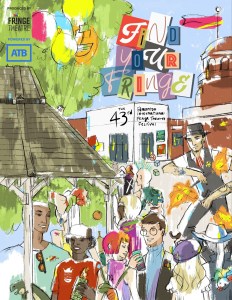
Find Your Fringe, the 43rd annual edition of the Edmonton International Fringe Theatre Festival.

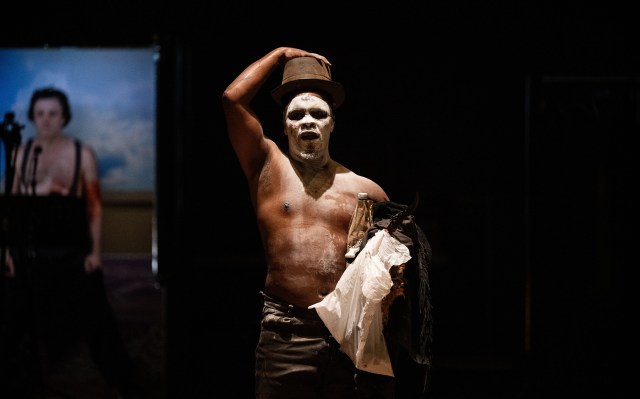
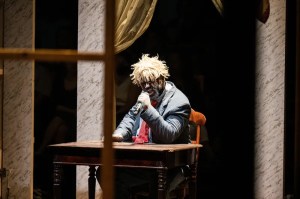
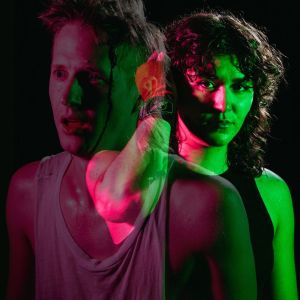
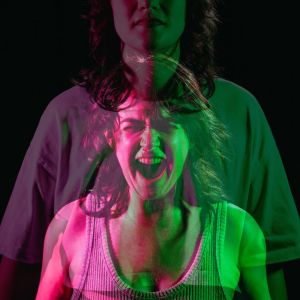
Tickets go on sale at noon today for the 43rd annual edition of Edmonton’s international summer theatre extravaganza, the continent’s biggest and oldest Fringe (Aug. 15 to 25). The routes through the 216-indoor show universe of this year’s Fringe are yours to discover — no, create — as they’ve always been in this Edmonton invention that transformed fringe from noun to (very) active verb. And there’s more than one road to tickets, too.

You can order them online at fringetheatre.ca (and get e-tickets in your inbox). You can call (780-409-1910). You can show up in person at the Fringe’s central box office at Fringe HQ in the Fringe Theatre Arts Barns (10330 84 Ave.) or the EAC (Edmonton Arts Council) shop and service outlet downtown (9930 102 Ave.). And when the festivities start, you can also pick up tickets at a couple of other Fringe box offices — 83rd Ave. and 104th St. next to ATB (aka the Gazebo) Park, or at La Cité francophone (8627 91 St.) in the French Quarter. Note, there isn’t a Fringe box office at Theatre Network this year.

To help support 12thnight.ca YEG theatre coverage, click here.

After many years in a holding pattern, the top ticket price went up by 2 bucks last summer. It’s up again by a toonie this summer, to $20 (the prices you see in the program are all-inclusive). Fringe artists set their own ticket price, to a $15 max, and take home 100 per cent of ticket sales. And the festival collects a service fee on top. In a year of struggle for the arts (critical escalation of production costs and dwindling sponsorships), the Fringe’s per ticket service fee is $5 max (up from last year’s $3) on a top-price $15 ticket. For ticket prices that are less, the Fringe’s service fee is reduced too,  and can be as little as $2 depending on the ticket price selected by artists, according to Fringe organizers.

As you’ll see from the program, either online or in glorious 3—D i(n the $15 152-page high-gloss Fringe guide), most artists have opted for the $20 max. And who can blame them? But there are exceptions. Tickets for Linda Wood Edwards’ new comedy/drama I, Diana are $18 (students and seniors $12), for example; for Spin Cycle $12. The Empress of Blandings’ anniversary production of the Moliere comedy The Flying Doctor is $15 (with $10 tickets for students and seniors). And of the four shows at the “young audiences” venue, the Edmonton Public Library Strathcona Branch, three have a top price less than $20.

The best deal for the bargain Fringe explorer is the Frequent Fringer pass ($160 for 10 tickets) and the Double Fringer pass ($320 for 20 tickets). But they get snapped up in a blink, so hustle is required. Many shows offer discounts for seniors and students. And there are daily discounts too, as determined by artists (the sales are in-person only, but check out the available discounted shows on the day at fringetheatre.ca. And here’s something new: the $20 Champion Pass. Once you buy one (online, in person, or on the phone) you get $5 off a full-price ticket to performances that opt into the program (identifiable by a Fringe badge on their website show image). So it pays for itself after four Champion performances.   

You’ll be Finding your Fringe and “doing it your way,” as the theme puts it alluringly, in a profusion of choices. The 216 ticketed shows are to be found in 38 venues, 10 of them official Fringe theatres programmed by lottery (up from 8 last year), and 28 of them BYOVs, bring-your-own-venues acquired and outfitted by artists themselves. As with the number of shows (last year 185) this is palpable growth, but not a wild topsy-turvy escalation from the year before (Fringe Theatre executive director Megan Dart has talked before of “incremental growth” and this seems like an example).

The two new additions to the Fringe’s roster of official lottery-programmed venues have both been festival venues in summers of yore. One is the Strathcona library, now the “young audiences” destination, mere steps away from the central Fringe box office. The other is the Granite Curling Club, the new home of the Fringe’s own invariably sold-out Late Night Cabaret. For 13 years, this hit midnight show, different every night, has been turning insomniac Fringers away at the Backstage Theatre. This move to a larger venue is, quite literally, by popular demand.

You can find Fringe shows in actual theatres, among them Fringe Theatre’s Backstage, Studio, and Westbury; the Varscona; the Gateway; Walterdale; Theatre Network’s Nancy Power mainstage; Rapid Fire’s Exchange Theatre. But many of the venues have other lives, as bars or dance clubs, churches, auditoriums, cabarets. There’s even a show (Sherlock Holmes Experience: The Incendiary Incident) that sends you forth from the Fringe’s garbage container, 221B Baker Street.

The artist-run BYOVs are mostly, but not all, in Old Strathcona. Three are across the river downtown, for example: CKUA, Evolution Wonderlounge, and (no kidding), the Citadel boardroom.

There’s a cluster of four Fringe “theatres” in the French Quarter, with 29 shows among them inside La Cité francophone and across the street at Campus Saint-Jean (hold this tantalizing thought: Le Café bicyclette). The Grindstone Comedy Club, a crazily busy little venue on 81 Ave., has curated a 32-show Fringe presence happening in four venues, including the Luther Centre across the street and Mile Zero’s Dance headquarters. Strathcona’s Holy Trinity Church houses 15 shows in its three BYOV venues.

Starting Friday August 16, the KidsFringe is back in Light Horse Park (10325 84 Ave.), with all sorts of activities and shows for the under-12 set and their grown-up companions. It’s curated by the indefatigable Alyson Dicey of Girl Brain. And it’s all free. Check out the schedule and show descriptions in the program.

There are outdoor performances. There’s a music series on the ATB outdoor stage (aka the Gazebo Park), on both Fringe weekends at 9 and 10 p.m., curated by the indie star Lindsey Walker. There are (as if it needed saying) beer tents. Tthe Fringe’s official beer? Sea Change.

Which brings us to the eternal Fringe question, the one that never loses its lustre. What to see? It is, of course, your Fringe To Find. But 12thnight.ca can help with that. Stay tuned to this site for encouragement, suggestions, previews, features, and reviews.

And if you enjoy the theatre coverage on my free (so far) and independent site 12thnight.ca worthwhile and entertaining, I am really hoping you’ll be able to chip in to my ongoing Patreon campaign, with a monthly contribution, no matter how modest, to support its continuation. 12thnight.ca is solely supported by its readers. Click here.

Posted in Fringe 2024, News/Views | Tagged , , , , | Comments Off on Find Your Fringe and get your tickets: they’re on sale today at noon

How did it all go wrong? Civil Blood: A Treaty Story, a review

Civil Blood: A Treaty Story, Thou Art Here Theatre. Photo by Mat Simpson

By Liz NIcholls, 12thnight.ca

On a sunny afternoon in the Edmonton river valley, the old Fort looks positively benign. And when we gather in the courtyard for a performance of Civil Blood: A Treaty Story, happy endings, love stories, alliances, the reconciliation of opposing forces … all seem possible.

To help support 12thnight.ca YEG theatre coverage, click here.

It the inspiration of Anishinaabe playwright (and storyteller and producer) Josh Languedoc and his co-creator Neil Kuefler to take us to the evening of September 9, 1876. Civil Blood reimagines the high-test moment and the lead-up to the signing of Treaty 6, which pertains to the land on which we live. And, like the Indigenous and settler characters of Kuefler and Mark Vetch’s Thou Art Here Theatre production, we are divided. We have to choose between two different narratives and their perspectives, intertwined but separate, through Languedoc’s ambitious double-routed play.

Maria Buffalo in Civil Blood: A Treaty Story, Thou Art Here Theatre. Photo by Mat Simpson
Tre

You can follow the Indigenous-led track of Nehiyaw huntress Ekah (Emily Berard), or you can follow Lily (Christina Nguyen), a Euro idealist recently arrived in the West and discovering for herself its complex realities. I picked the former track, and (not coincidentally) we were led just outside the Fort. We arrived at a teepee with a welcoming white-clad Indigenous figure Takah (Maria Buffalo). In a production clad in earth-tones, there she was, in dazzling white, with a white feather in her hair. Was she a benevolent ghost from the ancestral world present on behalf of the continuity principle? A stalwart angel? A dream spirit? I’m not too sure. But she shepherded us through a variety of locations, and watched us watching.

There’s tension in the Indigenous camp, where privations — the settler incursions on traditional hunting lands, the disappearance of the buffalo, whiskey, disease — are taking their toll. The chief (Dylan Thomas-Bouchier) and his sister Ekah (Berard) are deeply distrustful of the olive branch extended by Governor Sampson, in the form of a peace treaty, with a dinner and dance to gild the lily. Are generosity and charity any substitute for equality? The Indigenous track of Civil Blood says no. The chief’s exuberant mama (Rebecca Bissonnette) is more conciliatory, and open to collaboration. Or maybe she’s just practical, given the dark undercurrent that the resistance to signing the treaty will, in the end, be futile anyway against mighty colonial power.

The ominous title of the piece is borrowed from the prologue to Romeo and Juliet (“civil blood makes civil hands unclean”), which sets forth the “ancient grudge” and “new mutiny” of that brouhaha in Verona. And from the tensions of Civil Blood, a Romeo and Juliet love story of star-cross’d lovers emerges: Ekah and Julian (Gabriel Richardson), a French-speaking philosophy scholar, are separated by the great colonial divide. And the arrival of Lily, the daughter of Governor Sampson (Doug Mertz), intrigued by this new adventure (and by Julian) complicates the love story still further.

It’s a volatile world they live in. And Berard and Richardson, both excellent, have a fine-tuned scene in which he attempts to rekindle their smouldering relationship, overcoming her wariness with his ardour.

Ivy DeGagné, Colby Stockdale, Emily Berard in Civil Blood: A Treaty Story, Thou Art Here Theatre. Photo by Mat Simpson

Julian’s vivacious and curious little sister Pauline (delightfully played by Ivy DeGagné) is one go-between, who’s embraced the duality of her environment and is learning Cree. And the lively Métis character Kahkakis (Colby Stockdale), who has a teasing brother-sister friendship with Ekah, is another. The two tracks intersect, along with Métis sashes, at the celebratory dinner and bi-cultural dance (choreographed by Rebecca Sadowski).

The preamble to the Treaty, as the play sets forth vividly, is not without people of good will. But by the time the play’s two tracks intersect once more and fatally, at the end, it’s all going wrong. And the fracture lines in the peace treaty are violently evident. The church, via the presence of a fiery racist priest, Father Gabriel (Cody Porter, who digs into the role), is an instigator. And you assume that light is shed on his viciousness in the play’s other track.

Rebecca Bissonnette, Dylan Thomas-Bouchier, Emily Berard in Civil Blood: A Treaty Story, Thou Art Here Theatre. Photo by Mat Simpson

Civil Blood wonders about the built-in power inequalities of a peace treaty in which the land isn’t shared and interpretation and enforcement reside on one side alone. The Nehiyaw are up against it when they sign. There’s a curse, there’s talk of “cages” and “fire that will never be put out.” All of that resonates with us, and in multiple ways (including this past week’s tragic reminders of our lethal inattention to the natural world).     

The 90-minute “traffic of our stage” sets about unspooling back from the present moment, and the dishonourable subterfuges of “reconciliation” to a crucial moment in our history. We know how the story has worked itself out in 2024. Did it have to be that way?

It seems important to ponder that (and from two perspectives). And Civil Blood take us on location.

REVIEW

Civil Blood: A Treaty Story

Theatre: Thou Art Here Theatre, co-presented by Common Ground Arts

Created by: Josh Languedoc and Neil Kuefler

Directed by: Neil Kuefler and Mark Vetsch

Starring: Emily Berard, Rebecca Bissonnette, Maria Buffalo, Ivy DeGagné, Doug Mertz, Christina Nguyen, Cody Porter, Elena Porter, Gabriel Richardson, Colby Stockdale, Dylan Thomas-Bouchier

Where: Old Fort, Fort Edmonton Park

Running: through Aug. 4

Tickets: tickets.fringetheatre.ca, on a pay-what-you-will scale


Posted in Reviews | Tagged , , , , , , , , | Comments Off on How did it all go wrong? Civil Blood: A Treaty Story, a review

Summer! theatre in New York with trimmings

The Broadway company of Illinoise. Photo credit: Matthew Murphy

By Liz Nicholls, 12thnight.ca

NEW YORK – On a sultry Saturday afternoon 10 days ago under Manhattan Bridge, in an amiable queue for a cone at Brooklyn Ice Cream, an elegant French woman from Basel explains to me, en français, that she maintains an apartment in New York to “keep her words.”

To help support 12thnight.ca YEG theatre coverage, click here.

They can get away from you, to be sure, in the course of Big Apple sensory overload. But New York is a city of words. Written. Neon. Graffiti. Spoken (at a volume that always takes some getting used to) — in the subway, in Central Park, in exchanges with taxi drivers or hot dog vendors or invisible people at the other end of AirPods.

Jenny Holzer: Light Line, at the Guggenheim Museum, NYC. Photo by yours truly.

At the Guggenheim Museum words, a dizzying six-storey moving LED ticker tape of them, spiral upwards through the ramps of the Frank Lloyd Wright-designed museum’s rotunda to the very top. In in Jenny Holzer: Light Line, catchphrases, clichés, idioms, invented slogans… they never stop moving. “Words tend to be inadequate.” “Abuse of power comes as no surprise.” “You are guileless in your dreams.” And in intermittent alcoves en route up, on what seem to be burnt scraps of paper, a selection of idiotic Tweets from the man who became U.S. president in 2016. Or engraved on burnished sheets of metal, heavily redacted documents from protocols about the treatment of prisoners

Illinoise on Broadway. Photo by Matthew Murphy

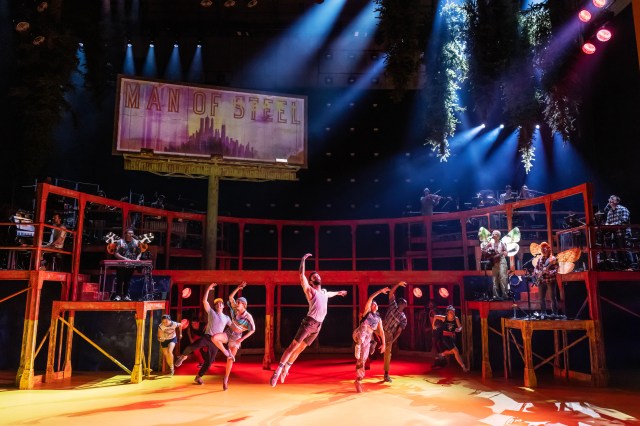
Curiously, the other extreme in word count happens in a theatre, where words tend to rule. Illinoise, at the St. James on West 44th is a stunning dance-theatre production with none at all. Based on a 2005 concept album by Sufjan Stevens, the text-less production directed by Justin Peck, resident choreographer of the New York City Ballet, reveals its episodic coming-of-age narrative (devised with the playwright Jackie Sibblies Drury), through movement, and music.

Illinoise on Broadway. Photo credit: Matthew Murphy.

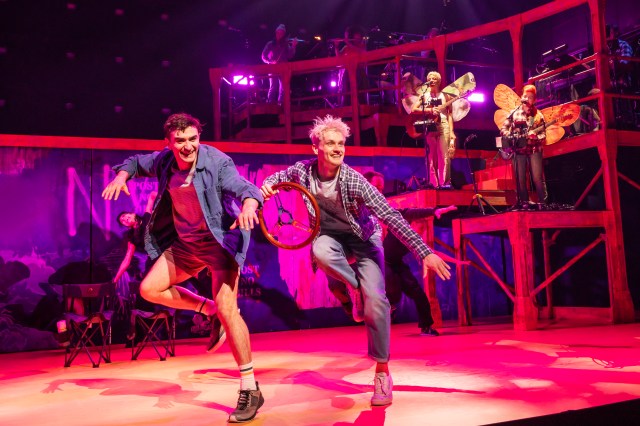
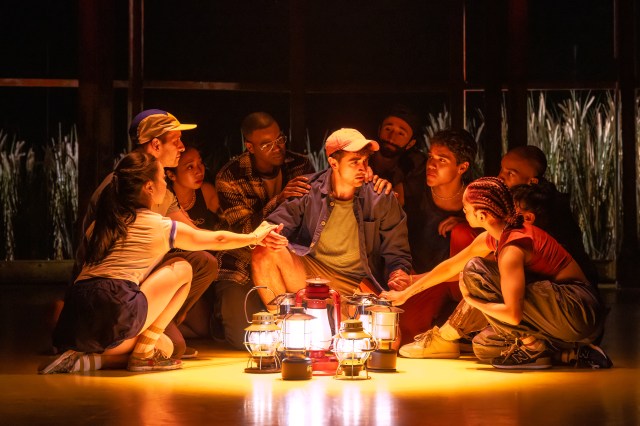
It’s called “a new Broadway musical” but Illinoise doesn’t work like one. A cast of 16 actor/dancers do not dance to illustrate or even amplify the songs or their lyrics. And the songs (delivered by three singers wearing butterfly wings on assorted platforms, along with an 11-piece orchestra) don’t advance the “story,” at least not in the usual musical theatre way. But you understand with such clarity, in performances led by Ricky Ubeda, the complex feelings of a small-town kid and his best friend who move first to Chicago and have a road trip to New York, as friendship moves to romance, and then, fatally stops there but can’t go back. It’s a beautiful, moving piece of storytelling set forth onstage with real originality: characters gather round a sort of campfire, and as Illinoise progresses, they emerge from a subterranean garden. I loved it.

Stereophonic, at the Golden Theater. Photo by Alan Kellogg

David Adjmi’s Stereophonic, the season’s Tony Award winning play (and biggest nomination magnet in history, with 13) is full of music too. And the dreams and frustrations, the creative tensions and broken relationships that go into making it, and then making it better. It’s set almost exclusively in a recording studio c. 1976, where a five-person rock band and a couple of sound engineers, on a health diet of booze, weed, and cocaine, are working on what they’re starting to dare to hope will be a break-out runaway hit album.

Loosely based on the famously fractious history of Fleetwood Mac, with original songs by Arcade Fire’s Will Butler, Stereophonic lives on the high-stress frontier between the small- and the big-time, where backstage life and personal life duke it out, and egos grow along with confidence.

The performances by actors who, like the fictional musicians they portray, have had to  work to become a band, are absolutely convincing in Daniel Aukin’s production. And so are the set and sound design by David Zinn and Ryan Rumery (respectively).

Three fascinating, absorbing hours of a play that really needs its length.

Hell’s Kitchen, at the Shubert Theater..

Hell’s Kitchen is the story of an artist, too, finding her own way, discovering mentors as she discovers her own burgeoning talent. The musical is inspired, in a loose way, by the coming-of-age story of Alicia Keyes, whose own r&b-flavoured songbook is tapped (and supplemented by new Keyes originals). This isn’t a narrative with the age-old built-in drama of an artist struggling out of privation and poverty to be a star. Keyes and the protagonist here, played by the sensational newcomer Maleah Joe Moon, grew up in the artist-friendly Manhattan Plaza in the title part of town. Dramatic conflict is limited to domestic frictions:  constant tension with a protective mother (Shoshana Bean) — OK, that is an old story — and occasional encounters with a musician father (Brandon Victor Dixon) who’s a charmer when he’s around and then disappears for indeterminate periods.

The fierce mentorship of a pianist who lives in the building (Kecia Lewis) is vivid. But to me the storytelling felt a little inert. Keyes’ fans will be delighted by the musical expertise onstage, but the songs aren’t exactly propulsive, in a way that would move the musical through the narrative.

Having said that, though, I must add that the stagecraft in Michael Greig’s production is a knock-out: Camille A. Brown’s jagged, startlingly original choreography, Robert Brill’s utterly beautiful scenic design, a love affair with New York City in itself, aided and abetted by Natasha Katz’s stunning lighting and Peter Nigrini’s projections. All breathtaking. In a final flourish, it ends with Empire State of Mind, Keyes’ homage to her birthplace city. When you walk out at the end, there’s a ’stereophonic’ immersive experience in that, and you get to put it in your pocket and take it with you.

Dark Noon 4, fit+foxy at St. Ann’s Warehouse. Photo by Teddy Wolff.

It’s a moment in history, it need hardly be said, when the world is wondering what on earth is going on with America. At St. Ann’s Warehouse, a marvellously adaptable old brick warehouse in DUMBO (Down Under the Manhattan and Brooklyn Bridges) where the programming is consistently gutsy, you get an outsider’s perspective, scathing and funny, on the great American mythology attached to … America’s own history. In Dark Noon, by the Danish artist Tue Beiring who co-directed it with South African director/choreographer Nhlanhla Mahlangu, seven agile South African actors, six Black and one white, “perform,” with Hollywood gusto, the storied history of the Wild West.

Dark Noon, fit+foxy at St. Ann’s Warehouse. Photo by Teddy Wolff

It is, in a word, riotous — a high-speed shoot ‘em up all the way in this 2023 Edinburgh Fringe hit which has been touring Europe. And the muse is slapstick comedy with a cutting edge (and a live video feed), as the Indigenous populations get gunned down, Africans get enslaved, Chinese railway workers get popped. The history of America is a story of violence. Guns and gunslingers are everywhere. And they’re the response to every crisis, from the moment to Black actors in whiteface, stand opposite each other, in a face-off that re-purposes the film High Noon. The railroad and an entire Western town get built before our very eyes on the red-clay stage.

This is satire at its most blistering. And movingly it ends with the actors shedding costumes and wigs to tell us their personal experience with American Westerns as entertainment, and the effects they believe have ensued in their own very violent gun-happy South Africa.

Conrad Ricamora and Cole Escola in Oh, Mary. Photo by Emilio Madrid

If Dark Noon is the outsider’s view, the insider perspective is the irreverent, very silly, very amusing comedy burlesque Oh, Mary. A transfer from Off-Broadway it’s arrived at the Lyceum trailing rapturous reviews (“not just funny, dizzyingly, breathtakingly funny!” in Time Out New York, for example). It’s the talk of the town.

The star of the show, and its creator, is a particularly gifted cabaret soloist Cole Escola, whose appetite for zany and high camp knows no bounds. They play Mary Todd Lincoln, the uncontrollably vicious booze-soaked wife of Abraham Lincoln. Escola has been on the late-night talk shows explaining breezily that he did no research, “zero!”, for his play.

Mary has had to give up her true love, cabaret, and deprive the world of A Star. And her resentment knows no bounds, as she bustles around the stage tossing her ringlets, on the hunt for hidden bottles. Since Abe (Conrad Ricamora), who’s a dour shouter, has got a lot on his plate what with the Civil War (“the South of what?” asks Mary), and his pesky under-the-desk attraction to his aide, he tries to distract his wife. He offers acting lessons with a handsome instructor; the chosen text is The Tempest, with Mary as the dewy Miranda, in an inexplicable Scottish accent.

Cole Escola, star of Oh, Mary at the Lyceum. Photo by Emilio Madrid.

Oh, Mary has been touted widely as satire, but I don’t really think that’s its strength. It’s a giddy, amiable entertainment, scripted but with the feel of improv in its constant anachronistic asides. It has everything to do with Escola, an amazingly gifted comic performer. Ever pause, every grimace, every double-take is judged for maximum impact. The audience roared their approval after every scene.

The only dud of the holiday was a show reviewed everywhere with irresistible enthusiasm (a cautionary tale for career reviewers, to be sure). Water For Elephants, adapted for the stage by Rick Elice (of Peter and the Starcatcher fame) from the Sara Gruen novel, is set in a travelling one-ring circus during the Depression. The circus consultants were the Montreal troupe the 7 Fingers. But both the aerial acts and, especially, the music by the PigPen Theatre Collective seemed generic. When a show where a young man runs away from family tragedy to join a circus fails to generate a sense of wonder, it’s in trouble. In this country we know a lot about the marriage of circus and wonder.

Joey Alexander Trio at the Blue Note. Photo by Liz

One of the great delights of summer in New York is the way theatre, music, and visual art tag-team for your especial benefit. So you can see The Harlem Renaissance, a wonderful Metropolitan Museum exhibition starring paintings by Archibald Motley, a key artist in the flourishing of Black American art in the ‘20s and 30s. You can savour his vigorous, energized images of Black jazz clubs, their musicians, their excited dancing audiences. And then, of course, you can experience live jazz at the Blue Note and Birdland.

Abetare by Petrit Halilaj, the rooftop commission at the Metropolitan Museum, NYC. Photo by Alan Kellogg

Up on the rooftop garden at the top of the Met, you can see the park and the gleaming towers of Manhattan through the eyes of a child. It’s a dreamy urban vision through the loops, curly-queues and wonky angles of Abetare, airy outsized sculptures in bronze and steel piping by Kosovo artist Petrit Halilaj. They’re kids’ drawings writ large: a giant spider, tilted houses, stars, birds. a flower, an upside down Batman.  And there’s theatrical magic in that.  

Posted in Features | Tagged , , , , , , | Comments Off on Summer! theatre in New York with trimmings

Reimagining history in a cautionary tale: Civil Blood: A Treaty Story, a Thou Art Here epic at the Fort

Civil Blood: A Treaty Story, May 2023 workshop production. Photo by Mat Simpson

By Liz Nicholls, 12thnight.ca

It began with a vision of an Indigenous/settler Romeo and Juliet, star-cross’d lovers reaching across the colonial divide.

To help support 12thnight.ca YEG theatre coverage, click here.

And gradually a bigger, richer, more complex story — poised at an historically critical juncture in our collective history — has emerged. Seven years in the making, Civil Blood: A Treaty Story premieres next week in the Old Fort at Fort Edmonton Park.

The co-creation of Anishinaabe playwright Josh Languedoc and director Neil Kuefler, Civil Blood is epic in scale: the story, the history, the contemporary implications. And it has an epic production to match: a cast of 11, a double-play of two intertwined multi-generational narratives, an audience (max: 80) divided in half between the two — and, ah, the largest set of the season, an entire fort.

poster design: Tynan Boyd

If the seed of their project was Shakespearean it’s hardly surprising, since Kuefler is a founder of Thou Art Here Theatre, a company whose origins are in site-sympathetic Shakespeare. Even its title comes direct from Romeo and Juliet, and that fractious situation in Verona: “civil blood makes civil hands unclean.” At a Banff Centre summit “Truth and Reconciliation Through Theatre” Kuefler approached Languedoc, the playwright/storyteller who brought us Rocko and Nakota. And the latter was intrigued by the possibilities of “using theatre as a healing tool in reconciliation.”

And now, “a lot of back and forth” later, as Languedoc says, laughing, the double-helix play is set at the very moment in 1876 when Treaty 6 is about to be signed. It’s a particularly tense period in our history. The fur trade is collapsing; settlers are encroaching on First Nations territories and, deprived of traditional hunting grounds, the tribes face starvation; the government of Canada is trying to lay down the law.

The Old Fort, Fort Edmonton Park. Photo by Mat Simpson

As Languedoc explains, “the ‘Romeo and Juliet’ characters, Ekah and Julien, are a nehiyaw warrior and a French Catholic settler, a young budding philosophy scholar whose parents are the chief factors of Fort Edmonton Park.” We choose which track to follow, “and you do get the overall story either way, but you see it very intimately from one perspective…. You get to see characters through different eyes.” There are certain characters who appear in both tracks, which makes for high-speed exchanges.

In the very first scene a messenger is sent from each track to the other camp. And there is historical evidence for the dramatic proposition of a multi-year courtship, says Languedoc, “with a view to a possible merger….” War and famine take their toll. Ekah’s sister killed; Julien’s parents die. “And the courtship is off.”

As Civil Blood begins, the pair haven’t seen each other for a year. And with the arrival of Lily, the pampered, privileged daughter of governor of the Dominion of Canada, a triangle begins to take shape. “The governor is trying to quell tensions by creating a merger between settlers here and the government…. We see Lily’s discovery of what’s happening in these lands.”

“The whole point,” says Languedoc, who has a U of A master’s degree in theatre creation, “is that we get to know the history of the events that led up to the signing of Treaty 6…. And it’s a cautionary tale.”

The intention might have been peace between equals. But “pretty quickly it becomes evident that this is not going to go in an equal way,” as Languedoc points out. “And the tensions are too big to ignore.” After that historic signing, “you start to see the downfall, the manipulation, the agendas … as one side starts to take advantage of the other. And the play becomes a ‘what-if?’ story,” he says. “We know where it goes. But could any of these events have happened differently, to change the course of history?”

Languedoc and Kuefler talked about a possible land acknowledgment for the production we’ll see at the Fort. “And then we agreed, the whole play is the land acknowledgment. A giant statement about whose land this is.”

In its way, their creative partnership on Civil Blood as Languedoc says in his genial way, is a living demo of the possibilities that were lost post-Treaty. “We’ve had our own negotiations,” he laughs. “We’re both passionate artists: Neil has had ideas he’s fought for; I’ve had ideas I’ve fought for. We’ve intermingled them; we’ve found compromise, and some very cool ideas…. “We ARE the spirit of the Treaty.”

“We’re really close friends now. I see his family; he sees my family. I’ve adopted his cats!”

PREVIEW

Civil Blood: A Treaty Story

Theatre: Thou Art Here Theatre, co-presented by Common Ground Arts

Created by: Josh Languedoc and Neil Kuefler

Directed by: Neil Kuefler and Mark Vetsch

Starring: Emily Berard, Rebecca Bissonnette, Maria Buffalo, Ivy DeGagné, Doug Mertz, Christina Nguyen, Cody Porter, Elena Porter, Gabriel Richardson, Colby Stockdale, Dylan Thomas-Bouchier

Where: Old Fort, Fort Edmonton Park

Running: July 24 to Aug. 4

Tickets: tickets.fringetheatre.ca, on a pay-what-you-will scale


Posted in Previews | Tagged , , , , , , , | Comments Off on Reimagining history in a cautionary tale: Civil Blood: A Treaty Story, a Thou Art Here epic at the Fort

A visceral reverb that stays with you: Brick Shithouse at Found Fest

Brick Shithouse, fenceless theatre, Found Festival 2024. Photo by Brianne Jang

By Liz Nicholls, 12thnight.ca

It’s stayed with me, the way dangerous theatre does. So I wanted to tell you about Brick Shithouse. I was lucky to catch the last performance of the fenceless theatre production that sold out its whole run at the Found Festival.

To help support 12thnight.ca YEG theatre coverage, click here.

The people we meet in Ashleigh Hicks’s play are stalled, restless 20-somethings, millennials with college degrees that are looking awfully worthless. They’re working crap retail jobs, scrambling to put together rent money, still living with their parents, deadeningly aware they’re never going to catch up with their student loans.

And what they’re really doing for a living, these childhood friend/classmates who are still referring to their high-school relationships, is looking to the online world. Behind a pay wall that they’re kidding themselves is a fortress, they’re live-streaming their fight club to that anonymous expandable audience. When that audience starts to make ever-grosser, more appalling requests, upping the ante with hard cash, drawing the line gets harder and harder. How far will they go?

Brick Shithouse, fenceless theatre, Found Festival 2024. Photo by Brianne Jang

As one character says, once you open that door, it can’t be closed. The dangers, and the assault on individual consent and viable relationships, escalate. Once there’s a camera and a link, the notion of privacy, of personal boundaries and private moments, is a dangerous illusion.

Watching Sarah J Culkin’s production at the Tesserae Factory (a big warehouse where Freewill Shakespeare and Edmonton Opera sets get built) is a visceral (not to say blood-splattering) experience. You can feel the bruises getting kicked and the noses getting busted, at the same time you’re getting to know desperate characters on an individual basis.

Brick Shithouse, Found Festival 2024. Photo by Brianne Jang

This is a cast of seven selflessly physical actors who literally throw themselves into the play. Sam Jeffery’s fight direction (which is almost by definition intimacy direction) is remarkable bone-rattling, on Even Gilchrist’s set design, over which a lighting grid hangs like a cage.

Brick Shithouse speaks to the moment — against a soundscore of bodies smacking down on mats — and a generation who have found themselves off the grid where ‘coming-of-age’ has traditionally happened. The memory is live, and it makes me flinch.

Posted in Reviews | Tagged , , , , | Comments Off on A visceral reverb that stays with you: Brick Shithouse at Found Fest

The breezy and the sharp in a comedy of (bad) manners: Private Lives at Teatro Live! A review

Belinda Cornish and Josh Meredith in Private Lives, Teatro Live! Photo by Marc J Chalifoux

By Liz Nicholls, 12thnight.ca

“I think that very few people are completely normal really, deep down in their private lives….” argues Amanda in Noel Coward’s 1930 comedy of (bad) manners, the season finale at Teatro Live!. It’s a declaration on behalf of entitlement, personal exceptionalism, liberation from convention.

To help support 12thnight.ca YEG theatre coverage, click here.

And Amanda (Belinda Cornish) and Elyot (Josh Meredith), the charming monsters of Private Lives, not only use it as a barricade against the vulgar world and its disillusionments, but weaponize it against each other, too. Five years into their divorce, they meet again on adjoining French Riviera hotel balconies (designer: Chantel Fortin), honeymooning with ‘normal’, and hence entirely unsuitable, spouses.

The flammable love/hate that burnt their marriage to the ground instantly bursts into flame again. And they up and leave together: they flee to Paris, abruptly leaving in the lurch a couple of perplexed new spouses and the chaos they’ve created. Clearly they can neither live with nor without each other. Neither calm nor its opposite can sustain them; both are ominous.

Coward’s comedy is a very particular combination of the breezy and the sharp: cool teasing wit on top, heat underneath. And it’s tricky to pull off. Not least because of the idiomatic verbal dexterity it requires, but the full-blooded way Amanda and Elyot knock each other around the stage. And Max Rubin’s production is at pains to give full weight to the play’s double-sidedness about passion and fury, without Private Lives turning into Who’s Afraid of Noel Coward?. For the benefit of Victor, Amanda remembers their marriage as “two violent acids bubbling about in a nasty little matrimonial bottle.” And yet, self-destructive impulses rule her life.

Priya Narine, Garett Ross, Josh Meredith, Belinda Cornish in Private Lives, Teatro Live! Photo by Marc J Chalifoux.

For his part Elyot’s defence against residual guilt, both present and retrospective, is flippancy. “You mustn’t be serious my dear one; it’s just what they want … all the futile moralists who try to make life unbearable.” You could haul out the term dysfunctional, I guess, for the central relationship in this romantic “comedy” with its dark, acidic anti-romantic stance. But it’s dysfunction that is, in every way, high-functioning.

In Cornish, Rubin’s production has a star Amanda, quick-witted and elegant, who knows exactly how to time and toss off Coward’s witticisms so that the little barbs are funny, generated with high style, and stick (lightly) to all the available surfaces of the play. It’s a captivating performance, bright charm with a cutting edge. Amanda is incurably, chronically, arch, but this is a performance that reveals hints underneath of the vulnerability of the truly directionless.   

If Meredith, new to the Varscona stage, doesn’t quite have the suave and teasing crunch that makes so Elyot irresistibly maddening, to his ex-wife and to us, his boyish sulkiness at high-pressure moments is amusing. Together they have contiguous exasperation thresholds, and in Rubin’s production, the way insignificant remarks become momentous — a Cowardly insight into volatile relationships — is always convincing.

Priya Narine and Garett Ross in Private Lives, Teatro Live!. Photo by Marc J Chalifoux.

As the rejected spouses, who are designed to be irritating foils to the main event, constantly demanding reprises of the failed marriage, Priya Narine and Garett Ross bring some originality to their performances under Rubin’s direction. Victor isn’t a dope; he’s touchingly gallant in his conventional way, genuinely baffled by a wife who says things like “darling, don’t be vehement” to him.” Sybil, in Narine’s performance, has the kind of grating vivacity that brings out the worst in Amanda. And, with a supply of outrage at hand, she cracks off a few choice insults of her own that are, inevitably, no match for the effortless throwaways of her “rival.”

Everyone looks divine in Leona Brausen’s frocks and suits. And the Mediterranean lighting by Narda McCarroll locates us in an improbable world of a funny comedy that isn’t comical — in which love is both the subject, and the problem. 

REVIEW

Private Lives

Theatre: Teatro Live!

Written by: Noel Coward

Directed by: Max Rubin

Starring: Belinda Cornish, Josh Meredith, Priya Narine, Garett Ross

Where: Varscona Theatre, 10329 83 Ave.

Running: through July 28

Tickets: teatroq.com

Posted in Reviews | Tagged , , , | Comments Off on The breezy and the sharp in a comedy of (bad) manners: Private Lives at Teatro Live! A review

Teatro Live! announces a new season

By Liz Nicholls, 12thnight.ca

At the centre of Teatro Live!’s upcoming 43rd season, announced this past weekend, are revivals of two seminal Stewart Lemoine comedies of very different hue. And the 2024-2025 lineup at a company devoted to comedy in all its permutations is bookended by two evergreen hits: a hit thriller of English provenance, and one of the theatre repertoire’s most popular and enduring American comedies.

Jeff Haslam and Kristen Padayas in On The Banks of the Nut (2010), Teatro Live!. Photo supplied.

To help support 12thnight.ca YEG theatre coverage, click here.

Lemoine’s 2001 screwball comedy On The Banks of the Nut, set in the Wisconsin hinterland in 1951, is set in motion by the rural expedition of a “federal talent agent” and a plucky temp. The music of Mahler is involved, specifically the post-horn solo in Mahler’s Third Symphony, which changes the life of the proprietor of the Nut River Lodge.

The premiere production 23 years ago introduced two newcomers, Brianna Buckmaster and Josh Dean, at the outset of their theatre careers, alongside Teatro veterans Jeff Haslam, Davina Stewart, and Leona Brausen. And that’s what Lemoine, who directs this first revival since 2010 (May 30 to June 13, 2025), intends to do this time out with new talent from this year’s auditions.

Leona Brausen and Eric Wigston, On the Banks of the Nut (2010), Teatro Live!. Photo supplied.

If Teatro artistic director Andrew MacDonald-Smith has a particular affection for On The Banks of the Nut, it’s because “it was the first Lemoine I ever saw,” he says. “It was the fall of my first semester at MacEwan (theatre arts)…. I think I saw it 10 times; I just fell madly in love with Lemoine comedy. By about the seventh time, Stewart said, “don’t buy a ticket; just buy popcorn.” Soon MacDonald-Smith would join the ensemble at the company devoted to comedy in all its permutations and possibilities. And soon he would be a Teatro leading man. He laughs. “You never forget your first Lemoine.”

Davina Stewart and Jeff Haslam in The Noon Witch (1995), Teatro Live!. Photo supplied

With The Noon Witch (Feb. 21 to March 9) Teatro to one of the first plays the company staged at the Varscona in 1995. Lemoine says he’d heard of the eccentric Hungarian legend that inspired it via a 20-minute Dvorak tone poem. The title character of the piece, set in 1920s Budapest, is a supernatural creature who appears at mid-day and lures men to a watery death by plying them with rich fatty food so that they sink. Lemoine, who laughs that he had “a Hungarian period,” had first introduced the lead characters Anatole and Josef some years before in A Moment in Budapest (part of The Argentine Picnic), famous in the Teatro archive for the consumption of real goulash onstage by the cast every night.

A very different kind of mysterious apparition emerges from the mist in the Teatro season-opener, The Woman in Black, a genuinely unnerving Edwardian thriller adapted for the stage in 1987 by the Brit playwright Stephen Mallatratt from the Susan Hill novel. After a 35-year run in London’s West End, it closed in March 2023. Andrew Ritchie, the artistic director of Thou Art Here, directs the Teatro production that runs October 11 to 27. MacDonald-Smith calls The Woman In Black “a thriller with a sense of humour.”

The season finale July 11 to 27 is Neil Simon’s 1965 The Odd Couple, arguably the most successful comedy in the entire Simon canon. It was last produced on the Varscona stage 20 years ago, in a Teatro-Shadow Theatre co-production.

The mismatched roommates whose incompatibility is the crux of the hilarity are two New Yorkers, Felix and Oscar. The one is a neurotic neatness freak, with a homemaker’s skill set; the other is an easy-going poker-playing slob. Belinda Cornish, currently starring in the Teatro production of Private Lives, directs. Her production stars MacDonald-Smith as the uptight Felix, with Alexander Ariate as Oscar.

Tickets and subscriptions: teatrolive.com.


Posted in News/Views, Previews | Tagged , , , , , | Comments Off on Teatro Live! announces a new season

So … what could possibly go wrong? The Play That Goes Wrong at the Citadel, a review

Andrew MacDonald-Smith and Joel Schaefer in The Play That Goes Wrong, Citadel Theatre. Photo by Nanc Price.

By Liz Nicholls, 12thnight.ca

Live theatre is a risky business. And there’s a show onstage in town designed expressly, with single-minded high-precision calculation, to mine the comic gold in that.

The Play That Goes Wrong, currently making people laugh en masse and out loud at the Citadel, is proof incontrovertible that we have a fatal attraction to chaos. And we love the scramble to cover it up and carry bravely on, against the odds. Which says something about us, and our world, but that’s another story for another day. 

To help support 12thnight.ca YEG theatre coverage, click here.

Anyhow, the disaster potential is high, moment to moment, in this the break-out hit (still in New York and London) from the agile minds of the Brit comedy company Mischief Theatre, the trio of mischief-makers who brought us Peter Pan Goes Wrong in 2022. Here, the game amateur thespians of the Cornley Drama Society are undertaking their biggest, most impressively elaborate, production yet, as the director (Daniela Vlaskalic) tells us at the outset, in her plummy noblesse-oblige theatre director voice. Oh-oh.

After the budgetary set-backs that led to such scaled-down Cornley productions as The Two Sisters, The Lion and the Wardrobe, and Four-And-A-Half (“based on some of the wives of Henry VIII”), The Murder at Haversham, she assures us, is full bore.

Vanessa Leticia Jetté and Honey Pham in The Play That Goes Wrong, Citadel Theatre. Photo by Nanc Price

Tackling a hoary old chestnut, as the Cornley Drama Society does here, doesn’t really have the comedy potential of Peter Pan Goes Wrong, to be honest. Valiant attempts by earnest amateur artistes to stage, and capture the wonder of, J.M. Barrie’s evergreen airborne fantasy adventure are just more sublime in the end than essaying the overwhelming technical requirements of a genre that’s pretty creaky to begin with, already frequently overacted by theatrical satirists. That Dennis Garnhum’s production has such a comically inventive and physically dexterous cast, and a playground of extreme complexity, counts for a lot.

John Ullyatt, Alexander Ariate, Joel Schaefer in The Play That Goes Wrong, Citadel Theatre. Photo by Nanc Price.

An old-school 20s-style whodunnit of the Christie persuasion, The Play That Goes Wrong is set in a remote country manor house, with an eclectic selection of costumes, a dizzying arsenal of props — and ah yes, weapons. Swords are not out of the question at Haversham Manor, just sayin’. The dramatic personae includes assorted members of the rich, landed gentry, their servants, a dog, the village police inspector — the tweedy and the tuxedo-ed.

Andrew MacDonald-Smith, Daniela Vlaskalic and Joel Schaefer in The Play That Goes Wrong, Citadel Theatre. Photo by Nanc Price.

The premise dangles before us the question: what could possibly go wrong? Beyata Hackborn’s atmospherically cluttered two-level faux gothic set, where the murderous events unfold — the drawing room, the library, the study, views of the garden — offers an alluring array of possibilities. And, the real star of the show, it will take an extraordinary beating in the course of a couple of hours in the hands of the Cornley company.

Vanessa Leticia Jetté and Daniela Vlaskalic in The Play That Goes Wrong, Citadel Theatre. Photo by Nanc Price

By intermission that set is virtually dismantled. In Act II, as rebuilt in the interval, it gets dismantled again, and by the end it’s in tatters. Props — keys, notebooks, ledgers, incriminating notes, a stretcher, whole bottles of booze, a dog named Winston — will go missing or get mislaid. And so will crucial members of the Cornley cast, felled by collisions with each other and the set. Doors will stick, then fall over when pounded. Even the clock refuses to ring true. Wherever there’s an elevator and chandeliers, be very afraid.

Joel Schaefer, Daniela Vlaskalic, John Ullyatt in The Play That Goes Wrong, Citadel Theatre. Photo by Nanc Price.

Cues will be mis-timed, the script will go AWOL, lights will flicker out of sync (lighting by Kimberly Purtell), so will the backstage onstage sound system (David Pierce)…. As we arrive in the theatre the likeable Cornley cast members are mingling with the audience, testing out their English accents. The Cornley costumes (by Joseph Abetria) are a riot of clichés and near-misses: deer stalker hats, a velvet smoking jacket, a Flapper dress, a hideous brown cardigan, and as sported by Vlaskalic as the director, the beehive wig and stilettos of a blonde bombshell from a different period and a previous production (possibly Noises Off or One Man Two Guvnors).

Even before showtime the crew is scrambling, hollering, unplugging the wrong cords, shoring up the mantelpiece, requesting assistance with the snow machine…. Yes, things are already starting to go wrong, and things going wrong in live theatre pretty much nails The Domino Effect.

It takes impressive technical skill and formidable timing to bring The Play That Goes Wrong to its knees (and lower), and reduce a murder mystery to a high-speed farce gone off the rails. And Garnhum’s production (a partnership with Theatre Calgary and the Royal Manitoba Theatre Centre) has that. It also takes an expert cast to act badly well (with comic timing to match the disintegration of the set). And it has that too.

This is an ensemble of first-rate comic actors hamming it up as go-for-the-gusto amateurs with an awful script. And they must work together, not least to avoid unscripted stage fatalities (Morgan Yamada directs one of the silliest stage fights of the season). Together, under Garnhum’s direction, they redefine, in assorted and amusing ways, what being taken aback literally means, as they scramble to restore plausibility, disaster after disaster.

Vanessa Leticia Jetté and Daniela Vlaskalic in The Play That Goes Wrong, Citadel Theatre. Photo by Nanc Price

The brother of the deceased (played by the delightful Andrew MacDonald-Smith) discovers a certain rapport with the audience when things go wrong; his riffs as he discovers just how addictive audience applause can be are very funny. The suave butler (John Ullyatt), attempting aplomb and rattled by his own hysterical deficiencies in pronunciation, is highly amusing. The exasperated corpse (Alexander Ariate), his only somewhat grief-stricken fiancée (Vanessa Leticia Jetté), his hale and hearty childhood friend (Joel Schaefer), along with stage managers (Honey Pham and Ray Strachan, among others) pressed into onstage service … you will get a kick out of them. Ditto the selection of death scenes, and one remarkably acrobatic sequence involving a telephone receiver.

What makes it all a little relentless is that the play under assault by the game but hapless amateur artistes of the Cornley Drama Society is by no means a substantial target to begin with. So there’s a fair amount of repetition involved. Still, you’ll have fun as you survey the wreckage. And you’ll feel for them, too, these struggling stagestruck amateurs. They try so hard to please. And you’ll realize something about the crazy, brave improbability of live theatre too.

REVIEW

The Play That Goes Wrong

Theatre: Citadel Theatre, in partnership with Theatre Calgary and the Royal Manitoba Theatre Centre

Created by: Henry Lewis, Henry Shields, Jonathan Sayer

Directed by: Dennis Garnhum

Starring: Alexander Ariate, Vanessa Leticia Jetté, Andrew MacDonald-Smith, Joel Schaefer, Daniela Vlaskalic, John Ullyatt, Emily Meadows, Ray Strachan, Honey Pham, Bernardo Pacheko

Running: through Aug. 4

Tickets: citadeltheatre.com

Posted in Reviews | Tagged , , , , , | Comments Off on So … what could possibly go wrong? The Play That Goes Wrong at the Citadel, a review

Classic comedy: a summertime weekend in Edmonton theatre

Belinda Cornish and Josh Meredith in Private Lives, Teatro Live!. Photo by Marc J Chalifoux

Vanessa Leticia Jetté and Daniela Vlaskalic in The Play That Goes Wrong, Citadel Theatre. Photo by Nanc Price

By Liz Nicholls, 12thnight.ca

Hey, Edmonton, look what’s waiting for you onstage this weekend. Something about summer inspires our theatre artists to tangle with the classics, reimagine them, put them in new shapes: A classic playwright (you guessed, Shakespeare), in camping mode in an outdoor community hockey rink. A  perfectly contoured Jazz Age comedy. A classic ‘20s murder mystery (dismantled by earnest thesps). Chekhov, but through a playful absurdist lens. Mythology tickled and bent by a selection of local playwrights.

To help support 12thnight.ca YEG theatre coverage, click here.

•The season finale at Teatro Live!, opening tonight on the Varscona stage, is Noel Coward’s witty, sparkling 1930 anti-romantic romantic comedy Private Lives — as dry and fizzy as the best champagne. For the occasion, and Private Lives is always an occasion, Teatro has borrowed director Max Rubin from Theatre Yes, where he’s the co-artistic director. His production, which runs through July 28, stars Belinda Cornish and Josh Meredith, as Amanda and Elyot, a couple who have uncoupled, then find themselves in an inflammatory situation — on their honeymoons with new spouses (Garett Ross and Priya Narine), in adjacent hotel rooms on the French Riviera. It runs through July 28 (stay tuned for a 12thnight review soon). Tickets: teatroq.com.

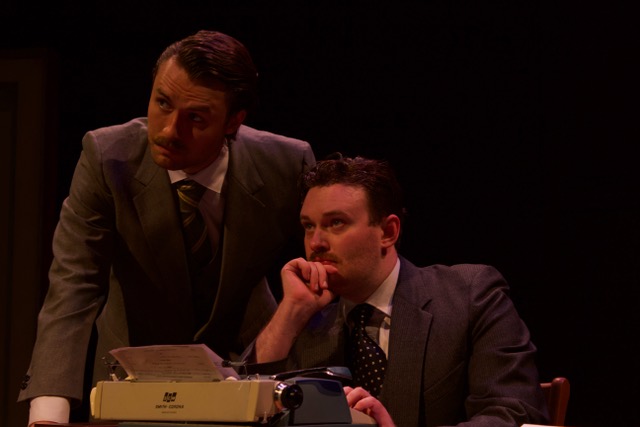
•In The Play That Goes Wrong, at the Citadel through Aug. 4, the earnest amateur thespians of the Cornley Dramatic Society are putting on an elaborate 1920s-style murder mystery. What could possibly go wrong? The comedy, a losing race against chaos that is still packing houses in London and New York, is by the cheeky insurrectionists of the English company Mischief (Henry Lewis, Jonathan Sayer, Henry Shields) who brought us Peter Pan Goes Wrong a season ago. Dennis Garnhum, a former artistic director of Theatre Calgary and the Grand Theatre in London, Ont., directs the production, a partnership between the Citadel, Theatre Calgary, and the Royal Manitoba Theatre Centre. Tickets: citadeltheatre.com.

Nadien Chu as Prospera in The Tempest, Freewill Shakespeare Festival. Tech dress rehearsal shot by Brianne Jang

•It’s the final weekend of the Freewill Shakespeare Festival, this year in exile — like the magus at the centre of The Tempest — from their home in Hawrelak Park. They’ve landed in a series of community outdoor hockey rinks (currently the Sherbrooke Community League). Dave Horak’s production of the strange and wonderful late-period romance leans into the comedy instead of the play’s darker tones. Tickets: freewillshakespeare.com. Have a peek at the 12thnight interview with star Nadien Chu, as Prospera, and the 12thnight review.

•At the 2024 Thousand Faces Festival, five Edmonton playwrights of very different stripe, are inspired by mythology in their five new plays. The festival’s “New Mythic Works Series” that runs Saturday and Sunday (2 p.m.) at the Alberta Avenue Community Centre (9210 118 Ave.). The lineup includes Christine Lesiak’s Rebel Rebel, Gavin Bradley’s SeanChai, Calla Wright’s Tiresias, Turning, Sophie May Healey’s Issun Boshi, The Inch-High Samurai, and Bailey Bieganek’s Hero and Leah. Tickets: eventbrite.ca

•At Walterdale, Edmonton’s venerable community theatre, you’ll find a kooky but genial Chekhovian mash-up in Vanya and Sonia and Masha and Spike, Christopher Durang’s  Tony Award-winning comedy of middle-aged regret and disappointment and under-achievement. Crammed with every kind of Chekhov allusion, it’s kind of an homage to, and kind of a take-down of, the storied wistfulness built into the sacred canon. Lauren Tamke’s production runs July 10 to 20. Tickets: walterdaletheatre.com.

Posted in News/Views | Tagged , , , , , , , , , , | Comments Off on Classic comedy: a summertime weekend in Edmonton theatre

Fast and furious: the righteous frustration of Ashleigh Hicks’ characters in Brick Shithouse, at Found Fest 2024

Brick Shithouse, fenceless theatre, Found Festival 2024. Photo by Brianne Jang

By Liz Nicholls, 12thnight.ca

The largest production in the Found Festival’s 13-year history of unexpected encounters with art opens this week in a place you might not even know about yet.

To help support 12thnight.ca YEG theatre coverage, click here.

As in most of Found’s surprises, that place is not a theatre. The Tesserae Factory, a vast west end warehouse, is where seven struggling 20-somethings, “best friends/ worst enemies,” are secretly, illicitly, live-streaming their fight club, hiding behind the porous barricade of anonymity (and a pay wall) in Ashleigh Hicks’ Brick Shithouse. It is, declares the playwright, “a space that lends itself really beautifully to the stylistic conceit of the show… a dream come true.”

The vision they share with director (Sarah J Culkin), fuelled by the style of cinéma vérité, is “everything happening all at once, naturalism cranked up to 11… simultaneous conversations where you pick up bits and pieces depending on where you sit, which character you’re choosing to pay attention to, which conversation you choose to follow.”

“You’re actively eavesdropping,” Hicks say of a space that contains “places where characters can hide and have privacy from each other, too….” Which is a way of saying that your Brick Shithouse will be different than everyone else’s Brick Shithouse, depending on where you sit and whom you choose to listen to. As Hicks points out, you’ll have something to talk about with the person who sat five chairs away from you, but made different choices.

The play had a work-in-progress debut at Found last year when Hicks was the festival’s Fresh Air artist-in-residence. The inspiration, though, goes back nine years to a now-unrecognizable debut draft — “the sloppiest first draft you’ve ever seen!” they insist. Director Culkin, Hicks’s friend and theatre school classmate, “really latched onto it. She saw something special in it I definitely couldn’t see.”

“When I wrote that first draft nine years ago I was wanting it to be site-specific show, outside a traditional theatre venue. It’s been in the bones of the text since the beginning,” Hicks says. And they got their wish.

Nine years of life (and theatre) have left their mark on the play, says Hicks, who wrote the first draft at 20 and is now 29, around the age of the characters, and heading like them into the 30s. They remember that younger self who “wrote from a place of anger, and not knowing where to put it. I was 20 years old, up to my armpits in theatre school — before the #MeToo movement, before intimacy directors, before conflict de-escalation. I was working a crappy part-time retail job and still couldn’t afford to move out of my parents’ place….”

“I was so angry. I was getting older, becoming an adult,” and so many socio-cultural promises were vanishing into the ether: “You go to college, you get a good job, you buy a house.…”

So, in its first incarnations, Brick Shithouse was “a very angry show,” says Hicks. “What’s developed is that it’s about so much more than that now.” What director Culkin and her team of actors and designers have done, they think, is “infuse so much joy into the play while still holding space for that anger, that righteous frustration…. They’ve added so much to the storytelling; I’ve really felt the honour of trying to be better at my job to be worthy of the immense effort this team is putting in…. It’s remarkable and humbling.”

Brick Shithouse, fenceless theatre, Found Festival 2024. Photo by Brianne Jang

A diverse cast and design team led by Even Gilchrist have brought perspectives on “what it’s like being working-class and queer in Alberta, what it’s like being a person of colour…. It feels charged in a way that’s productive, as opposed to reductive.”   

“You’re heading into your 30s. You’re out of school. Half  your friends are still living at home, working part-time jobs at West Edmonton Mall, half are married with kids…. Not that the 30s are old, gawd, I hope not! But it’s a tumultuous time: this is when you turn around … and you’re starting to feel that this is what the rest of my  life is going to look like. All the characters are at an age where they’re feeling a bit like life is leaving them behind.”

The people of Brick Shithouse, as Hicks describes, aren’t strangers. “They have some sort of history with each other — childhood friendships in all the complexities and toxicities that come with that. Some are lovers, part or present; two are soon to be step-sisters.…”

What you’ll be overhearing at the Tesserae Factory is a story about the dreams and disappointments of “working-class young people in Alberta,” says the playwright. “Seven people looking at the economy and the state of the world… They’ve started live-streaming their fight club behind a pay wall, to help make rent in the freakiin’ housing crisis. You need a whole swack of jobs to make ends meet these days.”

The cast of Ashleigh Hicks’s Brick Shithouse, Found Festival 2024. Photo by Brianne Jang

They’re doing it anonymously, “but that anonymity is always at risk of being compromised…. Their ‘loyal audience’ starts making requests that their fights take a more explicit turn,” as Hicks describes. And the questions they have to grapple with, individually and as a group start multiplying: “how far is too far? What are your boundaries? What am I willing to do for 50 bucks? 100 bucks? 1,000 bucks? How much can I trust these people in front of me? how much can I trust people on the other side of the computer screen?”

“These things really change when there’s money on the table.”

Hicks, who has a drama degree from the U of A, has always been a writer. At age three, they remember knowing “I was going to be a writer. Forever (laughter). I’m nothing if not stubborn.” They realized pretty quickly that to arrive at the “emotional and psychological stamina you need to be an actor” would take a lot of work.

They’ve explored clowning, at the Manitoulin Conservatory run by John Turner of Mump and Smoot. And that’s been “hugely influential to me as a writer,” says the Cape Breton-born Hicks. “Most of my shows till now lean into style and away from naturalism.” Mine, for example, developed for last year’s RISER Edmonton, “had poetic moments, heightened dialogue, choral narration,” inspired by the Greeks.

In its heightened naturalism, Brick Shithouse is something of a departure, they agree, “and also a natural progression…. Everyone is talking like a real person 100 per cent of the time.”

And it’s the particular gift of director Culkin, Hicks thinks, that the plays issues of “the private and the exposed, sexuality, shame and pride are connected to a longer lineage of style.” You’ll see it in the set-up and lighting, too, of Brianne Jang’s promotion shots, which reference the paintings of Caravaggio.

“You’re watching the characters livestream, and when the camera is off, you’re still there.” There’s an exciting kind of voyeurism in that.

PREVIEW

Found Festival 2024

Brick Shithouse

Theatre: fenceless theatre

Created by: Ashleigh Hicks

Directed by: Sarah J Culkin

Starring: Mohamed Ahmed, Geoffrey Simon Brown, Alexandra Dawkins, Sophie May Healey, Jasmine Hopfe, Moses Kouyaté, Gabriel Richardson

Where: Tesserae Factory, 11210 143 St.

Running: Friday through July 14

Tickets: commongroundarts.ca


Posted in Previews | Tagged , , , , | Comments Off on Fast and furious: the righteous frustration of Ashleigh Hicks’ characters in Brick Shithouse, at Found Fest 2024