BAM! the new showcase for Edmonton’s black artists in Chinook Series

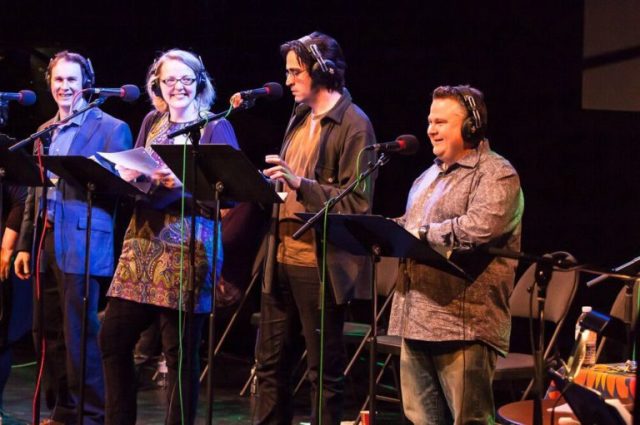
multi-instrumentalist Brett Miles

multi-instrumentalist Brett Miles

By Liz Nicholls, 12thnight.ca

It started with a lack, and a need.

“I needed it to be a festival that I would be excited to go to!” says the excited curator of Black Arts Matter (BAM!), a new  multidisciplinary celebration of Edmonton’s large and growing talent pool of black artists. And if you don’t know who they are — yet — well, that’s the point.   

BAM!, opening Thursday under the Chinook Series umbrella, is the brainchild of Nasra Adem, a 22-year-old activist dynamo who’s Edmonton’s Youth Poet Laureate, a multidisciplinary artist herself, and a repository of bright ideas for nurturing talent, encouraging  cultural diversity, and inspiring community participation.   

When Workshop West’s Vern Thiessen decided that this year’s edition of the annual Canoe Festival would be devoted to international black artists, he reached out to Adem to create a local black showcase to run in parallel. “He recognized that there was a local of visibility, of people of colour, in our artistic spaces.… He left it up to me, so we dreamt up BAM!” says Adem, a MacEwan University theatre grad who grew up in Ontario and spent her summers in New York, “checking out the poetry scene, hanging out, soaking up the vibe….”

“I wanted to bring back that high energy to Edmonton; I knew we were craving it!” says the effervescent Adem, who talks in exclamation marks, fast!.

Nextfest audiences know Adem, now an associate artist at Workshop West, from her contributions to the “night clubs,” performance parties assembled by Catch The Keys Productions. She still considers Catch the Keys’ Megan and Beth Dart “my alt-theatre moms!”

Adem’s ideas tend to operate on the centifugal principle. Sister 2 Sister, the expansible monthly showcase for and by women artists of colour she launched a couple of years ago, started with poetry, music and dance; now it has workshops, a book club, a DJ collective, with more to come. “It’s all about community-building,” Adem says. 

So it is with BAM! Adem wants it to be “a hub for the community of black artists to see each other, to feel the excitement of being in the same room with people who look like them! I want to help them know what it feels like to belong, to stoke that up!”

It’s a contagious idea. When the word went out, applications came flooding in, she reports, more submissions than she could accommodate. Calgary artists applied, but Adem kept BAM! local. “I knew this would happen, she says happily of the response. “All we needed was an avenue.”

“I knew that Canoe had the theatre side covered”; that festival has solo shows, from Toronto, New York, and Senegal. “So I was thinking music and dance; I knew poetry, spoken word, would be a big part,” says Adem who started out as a dancer (“hip hop predominantly, and jazz in high school”) before she went into musical theatre or took up spoken word performance.

Musical theatre has fallen off her radar, at least for now, the result, she thinks of “me not seeing musicals that have my story in mind. More artists of colour!”

BAM! didn’t start small or tentative. The cast list includes dozens of artists, and each event “is centred around a theme or an idea,” explains its creator. 

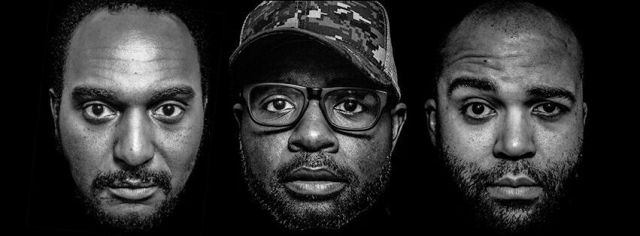
Mustafa Rafiq, experimental artist and promoter

Mustafa Rafiq, experimental artist and promoter

Poemcees Cipher, Friday night’s show, for example, is dedicated to poets who are also MCs and hip hop artists, and features Brett Miles. Saturday’s Young Lungs: Speak The Word is devoted to spoken word. Adem herself is part of Black Girl Magic Feb. 16, a large-cast all-female showcase of diverse talents.

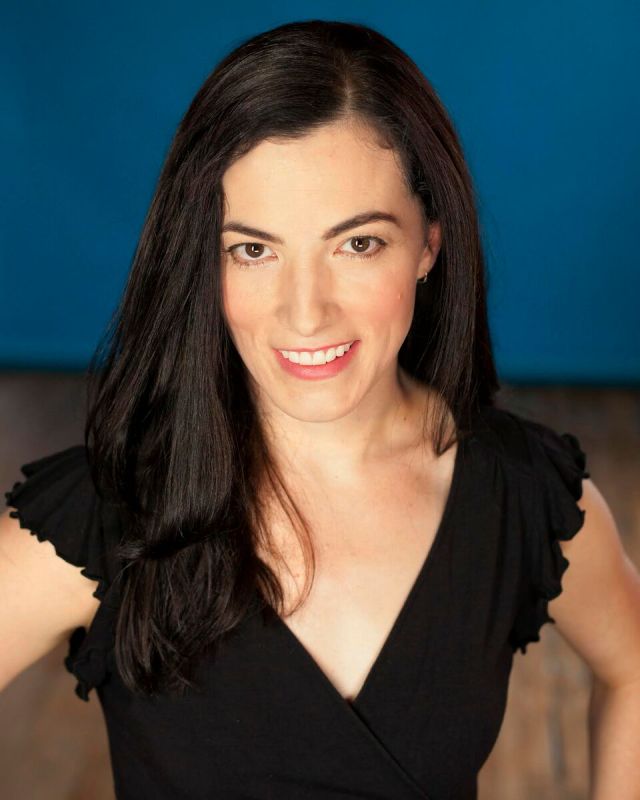
spoken word poet Timiro Mohamed

spoken word poet Timiro Mohamed

Monday is devoted to workshops and panel discussions on everything from marketing to anti-oppression to media relations. Adem describes them as “the back story of the art, the ‘life part’.”

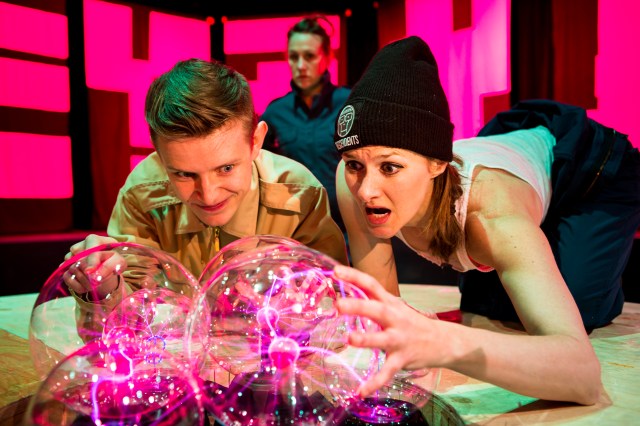
spoken word poet Althea Cunningham

spoken word poet Althea Cunningham

“It’s why we celebrate…. We get to the root of things; we look at the core issues, the conditions under which our art is created and our voices are heard; the social and political conditions we’ve grown up in.” There’s even a playwriting masterclass with Canadian award-winner Cheryl Foggo.

BAM! opens Thursday, with a showcase that combines hip hop and West African dance, drumming, hip hop artist Selassie. And, of course, there’s a closing night party Feb. 19! Bring your own exclamation points. 

The full BAM! schedule of events is at chinookseries.ca.

PREVIEW

Black Arts Matter (BAM!)

Where: ATB Financial Arts Barns, 10330 84 Ave.

Running: Thursday through Feb. 19

Tickets: chinookseries.ca or in person at the Arts Barns box office where pay-what-you-will tickets are available two hours before each show, first come first served

Posted in Previews | Comments Off on BAM! the new showcase for Edmonton’s black artists in Chinook Series

Bust: dark comedy, fire, family, Fort Mac in one Alberta story, at Network

271407 HCU Debottleneck Louise Lambert and Lora Brovold in Bust by Matthew MacKenzie, at Theatre Network. Photo by: Ian Jackson, Epic Photography.

Louise Lambert and Lora Brovold in Bust by Matthew MacKenzie, at Theatre Network. Photo by: Ian Jackson, Epic Photography.

By Liz Nicholls, 12thnight.ca

OK, you’re at a gathering in Vancouver or Toronto, somewhere in Canada that isn’t Alberta. Inevitably there’s the moment when you get asked where you’re from. 

The range of reactions? Pick one: the eye squint? the nuanced flinch? the pained smile of ironic sympathy? the expression that looks a lot like the person has just eaten a bad cashew? “Alberta” is never the good answer for this brand of sniffy encounter. Worse is “Fort McMurray.”

Playwright Matthew MacKenzie, who grew up here, knows a lot about those moments, thanks to his double theatre life in Edmonton and Toronto. He’s a veritable connoisseur of negative reactions — which is one of the inspirations of Bust, his new “dark comedy” Bust, premiering Thursday at Theatre Network.

“Alberta gets talked about a lot,” he sighs. “Stephen Harper’s from here. And the oil industry, well….”

The playwright, a thoughtful, engagingly boyish sort with a history of mining personal experience for his theatre, remembers being in Toronto last winter for a production of The Other, the third of his third-person plays about outsiders, the people who watch themselves watching themselves. “I was talking to someone working on a Fort Mac play, so she seemed like a safe person for me to say ‘hey, I’m from Alberta too!’” 

The reaction? “Euwww.” MacKenzie grins his rueful grin.  

And that was before the terrible Fort McMurray fire of last May. MacKenzie was back in the east, noting both the fund-raising initiatives for the fire victims who lost so much, and “the boiling hatred for oil and Fort Mac.”

There was a discernible motif of moral retribution (social media eats that stuff up): “You heard ‘Fort McMurray had it coming’,” sighs MacKenzie, who has friends and relatives who work in the oil patch. “‘Karma’ was a common sentiment; ‘Fort Mac and the evil oil companies deserved to burn’.”

This scenario finds its way into Bust, whose four characters, says MacKenzie, “are the most like me of any characters I’ve ever written.” Which is why he eschewed his usual method of interviews and research: “I was wanting to write a story in the realm of fiction, to relate on an Alberta culture level.”

A scant three months after the devastating fire, two Fort Mac couples are struggling with terrible loss and upheaval in their lives.  And, just to up the ante, they’ve been at a Peewee hockey championship game to cheer on their kids, and a bad call has robbed them of victory. 

Bust is one of the few plays in the repertoire to actually be set in Fort McMurray (the plays I’ve seen are peopled by the arrivals on the scene from elsewhere). Not only that, but it’s the immediately post-fire Fort Mac of this past August, when the ground has barely cooled.   

MacKenzie appreciates the unusual bravery of the theatre company where Bust is getting its world premiere. In its own way, Theatre Network knows something about fire and loss; their vintage theatre burned to the ground in the winter of 2015.

“Brad (Theatre Network artistic director Bradley Moss) signed on, right away, to something that could very easily have blown up in his face,” says MacKenzie, impressed. “Fort McMurray, fire, and ‘comedy’?!” He smiles.

The first day of rehearsal, he reports, the first question from the actors and the production team was whether MacKenzie was planning a sequel. “A sequel! You’ve gotta do a sequel!”

“The opportunity to write about something so current! It’s very now, not even a year!” The playwright sighs, “Theatre has the ability to be current and then … it mostly isn’t.”

Currency equals risk. And Mackenzie isn’t a playwright who’s shied away from that equation. Take his 2015 Bears, for example. It’s  a highly imaginative “multi-disciplinary comedy about the Northern Gateway Pipeline” in which a Métis protagonist in flight from the city through the mountains to the sea, gradually, magically, turns into a bear. SIA, his award-winning child soldier/hostage drama, was inspired by his own experiences as a naive Canuck student on a helping mission in Liberia.

In a double-header MacKenzie season, The Bone Wars, a multi-disciplinary extravaganza (premiering at Punctuate! Theatre in April) set on a fossil quest in the Badlands, investigates our fatally insatiable appetite for fossil fuels.”

By contrast Bust, says MacKenzie, is about “the people who call Fort McMurray home, the families…. I focus on the people, not the public policy.”

Christopher Schulz and Brandon Coffey in Bust, at Theatre Network. Photo by Ian Jackson, Epic Photography.

Christopher Schulz and Brandon Coffey in Bust, at Theatre Network. Photo by Ian Jackson, Epic Photography.

The assumption that Bust will be an anti-oil manifesto is something he’s encountered before, most recently at his brother’s birthday party. MacKenzie remains skeptical about “the Naomi Klein-type declarations of the latte left…. You want to say ‘wonderful!, but what are your plans for the working people?’.”

“And these are thinking, feeling, critically aware people. You’re not telling them something they’re oblivious to,” says MacKenzie.“This is a look at the people. Not a sympathetic look or a hostile look. Just a look.”

Louise Lambert in Bust. Photo by Aaron Pedersen

Louise Lambert in Bust. Photo by Aaron Pedersen

MacKenzie’s grandma thinks there’s too much swearing in Bust. Brandon Coffey, one of Moss’s quartet of actors, who grew up in Fort Mac, advised ramping it up. 

Which brings us to the always operatically fraught question of hockey. Getting your hockey references wrong in Edmonton would be a form of self-immolation no one sane would advise, even on the grounds of creativity.

MacKenzie and hockey have a close personal relationship. “I’m a massive Oilers fan, definitely,” he says. “My first little play, Bench Banter, at the very first Playwrights Garage with Ron Jenkins and Vern Thiessen, was two hockey dads burying a dead referee.”

PREVIEW

Bust

Theatre: Theatre Network

Written by: Matthew MacKenzie

Directed by: Bradley Moss

Starring: Brandon Coffey, Lora Brovold, Louise Lambert, Christopher Schulz

Where: The Roxy on Gateway, 8529 Gateway Blvd.

Running: Thursday through Feb. 26

Tickets: theatrenetwork.ca or 780-453-2440.

Posted in Previews | Comments Off on Bust: dark comedy, fire, family, Fort Mac in one Alberta story, at Network

The Citadel: a new artistic director, an adventurous new season

Hadestown, the New York Theatre Workshop production. Photo by: Joan Marcus.

Hadestown, the New York Theatre Workshop production. Photo by: Joan Marcus.

By Liz Nicholls, 12thnight.ca

Edmonton largest playhouse turns 52 next season — with a new artistic director, unusual international partnerships, and cultural/ethnic diversity initiatives on the mainstage and its trio of “add-on’s.”      

Daryl Cloran, newly arrived at the Citadel Theatre this past fall from six years at Kamloops’ Western Canada Theatre, unveiled his upcoming first season Monday evening in the Club cabaret.

Citadel artistic director Daryl Cloran. Photo supplied.

Citadel artistic director Daryl Cloran. Photo supplied.

It’s not a surprise to find a hot Tony Award winner (The Humans) and a high-mileage jukebox musical (Mamma Mia!) in a Citadel season. Less expected is the double axis of Loran’s adventurous and full-bodied 2017-2018 lineup: two musicals, a study in contrast both in provenance and theatricality.

One is an innovative Off-Broadway musical hit getting re-designed and scaled up in Edmonton for its journey to Broadway: Hadestown, based on a 2010 concept album by the American singer-songwriter Anaïs Mitchell. The other is a Canadian musical with an Indigenous auteur and a heartbreaking Canadian story to tell: Children of God, by the Oji-Cree playwright/director/composer/lyricist Corey Payette.

The scenario whereby Cloran has persuaded American producers to open Hadestown here in November, with a Canadian cast (Cloran’s proviso), en route to the Great White Way, is a salute of sorts to Citadel history. It echoes back through decades to energetic attempts by Citadel founder Joe Shoctor to be the out-of-town partner for New York-bound shows (Pieces of Eight and Duddy among them).

“I knew they’d be looking for a partner,” says Cloran, who saw Hadestown last summer in New York Theatre Workshop’s 250-seat venue, staged in the round. “‘Why not bring it to Edmonton?’ I asked the producers. And they laughed and laughed.”

“But I was persistent; I kept sending links to examples of the kind of work we did here, production shots, what our production staff was capable of in set and costumes, my background in new plays…. I sent a lot of stuff about Evangeline,” the epic Ted Dykstra musical that premiered at the Citadel in 2015. After all, “a new musical on a giant scale, to demonstrate that we can give you the support you need, in a safe off-the-radar place.”

“It’s a chance for 11 Canadian actors to work with one of the hottest directors in North America right now,” says Cloran of  Rachel Chavkin. Her imaginatively-staged production of Natasha, Pierre and the Great Comet of 1812, which completely reinvents the Imperial Theatre on Broadway, is currently playing to sold-out houses there after a performance history that has included an Off-Broadway spiegel tent. “No guarantee that (the actors) will be going (with the show) to Broadway, of course. But I’ll bet she’ll fall in love with at least one of them!”

“We’ve opened that door,” Cloran says of the possibility of two-way traffic in future cross-border projects.

Hadestown is spun from the myth of Orpheus and his underworld quest to recapture the affections of his lost love Eurydice. Cloran describes the music as having a “foot-stompin’, vintage New Orleans, really sexy, kinda jazzy Tom Waits feel to it.”  Think Tremé, he says.

A thousand renewing subscribers get a four-song EP from the Off-Broadway production, “so they can start to get the music in their heads.”

Michelle Bardach in Children of God, an original musical by Corey Payette. Photo by: Matt Barnes.

Michelle Bardach in Children of God, an original musical by Corey Payette. Photo by: Matt Barnes.

Children of God, an unprecedented example of original Indigenous work on the Citadel mainstage, is getting its world premiere in the current National Arts Centre season. That’s the production by the multi-talented Payette, artistic director of Vancouver’s Urban Ink, that arrives at the Citadel next March to tell the story of a family whose children are sent away to residential school.

“I feel it’s very important for us to have Indigenous programming on the mainstage,” says Cloran, who partnered with Payette in workshop performances of Children of God at Western Canadian Theatre. “Doing the play is the first step in building outreach and conversation.” To further that end, Cloran has just hired Christine Frederick as the company’s first “Indigenous associate artist to help us reach out and build relationships with Indigenous artists, playwrights, audiences….”

“It’s such a gorgeous, heart-rending production,” says Cloran. In high contrast to the jazzy Hadestown score, “the music (there’s a four-piece band) is beautiful, fluid, lyrical…. It’s sounds like musical theatre, but with a cool indigenous quality.” He quotes Payette: “when we can no longer speak we sing.”

“I feel it’s ultimately hopeful; Corey’s point is to find a way to move forward together…. It’s a great way for us to (contribute) to Canada’s 150th anniversary — instead (he laughs) of doing a play about John A. MacDonald.”

The season is bookended by its largest-cast shows, both directed by Cloran. It opens in September with the 2014 Lee Hall stage adaptation of the Oscar-winning movie Shakespeare In Love, a love letter to theatre that takes us backstage at the Globe with a certain up-and-coming playwright.

“It plays to the strength of the Citadel,” says Cloran of his mainstage Citadel directing debut with its cast of 20 and period costuming. “A fun, enjoyable, romantic way to start the season…. So full of great Shakespeare text, but with a contemporary comic sensibility,” says Cloran. “And there’s a dog!”

The mainstage finale, starring the participants in the Citadel/Banff Professional Theatre Program, is an original reboot of the Robin Hood legend, The Silver Arrow: The Untold Story of Robin Hood by Edmonton playwright/director/filmmaker Mieko Ouchi. This time out swashbuckler who steals from the rich to give to the poor is female. And, in collaboration with Annie Dugan of Firefly Circus, there will be aerial acrobatics. Cloran, who’s keen to provide more “family adventure programming,” describes “a steam-punk feel to the show, as opposed to merry olde England and people in tights.”

Between these bookends is Stephen Karam’s scary/ funny/ sad The Humans. The distinguished 2016 Tony Award-winner (and Pulitzer finalist) is of the family dinner drama stripe: “surprisingly funny, heartfelt, but with a thriller aspect to it,” as Cloran puts it. “So many plays set around the family dinner table don’t work; this one is so compelling….” 

The Citadel/Canadian Stage co-production is directed by the Shaw Festival’s ex-artistic director Jackie Maxwell; that has a special resonance for Cloran. “Years ago, in her first season at Shaw, she took a chance on a young upstart director,” grins Cloran of his younger self who directed Brian Friel’s Afterplay in the festival’s lunchtime lineup. “I’m very honoured in my first season to be able to, in a way, return the favour….”

It is humanly impossible to think Mamma Mia! without triggering the sound track in your brain. The box office-busting ABBA musical, which seems permanently embedded in the public cortex and never stops touring, will be directed, on the Citadel’s thrust stage the Maclab, by Ashlie Corcoran, artistic director of the Thousand Islands Playhouse. Her burgeoning career has recently added opera to her resumé;  she’s directing the Shaw Festival’s big musical, Me And My Girl, this summer.

Hadestown and Children of God are such unique musical experiences; I wanted to ensure we had a straight-up musical,” says Cloran, whose production of Mamma Mia! broke attendance records at Western Canada Theatre this season. 

The “season add-ons” tap into Edmonton’s cultural diversity with which the new artistic director is keen to connect. Ubuntu (The Cape Town Project), in a co-production with Winnipeg’s Prairie Theatre Exchange, brings to Edmonton for the first time one of Cloran’s own signature works. It’s a much-travelled 2009 inter-continental collaboration with South African artists he launched in his time at Toronto’s Theatrefront. 

At the centre of a story that unfolds in a highly physicalized way, a young South African man comes to Canada to find his father, who’d mysteriously disappeared 20 years before. The South Africans in the cast of five are back. Canadian casting awaits.

Tetsuro Shigematsu, creator and star of Empire of the Son. Photo supplied.

Tetsuro Shigematsu, creator and star of Empire of the Son. Photo supplied.

The add-on programming also includes Empire of the Son, a solo memoir of a father-son relationship by and starring the former CBC broadcaster Tetsuro Shigematsu, whose background is Japanese.

And the virtuoso improviser Rebecca Northan of Blind Date fame, is back with a cast of six to play detective with the audience. In Undercover, her latest experiment, an audience volunteer is a rookie assistant detective, working a case. 

Next season also includes includes the 18th return of the Citadel’s deluxe production of A Christmas Carol, adapted by Tom Wood and directed by former Citadel artistic director Bob Baker. 

“My goal is creating theatre that’s reflective of diverse communities in Edmonton, actors from different backgrounds, different voices on the stage,” says Cloran, whose banner for the season is “creating theatre that’s inclusive, innovative and international.”

Details about about new-play development (Cloran hopes to double the budget) and the Beyond The Stage series in the Club await. Meanwhile, “nobody has said ‘that’s not the way we do things around here’,” grins Cloran.

“I feel like this a company with Yes! in its heart.”

The 2017-2018 Citadel lineup at a glance:

Shakespeare in Love (with Royal Manitoba Theatre Centre): Sept. 16 to Oct. 8

Hadestown (with American producers Dale Franzen and Mara Isaacs): Nov. 11 to Dec. 3

The Humans (with Canadian Stage Company): Jan. 6 to 28, 2018

Mamma Mia!, Feb. 17 to March 18, 2018

Children of God (Urban Ink, produced in association with Western Canada Theatre): March 3 to 24, 2018

The Silver Arrow: The Untold Story of Robin Hood (with participants of Citadel/Banff Professional Theatre Program): April 21 to May 13, 2018

Season Add-ons

Ubuntu (The Cape Town Project), with Prairie Theatre Exchange: Oct. 11 to 22

Empire of the Son (a Vancouver Asian Canadian Theatre production): Jan. 31 to Feb. 18, 2018

Undercover  (a Spontaneous Theatre creation): April 4 to 29

Special seasonal presentation

A Christmas Carol, adapted by Tom Wood, Dec. 1 to 23

Posted in News/Views | Comments Off on The Citadel: a new artistic director, an adventurous new season

Innovation in the air: Chinook is back with warming trends in performance

Nilaja Sun in Pike St., at Canoe 2017. Photo supplied by Chinook Series

Nilaja Sun in Pike St., at Canoe 2017. Photo supplied by Chinook Series

By Liz Nicholls, 12thnight.ca

Forecast: Breezy. An adventuresome wind — full of diverse sounds, sights, cultural ideas, challenges — is set to blow through the winter theatre season again this week. 

Yes, Chinook is on its way to becoming an Edmonton verb (it’s like “fringe” that way), with the return of last year’s debut bright idea. The Chinook Series, Feb. 9 to 19, combines the offerings of three snow-melting performing arts companies — Workshop West and its Canoe Festival, Azimuth Theatre and its innovative Expanse Movement Arts Festival, and Fringe Theatre Adventures whose ever-breezy summer festivities entered the common parlance as a verb decades ago.

Nicolas Di Gaetano and Emily Pearlman in Countries Shaped Like Stars. Photo supplied by Chinook Series.

Nicolas Di Gaetano and Emily Pearlman in Countries Shaped Like Stars. Photo supplied by Chinook Series.

The latter is returning to us an irresistible charmer of a show that enchanted audiences in its 2013 run at the Fringe. Countries Shaped Like Stars is a once-upon-a-time musical love story fairy tale — there’s an under-represented category of theatrical experience — by Nicolas Di Gaetano and Emily Pearlman of Ottawa’s Mi Casa Theatre.

It’s an imaginative gambit not to be missed, utterly unclassifiable. “Once upon a time words were understood by the spaces between them, and anticipation grew on trees….”

“What are we not seeing here?” As Workshop West’s Vern Thiessen puts it, that’s the question that inspires Canoe’s annual adventure into experimental performance theatre. This year’s edition of Canoe is devoted entirely to black artists, as he explains, introducing the trio of acclaimed visiting solo shows from the big wide world that arrive by Canoe, so to speak.

That leading “what are we missing here?” question has inspired, as well, a partnership with a new multidisciplinary festival, designed to showcase Edmonton’s black artists: BAM! (Black Arts Matter).

And it’s inspired another Chinook collaboration, a groundbreaking Canadian first. Sound Off, created and curated by Edmonton’ deaf artist Chris Dodd, is the first deaf theatre festival in the country’s history. It presents work from work from Regina, Toronto, Montreal, as well as an improv night with Rapid Fire Theatre.

First up, Tuesday, two days before the rest of Canoe paddles into view, the Senegalese artist Patricia Gomis arrives with her acclaimed and globally-travelled solo show Moi, Monsieur, Moi. The Dakar/Paris/Brussels co-production is jointly presented by Canoe and L’UniThéâtre. “A friend of mine saw the show in Mali, and was so impressed!” says Brian Dooley, the ebullient artistic director of Edmonton’s francophone theatre. “And the franco-African community here is huge, and growing. So I seized on the idea. Let’s do this!”

Moi, Monsieur, Moi, which unfolds in a variety of theatrical techniques, chronicles the trials and tribulations of a young Senegalese girl growing up, shunted from household to household, chore to chore. “It’s about the challenge of being a woman in West Africa,” says Dooley. “But it’s done with a great smile…. There’s a real openness to the artist.”

That’s the light touch which the title captures, with its eager gust of “pick me, sir! pick me!”

“It’s important to display diversity,” says Dooley of theatre’s responsibility to engage its community, in all its variety including “the wave of new immigrants.” He’s currently planning an upcoming L’UniThéätre season that includes a Congolese writer.

“Storytelling is such a big part of African culture,” he says of the show’s appeal. And as its protagonist overcomes a series of challenges, “it empowers the woman’s voice in African storytelling!” Like Thiessen, Dooley is keen to bring Edmonton audiences at large experiences they wouldn’t otherwise have, he says.

Moi, Monsieur, Moi, starring Patricia Gomis. Photo supplied

Moi, Monsieur, Moi, starring Patricia Gomis. Photo supplied

Moi, Monsieur, Moi is in French. But never fear if your tenses aren’t up to scratch; there are English subtitles for every performance in the Tuesday through Saturday run at La Cité francophone (8627 91 St.).

Not only does Pike St. bring to town Nilaji Sun, a well-known New York artist, star of stage and small screen, but the show is a reunion for Thiessen with an old friend. In his six years making theatre in New York before he got his Workshop West job, Thiessen and Sun both worked for Epic Theatre.

“She’s acted in some of my plays,” says Thiessen happily. And her director Ron Russell has directed three Thiessens, Einstein’s Gift and The Parables (in which Sun appeared) and A More Perfect Union, which had an Off-Broadway run.

“And she’s never been to Canada before! We’re her Canadian debut!”

Thiessen describes Pike St., culled from Sun’s memories of growing up in the Lower East Side, as “really funny, very moving…. It’s the story of a community, and what happens to it when a hurricane is coming. It’s the story of a struggling family, a mother, a father, the people in the ‘hood,” all played by Sun.

Sébastien Heins in Brotherhood: The Hip Hopera, at Canoe 2017. Photo supplied by Chinook Series.

Sébastien Heins in Brotherhood: The Hip Hopera. Photo supplied by Chinook Series.

Brotherhood: The Hip Hopera (Feb. 17 to 19, Backstage Theatre), a solo show created by and starring Toronto’s Sébastien Heins, is “a kind of live hip hop concert, geared especially for the 16 to 30 crowd,” says Thiessen. “And Heins is such a great performer!”

As Thiessen explains, the story, which unfolds in music, movement, and rap (the show is entirely rhymed) tells of two twin brother hip hop artists, both played by Heins amongst a gallery of 11 characters. “There’s a great underlying story of family kinship and tension, backed up by the music,” says Thiessen.   

“All three soloists are “magnificent performers, world-class,” says Thiessen of his Canoe trio. “These shows are clinics on how to a one-person show!”

Chinook is testing the breeze of audience expansion with a new ticketing venture: 25 per cent of tickets for every show are pay-what-you-can (available in person two hours before at the ATB Financial Arts Barns box office). “It’s a big financial risk for us,” says Thiessen. “But we’re just trying to make Chinook more accessible, …. We’re flinging open the doors. Money should be no object for you!”  

PREVIEW

Chinook Series, Feb. 9 to 19, various theatres at ATB Financial Arts Barns (10330 84 Ave.) plus La Cité francophone (8627 91 St.).

 Canoe

Moi, Monsieur, Moi created by Patricia Gomis and Marcia de Castro, starring Patricia Gomis: Tuesday through Saturday, La Cité francophone.

Pike St. created by and starring Nilaja Sun. Feb. 14 and 15,  Backstage Theatre, ATB Financial Arts Barns.

Brotherhood: The Hip Hopera created by and starring Sébastien Heins, Feb. 17 to 19, The Backstage Theatre

Black Arts Matter (BAM!)Thursday through Feb. 19, ATB Financial Arts Barns locations (Backstage Theatre, Westbury Theatre, Westbury lobby)

Sound OffFeb. 13 to 19, ATB Financial Arts Barns

Fringe Theatre AdventuresCountries Shaped Like Stars, by and starring Nicolas Di Gaetano and Emily Pearlman. Thursday through Feb. 19, Studio C, ATB Financial Arts Barns

Azimuth TheatreExpanse Movement Festival, Thursday through Feb. 19, ATB Financial Arts Barns.

Tickets: chinookseries.ca or in person at Fringe Theatre Adventures box office, ATB Financial Arts Barns.


Posted in Previews | Comments Off on Innovation in the air: Chinook is back with warming trends in performance

Collin Doyle’s Slumberland Motel is at Script Salon this weekend

playwright Collin Doyle

playwright Collin Doyle

By Liz Nicholls, 12night.ca

He’s back. Theatres (and audiences) take note. 

If you saw Collin Doyle’s wonderful Let The Light Of Day Through, in Theatre Network’s top-drawer 2013 premiere production, you already know something important about the work of this award-winning playwright. It’s funny. And it’s moving. At the same time, and in a complex and startling way.

“People look at dark stuff more easily through comedy,” Doyle has said.

The Doyle play that gets a staged reading Sunday at Script Salon (an Edmonton theatre success story in itself), has all the signs of that signature combination. Slumberland Motel, billed as “a road-weary comedy,” gives us two ‘70s era underachievers, a couple of vacuum salesman,  Ed and Edward, sharing a room in a seedy roadside motel on Christmas Eve. Their flat landscape of disappointment and disillusion, a world of diminishing prospects — vacuum sales can suck — is transformed by the arrival of a mysterious woman from the next room.

I think we can safely call Slumberland Motel “long-awaited,” a term that applies to many of Doyle’s plays. It won the Alberta Playwriting Competition 11 years ago. Long lead times seem to be a Doyle specialty, a test of patience that would have made other artists implode. Doyle’s The Mighty Carlins, the raucous black comedy of family dysfunction which won the Alberta Playwriting Competition in 2004, was the most famous un-produced play in Alberta, before its Workshop West premiere four years later.

For Sunday’s reading, Robert Benz and Reed McColm are Ed and Edward, with April Banigan as the mystery woman. It happens in the Upper Arts Space at Holy Trinity Anglican Church (10037 84 Avenue) at 7:30 p.m. Admission is free; donations are welcome.

The genial playwright will be on hand to answer questions. I have one: when will it get fully produced by an Edmonton theatre? A Doyle play is always an event. And that long lead time business can wear thin.


Posted in Previews | Comments Off on Collin Doyle’s Slumberland Motel is at Script Salon this weekend

Celebrating winter and our three founding cultures: Flying Canoë Volant

Flying Canoë Volant 2016, in Mill Creek Ravine. Photo by Flying Canoē Volant

Flying Canoë Volant 2016, in Mill Creek Ravine. Photo by Flying Canoē Volant

By Liz Nicholls, 12thnight.ca

If you go out in the woods tonight….

It’s a strange form of civic enchantment. Every year about this time, the good burghers of Edmonton, thousands of them, find themselves irresistibly drawn to follow a trail of light and music through the a snowy ravine at night. 

They sing and dance in Mill Creek Ravine by the light of cunningly wrought light sources, in a stunning series of installations. They arrive at a First Nations Camp, and learn drumming from the experts. They find themselves doing jigs and reels with the Dave Cunningham Family Band at the Métis Camp — or making bannock. They meet up with a French-Canadian storyteller/musician (Roger Dallaire) in a Trapper’s Cabin.

It’s Flying Canoë Volante, the five-year-old winter festival where our three founding cultural traditions, First Nations, Métis, and French-Canadian, meet to play in the snow. Then everyone ascends to a city of light — a.k.a. La Cité francophone, the elegant curvilinear French cultural centre — to continue the party, indoors and out-, in a mixture of languages (and beverages).

The 2016 festival. Photo by: Flying Canoë Volant

The 2016 festival. Photo by: Flying Canoë Volant

And the people love it. Daniel Cournoyer, La Cité francophone’s amiable, and supremely bilingual, executive director, reports that in the five years since Flying Canoe became the heir to the defunct Winter Light Festival, attendance has grown from 3,000 to 30,000 last time out. And Cournoyer has enhanced the festivities by partnering with other festivals, Rubaboo for example, and Native Counselling Services.

Illuminating a dark ravine without a power source is no task for conventional thinkers. Flying Canoë Volante‘s ingenious lighting whiz Dylan Toymaker, has assembled 11 artists to create light installations along the snowy way, with contributions by theatre designer Marissa Kochanski and a variety of actors.

The adventures even have a narrative, and it’s an alluringly eerie one. The flying canoe, in different variations, is part of both French-Canadian and First Nations tradition. The 19th century legend recorded by Honoré Beaugrand — “a great piece of French-Canadian literature” as Cournoyer puts it — stars voyageurs who make a deal with the Devil to fly them home to their sweethearts on New Year’s Eve. One catch: they can’t drink or swear or crash into church steeples. Ooops, they do all of the above. “They made a deal, and they suffered the consequences,” laughs Cournoyer.

The 2016 edition of the festival. Photo by Flying Canoë Volant

The 2016 edition of the festival. Photo by Flying Canoë Volant

Cournoyer loves the festival’s “fusion of francophone and indigenous cultural traditions, a pow-wow of talent!” And Flying Canoë Volant isn’t a spectator sport. “I don’t want you to come here and just watch!” declares Cournoyer, with his usual exuberance. “I want people to partake. I’ve encouraged all our partners to engage the audience, to have interaction!”

 When you emerge from the ravine, Flying Canoë Volant turns more contemporary. The Rubaboo Festival is in charge of programming the theatre at La Cité francophone. Expect performance poetry, music, video, storytelling (Dallaire joins Elder Jerry Saddleback).

Out in the hall, it’s a cabaret, with three bands — one indigenous, one francophone, one anglo-Canadian — each night. There’s outdoor DJ-ed entertainment in the basin that the building encloses. And there’s “a big old dance party” at the end of Saturday night’s festivities, too.

“In the five years we’ve been doing it, I’ve learned so much,” says Cournoyer feelingly. “The partnerships! The knowledge I’ve gained! The cultures are so rich!”

The idea is “to create dialogue (between cultures) without imposing it. That’s what happens when you engage people…. It’s a journey of discovery.”

PREVIEW

Flying Canoë Volant

Where: Mill Creek Ravine, Rutherford School, La Cité francophone (8627 91 St.)

Running: Friday and Saturday. In the ravine, 6 to 10 p.m., at La Cité francophone, 6 p.m. to midnight.

Admission: free


Posted in Previews | Comments Off on Celebrating winter and our three founding cultures: Flying Canoë Volant

Disgraced: are we as tolerant and progressive as we think? A review

Raoul Bhaneja, Karen Glave MIchael Rubenfeld, Birgitte Solem, in Hope and Hell Theatre's production of Disgraced, at the Citadel. Photo by Cylla Von Tiedemann

Raoul Bhaneja, Karen Glave MIchael Rubenfeld, Birgitte Solem, in Hope and Hell Theatre’s production of Disgraced, at the Citadel. Photo by Cylla Von Tiedemann

It’s a particularly unnerving week to see a play as, well, nervy as Disgraced. The news has seen to that.

The snags in the social fabric are unravelling at a horrifying rate. Islamophobia isn’t even bothering to cover its tracks. And here, before our very eyes — thanks to Toronto’s Hope and Hell Theatre and the tough provocations of Ayad Ahktar’s 2013 Pulitzer Prize winner — is a classic joke set-up: so… a Muslim and a WASP, a Jew and an African-American sit down to dinner. The main course is pork tenderloin, but that’s not the punch line.

Witty smart-people banter about sports teams, work, art ensues — temporarily. You hear the line “irony is over-rated.” We’re at one of those stage dinner parties designed to give you indigestion. Or make you reach for the expensive scotch the way the characters do.

Somehow, incendiary topics like religion, fundamentalism, politics, terrorism, race, ethnic and cultural identity, Islamophobia vs “Islamo-fascism” — the subjects your mom and dad forbade over dinner — insinuate their way into the conversation, one dangerous spark at a time. Robert Ross Parker’s tense, dynamic, production escalates into fire in a nerve-wracking way.

It’s a compelling group portrait: smart, successful, liberal Manhattanites who discover, to their dismay, something about the thin cloth from which their progressive “post-ethnic” self-images are cut. It won’t keep you warm in the winter of anyone’s discontent; at moments of high stress, in fact, it’s see-through.

Raoul Bhaneja in Disgraced. Photo by Cylla Von Tiedemann

Raoul Bhaneja in Disgraced. Photo by Cylla Von Tiedemann

At the centre is Amir (the superb Raoul Bhaneja), a go-for-the-gusto corporate lawyer of Pakistani-Muslim heritage he’s careful to fudge, attached to a Jewish firm. Amir hasn’t just slid away from his Muslim background, he’s scathing about rejecting it. Islam is “a backward way of thinking and being. The Qur’an is “one long hate mail letter to humanity.”

His blonde and beautiful WASP wife Emily (Birgitte Solem) is an artist, an up-and-comer who’s making her mark adopting Islamic patterns into her work. When she talks about the “beauty and wisdom in the Islamic tradition,” Amir rolls his eyes.   

The guests at their dinner party are Isaac (Michael Rubenfeld), a curator at the Whitney interested in Emily’s paintings, and his lawyer wife Jory (Karen Glave), one of Amir’s legal colleagues at the firm. Isaac is Jewish, of the secular stripe; Jory is African-American, and a conservative. 

The fifth character is Amir’s young nephew Abe (Gabe Grey), who’s changed his name from Hussein to fit himself more comfortably into his new country. And his marginalizing treatment by an Islamophobic culture will result in a name-change back again later in the play, a hint of the story that continues to unfold in our world. He exits, adamantine. A radical is being born.

Abe has arrived pre-dinner to plead with his uncle to defend an Imam, unjustly detained. And it’s one of the cruel ironies of the play that it’s Amir’s intervention in a just cause, reluctant and grudging though it is, that will contribute materially to his downfall.

Bhaneja’s Amir is a dimensional, convincing creation, a man who’s forcibly re-wired his own identity into the high-powered corporate world, and remains on a short fuse. It’s a performance that recognizes the wear and tear on the human psyche of detaching yourself from your roots and attempting to re-invent yourself beyond ethnicity. Amir is tense, insecure, alert to nuance, ever-vigilante for signs of being found out, straining to hear the sounds of being found out.

And the terrible discovery Amir makes about himself, that he isn’t free of his heritage, is conveyed by Bhaneja in an outburst about 9-11 that startles all of us, including him, and signals his doom. It’s a test case in outrage for the performance and the production. And both emerge victorious.

The other performances are strikingly good, too. As the wry, affable art curator Isaac, Amir’s chief and worthy sparring partner, Rubenfeld captures, and easily, a certain jokey comic cadence and rhythm that make the character’s declension into fury even more dramatic.

Salem and Glave have less to work with. But both expertly convey the contradictions and accommodations built into their characters — Solem as the artist whose pro-Islamic creative creed is somewhat compromised by careerist upward mobility; Glave as the black lawyer who favours Order over Justice and must “explain” that in half a sentence.

At a fleet 90 minutes on an anonymously affluent-looking set by Sue LePage, Disgraced feels multi-faceted — possibly over-crammed with an adultery angle, but bristly from all sides. It addresses the tensions of the immigrant experience, of being a minority in the multi-cultural universe we tout. It’s an anti-complacency play; it attacks our liberal sense of ourselves as above the fray.

And questions abound. You find yourself wondering if the great cultural fractures are in the end impossible to heal. And if so, are they best concealed by splints, or will push always come to shove at the end of the day?  Is repression of our true “ethnic” selves desirable, even if it strains at the seams? Everything about this is discussable. 

You won’t want to miss a play that keeps you wondering about your own point of view.

REVIEW

Disgraced

Theatre: Hope and Hell at the Citadel, first produced by David Mirvish

Written by: Ayad Akhtar

Directed by: Robert Ross Parker

Starring: Raoul Bhaneja, Birgitte Solem, Karen Glave, Michael Rubenfeld, Gabe Grey

Running: through Feb. 12

Tickets: 780-425-1820, citadeltheatre.com

Posted in Reviews | Comments Off on Disgraced: are we as tolerant and progressive as we think? A review

Combustible dinner conversation: Disgraced comes to the Citadel

Raoul Bhaneja, Karen Glve, MIchael Rubenfeld, Birgitte Solem, in Hope and Hell Theatre production of Disgraced, at the Citadel. Photo supplied

Raoul Bhaneja, Karen Glave, MIchael Rubenfeld, Birgitte Solem, in Hope and Hell Theatre production of Disgraced, at the Citadel. Photo by Cylla von Tiedemann.

By Liz Nicholls, 12thnight.ca 

“O my god! What’s he going to say next!?”

It’s 2012 and Raoul Bhaneja and his actor wife Birgitte Solem are in New York watching an Off-Broadway audience watch a play. Everybody is tense, alert, engrossed: no oh no, don’t let him go there. 

They’re watching a two-couple dinner party, in a chic Upper East Side apartment, fracture in scary ways they’d never expect from successful, highly intelligent, “progressive” people who might think of themselves as post-ethnic.

The play is Disgraced, by South-Asian American writer Ayad Akhtar — a novelist/screenwriter/playwright, whose name — pre-Pulitzer Prize and Tony splash — wasn’t exactly household currency in theatre circles at the time. What struck Bhaneja, the Toronto playwright/actor/blues musician whose Hope and Hell Theatre brings the play to the Citadel this week, was that “the audience doesn’t know what they’re supposed to think.”

Bhaneja was excited by that. “This is why you do plays! To engage people!”

Bhaneja, engaging himself and entirely unpretentious, had first noticed Akhtar via a blog post. The writer had talked about a South-Asian pal who’d gone to a Hamlet audition, and the improbabilities had struck him: “he’s never going to play The Man.”

“There were all kinds of connections for me!” laughs Bhaneja. For one thing, his ethnicity is mixed (his mother is Irish, his diplomat dad is from Delhi). For another, as Edmonton audiences know, he’s taken on the slings and arrows of outraged traditionalists and their casting practices himself — by doing a solo Hamlet that’s played here a couple of times, and toured the world.

So Bhaneji read Disgraced, and its unresolved (possibly unresolvable) complexities blew him away. So — this seems exactly like something Bhaneja would do, and why he’d name his company Hope and Hell — he contacted Akhtar and set up a meeting. Which is why he and Solem had figured out the “kids! parents!” situation and flown down to New York. An additional nail-biter for an evening of nail biting: “We had one night! And one of the actors was 40 minutes late for curtain.”

Acquiring the rights for Hope and Hell took a while. Disgraced moved to Broadway, and acquired a Pulitzer and Tony nominations. But finally, this past year, it happened.

The Robert Ross Parker production that brings Bhaneja back to Citadel after the 2015 run of his theatre/concert/memoir hybrid Life, Death and the Blues, arrives here after a much-applauded run produced by Mirvish in its high-profile alternative season.

Bhaneja plays Amir, a high-powered Manhattan corporate lawyer specializing in acquisitions. He’s an ex-Muslim of Pakistani descent up for promotion in a Jewish firm. His wife Emily (Solem) is an up-and-comer WASP artist inspired by the Islamic world and its design aesthetic.

Raoul Bhaneja in Disgraced. Photo supplied.

Raoul Bhaneja in Disgraced. Photo by Cylla von Tiedemann

Their guests are Emily’s Jewish art dealer (Michael Rubenfeld) and his African-American wife (Karen Glave). Which sounds like a setup, as Bhaneja agrees. The play, he says, is “deliberately stocked with different points of view…. You agree with one person, then with another, then with another.”

He muses on the notion that intelligence “is the ability to hold two opposing points of view in your mind at the same time.” Disgraced, he says, “pushes that to the brink!”

Which may be why 80 per cent of the audience, “instead of the usual 20,” tends to stay for the talkback sessions, as Bhaneja reports. 

What Disgraced sets about “is creating engaging characters.” What it wilfully refuses to do — Bhaneja thinks this is its appeal — is “to tell you the feeling you’re supposed to have…. Two hours afterward, the audience is wondering what they think. The next day they wake up wondering. Whatever you think about it, you’re wrong by the end.”

“Answers?” Don’t look to the cast, Bhaneja laughs. “We don’t feel we can help you there, folks…. That’s what’s fun about it.”

Remember how your mom and dad always told you ‘don’t talk about politics and religions at the dinner table’.” Disgraced is what happens when “well-off, highly educated, privileged and successful people” ignore your mom and dad. It’s post-9-11 and combustible subjects like Islamophobia come up. Ethnic assumptions in this liberal élite are up for grabs.

“I’m not a tribal person, you think. I’m a progressive Western open-minded person who believes everyone’s equal. Right?” Disgraced “takes that assumption and pushes us against it.”

The play’s relevance hasn’t exactly leaked away. Current events have seen to that. And Canadians can’t exempt themselves, witness our own election with its divisive hijab controversy and the Conservative platform of informing on “barbaric cultural practices” into the social lexicon. Bhaneja brings up the name Kellie Leitch and her Trumpesque affinities.   

“So many elements reflect our lives here,” in a country that prides itself on multiculturalism. The fear of “the other” isn’t limited to the country south of the border. The play speaks powerfully in Germany, with its migrant crisis, for example. Bhaneja has  just been called to audition for a Singapore production of Disgraced.

Karen Glave and Michael Rubenfeld in Disgraced, Hope and Hell Theatre production at the Citadel. Photo supplied.

Karen Glave and Michael Rubenfeld in Disgraced, Hope and Hell Theatre production at the Citadel. Photo by Cylla von Tiedemann

“Its resonance continues to deepen,” says Bhaneja, who thinks Disgraced is well on its way to classic status. “There’s a weight to it.” He points to Arthur Miller and A View From The Bridge. “It was really good 50 years ago; it’s really good now.”

And its great strength is “a refusal to moralize and tell you what to think,” he thinks. “It doesn’t present answers…. But there’s an edge and brashness to it that’s not very Canadian.”

He encountered the play while doing final drafts of Love, Death and the Blues, in which our “half-white” protagonist resists the prejudice that he’s not black enough to be an authentic blues musician. “I was inspired by Akhtar,” says Bhaneja, “his boldness in facing the questions.”

He remembers his playwriting teacher at the National Theatre School (Sheldon Rosen) telling his younger playwright self that  “whatever you write about now, you’ll be writing about forever.” It’s been born out. “I’m drawn to questions of culture and identity. All my stuff so far, and the TV series I’m trying to get going…. it’s central to  what I’m trying to figure out. It’s what I can contribution to the theatre conversation.”

Has traditional casting, circumscribed by ethnicity, widened its embrace? Bhaneja, whose career moves from stage to screen and back again, pauses to consider. There are “positive signs, a more diverse perspective in characters, more reflective of our society. But I’d have hoped, 20 years in TVland, that it would be farther along than it is.”

“Being half-white has given me a double-sided access,  to roles I wouldn’t have had the chance to do if I were darker.” He laughs. “It hasn’t been a bad thing. And it’s also who I am!”

The role he landed in the Jessica Chastain thriller Miss Sloane was, as written,  “a 50-year-old white-haired textbook lobbyist.” And Bhaneja had thought “I’m never going to get this.” What he especially loved about the experience was hanging out with big-name actors who made time for the scheduling-busting complications of live theatre, John Lithgow and Sam Waterston among them. 

If Edmonton has a special place in his affection, it’s partly because of Citadel’s Bob Baker stepping up to acquire the Hope and Hell Disgraced even before its Mirvish production. Partly it’s because Disgraced is the first time in more than two decades — since a Fringe tour of 1995 — that he and his wife have been onstage together; they’ve even brought their kids. “We can walk into work together! A great change of scene for us….”

Ah yes, and there’s the prospect of Die-Nasty on his nights off with a troupe of the country’s top improvisers, including Mark Meer and Belinda Cornish. The last time he was here, in Love, Death, and the Blues, “I had the best improv night of my life!”

PREVIEW

Disgraced

Theatre: Hope and Hell (originally presented by David Mirvish)

Written by: Ayad Akhtar

Directed by: Robert Ross Parker

Starring: Raoul Bhaneja, Birgitte Solem, Michael Rosenfeld, Karen Glave, Gabe Grey

Where: Citadel Theatre

Running: Thursday through Feb. 12

Tickets: 780-425-1820, citadeltheatre.com 

Posted in Previews | Comments Off on Combustible dinner conversation: Disgraced comes to the Citadel

Back at the apocalypse factory: Star Killing Machine reviewed

Luc Tellier and Kristi Hansen in Star Killing Machine, a Broken Toys Theatre production. Photo by Ryan Parker

Luc Tellier and Kristi Hansen in Star Killing Machine, a Broken Toys Theatre production. Photo by Ryan Parker

It’s playful. It’s smart. It’s playful about being smart. It’s funny. It’s a musical. And, oh, did I mention?, it’s about the end of the world.

Yes, on the statistical probability charts, Star Killing Machine is right off the grid.

The strangest thing happened to me Friday night, thanks to Clinton Carew (book and lyrics) and Kris Schindel (music). I took a shuttle to a high-security facility in the Far North. And I arrived, with a couple of employees, in a daily workaday world we all know.

Working stiffs putting in their shifts are doing the usual — you know, surreptitiously surfing the net or sneaking a smoke, gossiping about promotions, avoiding the human resources manager, making and rebuffing advances, hooking up in liaisons they don’t think anyone else knows about.

The thing is, they’re scientists. And their job, along with support staff and layers of middle-management, is to develop a machine that will destroy the sun — and hence the world and all human life.

Under the circumstances, “progress” and “success” are unusually equivocal notions. And the idea of a “break-through,” well, no one really wants to go there, at least not farther than the day-to-day. Compromised and conflicted? Ring any bells, fellow citizens?

The company sings an ode to the sun: “I like the sun because without the sun there would be no sunny days.” One character expands on the notion. “I like the universe because without the universe I have too many things and nowhere to put them….”

Remarkably, Star Killing Machine, the large-scale (10-actor) inspiration of the small-scale indie company Broken Toys Theatre (in cahoots with Fringe Theatre Adventures and Azimuth), takes you into the heart of this world and its work force, fast and without a scrap of narration.

This they do the old-fashioned way: well-placed songs with witty lyrics; amusing, smartly written dialogue; imaginative cheap-theatre theatricality (design by Kevin Green). Ah yes, and acting. How many jukebox musicals can say the same? I’m looking at you Mamma Mia.

The characters are vividly individualized in the performances. We meet sad-eyed Simon (Garett Ross), a wry, knowing high-ranking brainiac who seems to having a crise de conscience about the contradictory nature of his professional life. He gets some of Carew’s funniest lines, and leads a delightful song about his favourite thing about a job that’s bringing him down. It’s a production number, choreographed entirely for a corps de ballet on office chairs, who twirl and hang and sail on and offstage on their rolling chairs, upside down. 

Garett Ross, in Star Killing Machine. Photo by Ryan Parker.

Garett Ross, in Star Killing Machine. Photo by Ryan Parker.

My Rolling Chair, like the other songs in the show, is culled from an early semi-released album, and arranged by musical director Scott Shpeley. He leads an onstage band as well as playing a character who always has a musical instrument in hand.    

Janice (Chantal Perron) is the tigerish manager, prowling through the facility sniffing out slackers, or fresh meat. Apocalypse statistician Brody (Cody Porter) finds an under-the-radar spot to smoke, and meets twitchy, intense Kate (Tatyana Rac) who points out that smoking can kill you. Porter doubles, amusingly, as an interactive spam-bot that Tara (Kristi Hansen) — of the ‘just doing my job’ school of survival — meets online. 

At the outset we meet Pippa (Elena Porter), a newish employee down in the mouth about getting dumped, and perky young Casey (Luc Tellier), just back at the facility from a leave of absence. “Hey, you’re alive,” says his boss Simon looking up at him. “Are you still crazy d’ya figure?” There are reasons for this time off, and I must leave you to discover them for yourself; Tellier is excellent as the unravelling young genius.

Star Killing Machine, a Broken Toys Theatre musical by Clinton Carew and Kris Schindell. Photo by Ryan Parker.

Star Killing Machine, a Broken Toys Theatre musical by Clinton Carew and Kris Schindel. Photo by Ryan Parker.

The apocalyptic pursued in the context of the ordinary workaday world: that’s the engine of Star Killing Machine. And it will see you through the left turn into the philosophical complications of Act II, which addresses, in a startlingly interactive black comedy way and at length (possibly too much of that), the possibilities and limitations of the spiritual world when confronted with mortality and death.

Act III, a fleeting one, takes us to the end of the world where time is either infinitely big or infinitely small. And the lingering image, of a band of humans on a raft, drifting in nothing, contemplating memory, meaning, and love, is like nothing you’re going to see onstage in a musical any time (or space) soon.

Not everything works in Star Killing Machine, and I must admit I lost the thread sometimes in Acts II and III. But discovering a musical comedy this ambitious and smart, this quirky, and this far off-centre feels like getting lost in the desert and finding a metro ticket.

What matters, in the end? There’s a lively song about that, too. And it’s addressed with Carew’s dark wit. “Depression could be a song,” concedes Pippa. “But who would sing it?” Good point. 

Highly recommended.

REVIEW

Star Killing Machine

Theatre: Broken Toys in association with Fringe Theatre Adventures, as part of Azimuth Theatre’s “emerging company” 2016-2017 lineup

Created by: Clinton Carew (book and lyrics) and Kris Schindel (music)

Directed by: Clinton Carew

Starring: Elena Porter, Chantal Perron, Tatyana Rac, Luc Tellier, Scott Schpeley, Kristi Hansen, Cody Porter, Garett Ross, Rebecca Merkley, Ryan Parker

Where: Backstage Theatre, ATB Financial Arts Barns 10330 84 Ave.

Running: Thursday through Jan. 29

Tickets: fringetheatre.ca

Posted in Reviews | Comments Off on Back at the apocalypse factory: Star Killing Machine reviewed

A rocky road to a reveal: Annapurna at Shadow Theatre

Shaun Johnston and Coralie Cairns in Annapurna, Shadow Theatre. Photo by Marc J Chalifoux Photography 2017

Shaun Johnston and Coralie Cairns in Annapurna, Shadow Theatre. Photo by Marc J Chalifoux Photography 2017

By Liz Nicholls, 12thnight.ca

The opening scene of Annapurna is a classic sitcom setup: a baggage sight gag. Ex-wife barges into ex-husband’s digs, dragging enough suitcases for a six-week spa tour of Europe and says she’s “passing through.”

If this were Neil Simon, it would be the Plaza (and her startled ex would be smoking a post-coital cig, with company). In the Sharr White two-hander that opened in John Hudson’s Shadow Theatre production Thursday as a vehicle for two seminal Shadow contributors, it’s a grotty trailer in the middle of nowhere at the foot of the Rockies. And the ex-husband is alone, wearing nothing but an apron, a chest bandage, and an oxygen tank.

Ulysses (Shaun Johnston) hasn’t seen Emma (Coralie Cairns) in 20 years, since the fateful night she vanished, with their five-year-old son. And this unexpected reunion doesn’t exactly exude warmth, witness a series of short, funny scenes, with amusing blackouts.

Emma is strangely aggressive about the derelict state of Ulysses’ surroundings, which she immediately sets about scrubbing. Oddly, she seems more surprised by his minimalist attire than by the evidently terminal state of his health (or is the oxygen tank the elephant in the room?). Cairns attacks the comedy with bustling sarcasm and outsized sitcom double-takes: “You bought meat? At the dollar store?”

For his part Ulysses the cowboy hermit is mystified and riled by the unexplained intrusion. And Johnston, Shadow Theatre’s co-founder and an actor who seems to have a natural affinity for broody muscular lone-rider characters, bites into the role with a certain grim wit and sardonic defiance: gallows humour with the rope in plain sight. The play gives him some juicey black comedy lines, and Johnston lands the pauses expertly.

Revelations about the characters and their pasts, shared and separate, ensue. They’re doled out on a draconian quota system designed, rather too obviously, to delay the play’s number one  mystery, often referenced then elaborately evaded:  So what happened 20 years ago? Hey, can I make you a sandwich while I don’t answer?

In short, you’ll have to wait (and wait) to find out. The reveal keeps getting postponed, for reasons that remain obscure. Ulysses is a poet and former professor, an alcoholic with gaping holes in his memory who gave up booze in favour of the smokes that are killing him. Why Emma disappeared without trace is something he doesn’t remember, as he tells her multiple times. She keeps withholding the information — mainly, it seems, so there can be 90 minutes’ worth of play. That the actors are able to wrest emotional heft from the moment, when it finally comes, is a credit to both. 

Coralie Cairns and Shaun Johnston in Annapurna, Shadow Theatre. Photo by Marc J Chalifoux Photography

Coralie Cairns and Shaun Johnston in Annapurna, Shadow Theatre. Photo by Marc J Chalifoux Photography

The other mystery of Annapurna is how these two were ever a couple. But that’s one of its insights into love, time, and memory — what can be lost and what can’t, no matter how hard you try. One of the production’s successes is the way affection gradually seeps into the starchy fabric of acrimony and grievances. Later Emma, softening, will remember the fateful moment of attraction: “…I’ve seen everything in the world but I’ve never seen a cowboy before, not a real one, and you look up and give me that … squint.”

Annapurna is named for a Himalayan peak of formidable aspect, with a history of failed climbs and retreats. And Daniel Van Heyst’s design, a cluttered trailer interior dwarfed by a stunning Rockies vista, beautifully lit to conjure the passage of dawn into dusk, make of those attempted ascents something of beauty. With relationships as with mountains, a little thing, a foothold lost, an overload of baggage, will send you tumbling down forever.

REVIEW

Annapurna

Theatre: Shadow

Written by: Sharr White

Directed by: John Hudson

Starring: Coralie Cairns, Shaun Johnston

Where: Varscona Theatre, 10329 83 Ave.

Running: through Feb. 5

Tickets:  780-434-5564, TIX on the Square (780-420-1757, tixonthesquare.ca)   

Posted in Reviews | Comments Off on A rocky road to a reveal: Annapurna at Shadow Theatre