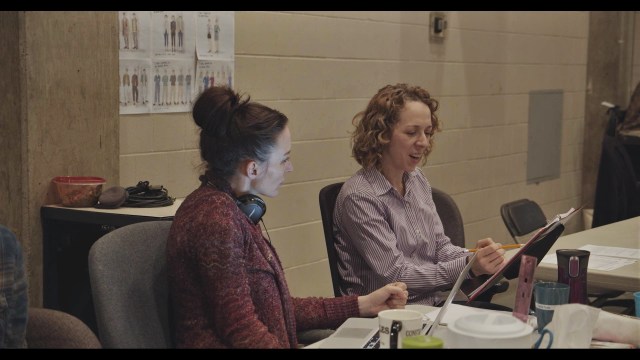
Zoom in on Shakespeare: Malachite Theatre bridges the gap

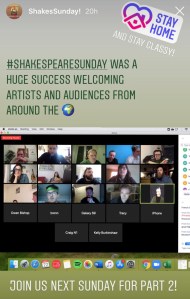
Shakespeare Sundays continues with Henry IV Part One. Photo supplied

By Liz Nicholls, 12thnight.ca

At a stressful moment when a virus is conspiring to make borders, to divide us from each other, what is live theatre to do? It is, after all, an art devoted by very definition to creating an imaginative connection, directly, with real people. Sharing, on the spot. But there’s this: Ingenuity and inventiveness are a theatre specialty. And though gatherings are on hold (which is vital, but lordie, how we miss them), creativity stops for no mere virus.   

Shakespeare himself, actor/ playwright/ theatre impresario par excellence, negotiated his way through periodic outbreaks of the plague. He’s the resident playwright at Malachite Theatre, a trans-Atlantic indie company that specializes in Shakespeare (and divides its time and human resources between Edmonton and London).  And Malachite is determined bring its audience an international experience to share — live, or as live as possible. 

Wine Wednesdays and Taco Tuesdays may not be happening. But Shakespeare Sundays are gathering momentum, in a weekly series of play readings chosen to follow Shakespeare’s history play cycle, in story order.

Artistic director Benjamin Blyth explains Malachite’s bright idea. Via the free and interactive online platform Zoom, every Sunday — morning here (11 a.m.) and evening in the U.K. — an international cast of artists joins an international gathering of audience members, for another play in the history cycle.

Shakespeare Sundays

Why the history plays? Says Blyth, “they’re all about privilege, isolationism, greed, nationalism.” You can’t argue with the fit, times being what they are.

Last week’s inaugural offering was the rarely performed Richard II, about a disastrously unqualified leader urged to abdication. “And I was just amazed how well it went,” says Blyth. “It was really an international event, artists and audiences interfacing from the U.K., Canada, U.S., China … places Malachite has toured.” And the reading was followed by a group discussion. “Heartwarming times in iambic pentameter!” as billed.

As he says, “everyone is in the same boat,” and hungry for a shared theatre experience. In a cast of 20-plus (“we don’t have to worry about doubling the parts”), he himself played the Duke of York, and his actor/composer wife Danielle LaRose played the Duchess of York.

To help support 12thnight.ca YEG theatre coverage, click here

This Sunday coming up, it’s Henry IV Part One, a play rich in vivid characters, including the great carousing dissolute John Falstaff and his drinking buddies (Prince Hal among them), and the fierce high-achiever Hotspur. And Blyth is hoping for a cast of upward than 30, depending on who signs up before the parts are assigned Saturday night. Ben Waring, an actor currently living on a boat in Suffolk, England, played Bolingbroke in Richard II, and he reprises his role in Henry IV Part One. “He has a three-month-old baby boy Christopher, who makes an appearance from time to time,” says Blyth.

The Zoom app, already much in use in the business world for meetings, is admirably suited to bringing artists and audiences together, says Blyth. “At home you can turn video or sound (of yourself) On or Off,” depending on whether you prefer just to watch and listen in, or be visible as part of the audience. Your view, adjustable on the app, can be “speaker only, or the gallery view, everyone at once.”

So your preferences and idiosyncrasies as an audience member can be accommodated. Are you the person who always gravitates to the back of any theatre? Under the circumstances do you prefer to stay in your bathrobe? You can turn the video off.

“It works really well for a reading,” says Blyth of the debut edition. “It flattens the distance between actor and audience…. You can join in. Or not. Oddly, it’s more intense, in a way, since you’re invited into people’s homes.” And here’s a bonus for Shakespeare: “you don’t need to cut the play,” to fit the time requirements of the theatre venue.

The post-reading discussion is “in the Q and A style. So if you want to offer something, you can go for it. It’s really good as a way of encouraging active listening.” He laughs. “It’s a very polite medium; everyone gets space to speak, and reflect.”

“It closes distances. It’s great to see people from the north of England next to people from Calgary, and someone in New York…. And to know that this conversation is happening across vast distances.” And there’s something intimate about the whole experience. Blyth laughs. LaRose “made cookies in the middle of Act II, and they appeared later in the play.”

“Now we’re keen to explore what the production possibilities are,” says Blyth, who’s looking at reviving the Malachite Macbeth that ran at Holy Trinity Church in 2019.

“The conversation is a way of building an international community. Breaking down borders that have newly gone up…. We’re a community that comes together to share stories. It’s a way of bridging physical distances without social distancing!”

Here are Blyth’s instructions. “The Zoom link: https://zoom.us/j/9520455493. Please download the zoom app to your computer or phone first, then click the link above to join on Sunday!”


Posted in News/Views | Tagged , , , , , | Comments Off on Zoom in on Shakespeare: Malachite Theatre bridges the gap

Bring on the women: Northern Light Theatre’s 45th anniversary season

Northern Light Theatre 45th anniversary season. Photo by Epic Photography

By Liz Nicholls, 12thnight.ca

There’s a certain wincing irony attached to cancelling the run of a play called Confessions of a Reluctant Caregiver, to be sure. And that’s what happened, sadly, in the case of Northern Light Theatre’s season finale, which was to have opened this weekend in the Studio Theatre at the ATB Financial Arts Barns.

But NLT’s longtime artistic director Trevor Schmidt, an expert in juggling shoestring budget planning, and the fine art of theatrical ingenuity to match, says “we’re not taking a huge hit…. I don’t think it (the cancellation) will mean any changes to next season’s programming.”

To help support 12thnight.ca YEG theatre coverage, click here

And NLT’s upcoming 45th anniversary season is what has him excited. “I picked the theme first,” Schmidt says of planning his four-play line-up — up a play from the company’s usual three — that launches in September with The Oldest Profession, a 1981 black comedy by the Pulitzer Prize-winning American star playwright Paula Vogel (How I Learned To Drive).

NLT’s quartet of 2020-2021 shows will be occupied by actors of a certain age, all women. 

In a youth-oriented culture “I really want to acknowledge the senior performers in our community, that I think are being neglected or overlooked,” says the director/designer of his season focus. “We’re in a society, and especially in our industry, that really values the new and emerging…. We’re seeing a lot of young people coming out of training schools after four years, feeling very entitled, and not quite recognizing there are people who went to school four years ahead of them, and worked really hard and paid their dues.”

“There are no grants for people in their ‘50s who are changing their focus, starting in a new direction….” he points out. The NLT season is “a sign of respect from our company. There are very few roles for women over 55…. I’ve purposefully tried to cast them, through as many shows as we could manage, with as many cast members. And to bring back some people who haven’t been seen onstage for a few years.” 

The Oldest Profession (Sept. 18 to Oct. 3) got its world premiere, curiously enough, in Edmonton in 1988, in a joint Theatre Network/25th Street production (with the late Barbara Reese in the cast). Lo these many years, it’s back, the largest show in the NLT season.

The characters are five sex workers in their 70s and 80s. The play, says Schmidt, operates on the “blackbird principle”: In the first scene there are five, then four, then three, two … “because they die off. Reaganomics, trickle-down economics, ideas about how that affected the elderly, and women in their business with no security, no pensions; their clientele is getting older, their bodies that aren’t what they used to be.…”

“It’s a comedy, but it’s a Northern Light kind of comedy: super-dark. You know me; I like my comedies pitch-black!” Schmidt laughs.

Schmidt’s cast includes Holly Turner (The Testament of Mary, Origin of the Species), Nimet Kanji (Contractions), Karen Gartner, and Coralie Cairns, with the fifth role yet to be cast. “I wanted to make sure we cast a good group, and made it a safe and supportive environment,” says Schmidt. “No pressure, no panic.”

Naturally, he’s looking forward to the costume design for the show. “Hmm, an 80-something sex worker … how high is too high a heel?”

The Ugly Duchess, by the Victoria-based playwright Janet Munsil, is a 1999 solo show imagined from a historical woman, Margaret Maultasch, the 14th century monarch of Tyrol reputed to be the ugliest woman in the world. She was also a highly desirable bride thanks to the advantageous location of her realm. And the arc of the play, explains Schmidt, “beautifully poetic and lyrical, is her dressing and putting on her make-up, her armour, in front of a mirror.”

Originally performed by a man (Paul Terry), the play has been something of a festival hit in its time. The star of Schmidt’s production, which runs Nov. 6 to 21, has yet to be announced.

Mirrors and faces figure prominently, too, in The Look, by the Australian playwright and TV screenwriter Alexa Wyatt (whose presence in the season continues an NLT practice of introducing us to writers whose names and work we don’t yet know). As Schmidt describes it, “an older woman, the former face of Estelle Cosmetics, has been aged out, demoted to training (younger) women to work on the new campaign…. And she starts to lose her mind!”

“It’s very funny, in a Baroness Bianka’s Bloodsongs kind of way,” he says of a play that’s never been produced. “Funny until it’s not.” Linda Grass stars in the Schmidt production (Jan. 22 to Feb. 6), to be set up as a cabaret.

The season finale is Something Unspoken, a Tennessee Williams one-act two-hander from the early 1950s and set in a house in Mississippi. That’s where two women, the lady of the house and her personal secretary, are waiting on the results of a vote; the former is running to be the Regent of the Daughter of the Confederacy, which has the kind of politics you might imagine.

Schmidt’s production (April 15 to May 1) pairs a white and a black  actor, Davina Stewart and Patricia Darbasie, casting that ups the play’s ante “from class to racial imbalance in power…. I’m excited to explode the play open,” he says of a scanty 25-page script “filled with stage directions.”

The title, says Schmidt, alludes to “something that happened 14 years ago.” And that something hints at the sexual. “I’m thinking (Williams) wrote a gay play in 1952!”

The season has an add-on, a two-night stand (Nov. 27 and 28), in a “special rehearsed reading,” of a new Schmidt play We Had A Girl Before You, a Gothic thriller set in a cliff-side house.

Early-bird subscriptions available through April 15, at 780-471-1586 or northernlighttheatre.com.


Posted in News/Views, Previews | Tagged , , , , | Comments Off on Bring on the women: Northern Light Theatre’s 45th anniversary season

Are you Stuck-In-The House? The Citadel can help with that (an update from E-town’s biggest theatre)

The Garneau Block, postponed by The Citadel Theatre. Photo by Arthur Mah.

By Liz Nicholls, 12thnight.ca

True, you can’t show up for a live in-person experience at the theatre. But Edmonton’s largest theatre company invites you to share the work of our impressive talent pool of local artists anyway — in your own home.

The Citadel’s bright idea is a timely adaptation of their House comedy, cabaret and concert series introduced last season and cut short in these challenging, isolating times. This very day the Citadel launches its new Stuck-In-The-House Series.

Citadel artistic director Daryl Cloran. Photo: Ryan Parker.

Artistic director Daryl Cloran, stuck in his own house at present, explains. “We’re inviting Edmonton artists to send us videos (or live-streams) of their performances, whether they be excerpts of shows that got cancelled, or other pieces of art, songs, music, comedy, they want to share.… There are so many talented people in Edmonton. And all of them had something cancelled or postponed.”

The idea is “one video per day every day the theatre is closed, as long as we need to” says Cloran. “And we’ll put it online, on our Facebook page. And we invite the people who watch to donate.”

To help support 12thnight.ca YEG theatre coverage, click here

All donations go directly to the artists; the theatre doesn’t take a cut. Additionally, with the support of the Edmonton Community Foundation, which agreed to move part of the Citadel’s grant into the project, “every artist will get paid an honorarium.” As Cloran says “it’s a little money going their way. And a chance for us to keep the art alive.”

First up in Stuck-In-The House, available online today at 4 p.m., resonates strongly in that regard. Oscar Derkx, a cast-member in two Citadel productions, As You Like It and Peter Pan Goes Wrong, impacted by the current crisis, sings Let It Be, from the former: Cloran’s ‘60s-style production, set to some 25 Beatles songs, closed four performances earlier than slated. “It’s just heartbreakingly gorgeous,” says Cloran.

Every day at noon, expect a new Stuck-In-The-House offering. Saturday’s has actor/ playwright, improviser Belinda Cornish presenting “a look at her adaptation of Todd Babiak’s novel The Garneau Block,” which was to have had its world premiere last weekend. On Sunday, the premier theatre couple Kristi Hansen and Sheldon Elter, talk about their cancelled shows, Edmonton Opera’s Candide and Punctuate! Theatre’s After The Fire (respectively).

As You LIke It. Photo by Dylan Hewlett

Cloran says he and Citadel executive director Chantell Ghosh have done an introductory video “where you get to see me play my drums! One night during previews for As You Like It, I wore a referee costume, and played with the band!”

As for this season’s heartbreaking news, Cloran is determined that Citadel audiences won’t be deprived of either The Garneau Block or Peter Pan Goes Wrong, both postponed, not cancelled. “We’re committed to these shows,” he says, “both for artists to get to do them and audiences to get to see them…. ” But the “when” can’t be nailed down, of course. “We’re drawing up plans, imagining them, right now. But things seem to change hourly.”

The Garneau Block got as far as the final dress rehearsal before the run was shut down, the night before the first public preview. The Citadel invited “a really lovely audience” of artists whose shows had been cancelled, As You Like It, Candide, Noises Off (at the Mayfield Dinner Theatre), etc. “Then we locked the doors of the Maclab, and walked out. It’s all still set up in there. And our hope is that when we get the go-ahead, it’ll just be a matter of trying to get the artists back together and ramping it up again.”

That reassembling of actors and the creative team depends, of course, on the length of the hiatus. A couple of months delay is a very different situation than six, or a whole season, as Cloran points out. “If we’re able to get back in the summer, we have some flexibility.” Elvis the Musical is slated to run in July, “if the world allows our first big show back… Maybe we could run The Garneau Block in August, to celebrate an Edmonton story along with another Edmonton story, the Edmonton Fringe…. If it gets pushed back into next season then we have to make choices.”

Could The Garneau Block be delayed till the following season? Might it displace one of the announced 2020-2021 productions? “It’s all dependent on what the world allows,” says Cloran. “And we really can’t know until we get closer to summer and fall…. Right now we’re going with the thought that next season remains in place as planned.”

As it stands, a cancellation of The Garneau Block (a Citadel commission) and Peter Pan Goes Wrong (a co-production with Vancouver’s Arts Club, which was to have staged it in the summer), represents “more than $1 million loss in box office revenue alone, not counting what we spent building and rehearsing. A big hit.”

The Garneau Block “is going to happen!” Cloran declares. “We just can’t guarantee when. Whether it’s this summer or next season, or two seasons from now, it will. We have a Plan B, a Plan C, a Plan D….”

“Belinda (playwright Cornish) did a great job of it; Rachel’s (director Rachel Peake) production is really lovely….We’re committed,” he says. “Please stick with us over the next couple of months as we develop a plan…. You can choose to hang on to those tickets, or transfer them to another show. Or donate that ticket cost to support us.” And if none of the above is workable, “a refund, of course.”


Posted in News/Views | Tagged , , , , , , , | Comments Off on Are you Stuck-In-The House? The Citadel can help with that (an update from E-town’s biggest theatre)

When the curtain doesn’t open: strange nights without theatre

The Garneau Block, postponed at the Citadel Theatre. Dress rehearsal shot by Arthur Mah. Jackson.

Playwright Belinda Cornish and director Rachel Peake, in the rehearsal room, The Garneau Block, postponed at the Citadel Theatre. Photo supplied.

By Liz Nicholls, 12thnight.ca

It’s a strange feeling. I’ve spent most of my adult life encouraging people to go to live theatre. Exhorting people to share the excitement, the fun, the surprise, the laughter and the tears, the shared gasp, the surge of feeling, the new ideas, the sense of breathing together … and trying to write about the experience in a way that might intrigue them.

It goes against the grain, to put it mildly, to be advising people that they’re much better off by themselves, at home, at a safe distance from their fellow humans — and for their own good. It’s like discovering that the law of gravity has been suspended.

And when you’ve gone out for a living, night after night, for the last 35 years, just staying home feels a bit like floating off the planet into outer space, and holding your breath. Not to mention that theatre is, supremely and by definition, a live and living form that’s all about the proximity of real people, the spark that happens when artists and their audiences share a room. It’s a spark you don’t get watching a screen.

To help support 12thnight.ca YEG theatre coverage, click here

And there’s this: live theatre is also a culture of close calls and close-to-the-bone operations. No one (sane) goes into live theatre for the money. Theatre people are incredibly good at making much of little. But not-for-profit theatre companies aren’t sitting on cushy margins; they’re precipice-dwellers at the best of times. The very necessary hiatus, the cancellations and postponements at theatres large and small that are the through-line of theatre news these days, are heartbreaks, every one.

When Edmonton Opera announces the cancellation of Candide, which was to have opened last Saturday night, that production is one of three for their entire season. When the Varscona Theatre announces the temporary closure of its 200-seat house, ditto Grindstone Comedy Theatre in their tiny venue, the loss of revenue from(very) modestly-priced tickets, is a huge body-blow to venues, and every arts group that uses them.

The chief investors in theatre are its artists. They inhabit a precarious world of freelance gigs and short-term contracts, unstable at the best of times; to survive most of them take on other gigs, waiting tables for example, in industries that are also inextricably linked to the gathering of real live people. 

Here’s the thing about theatre artists, of every stripe: they’re ingenious, and urgent, about sharing. They always have been. And the current physical separation of artists and their audiences, necessary as it is, won’t last forever. In the meantime, artists’ bright ideas and resourcefulness in connecting is inspiring.

Theatre and opera companies around the world are taking to the world of live-streaming. The Social Distancing Festival launched, online natch, by Toronto-based actor/playwright Nick Green, whose play Happy Birthday Baby J was recently onstage at Shadow Theatre, gathers information about cancelled and postponed shows from across the country. Check it out: socialdistancingfestival.com.

Die-Nasty, Edmonton’s live weekly improvised soap opera — this season a Jazz Age setting — isn’t running in person at the Varscona, of course. But every Monday night the performers, deluxe improvisers all, gather online from their 12 homes, and through the magic of video conferencing they improvise the Die-Nasty Radio Play, set in the early days of vaudeville. The first episode was last Monday; you can catch it on YouTube.

Northern Light Theatre has cancelled the production of Confessions of a Reluctant Caregiver that was to have opened next week. But, says artistic director Trevor Schmidt, they’re planning to post to their website some video sequences from rehearsal, and views of the set and costumes. At least we can catch a glimpse of what we’re missing. 

It’s tricky, to be sure. But director Stephen Heatley, a drama prof at UBC, says they’re devising ways to have acting classes online.

Darka Tarnawsky of Bottom Line Productions, agents provocateurs and specialists in arts marketing and publicity strategies, sent out a letter, full of brainstorming initiatives and provocations, to the arts community. “Is this the opportune time to share some fun archival content? To write and post that blog about art appreciation  you’ve always wanted to do? To prep and share a short video performance, Skype interview or haiku about your coming season? No idea is too out-there.”

With the closures and postponements that have happened in New York, where theatre is dark till at least April 16. Time-Out New York, devoted to telling its readers what’s on in the Big Apple, has re-christened itself temporarily Time In. The chief reviewer presides over a “theatre from home” site to announce webcasts and live streaming entertainment events. Broadway World (@BroadwayWorld) has a #LivingRoomConcerts series featuring Broadway stars singing numbers from the musicals audiences are missing at the moment.

Or there’s reading. Mark Fisher of the Guardian has suggested resorting to the page — and starting, with all the allegedly unstageable plays you can get your mitts on, like Ibsen’s Peer Gynt. Hey, is this the moment for a GBS binge?

Artists and arts companies do need our support to stay afloat and breathing. Instead of collecting a refund, consider donating an unused ticket for shows that aren’t happening right now. Or buy a subscription for the upcoming season.   

In the note that Chicago’s famed Steppenwolf Theater sent out to its audiences this past week, they said “our greatest hope is that this current hiatus of live theatre at Steppenwolf and elsewhere will only serve to rekindle our love and appreciation for it.”

In Edmonton, we already have a profound and lively sense of what we’re missing. Hold that thought, and stay tuned.


Posted in Features, News/Views | Tagged , , , , , , , , , , , | Comments Off on When the curtain doesn’t open: strange nights without theatre

Sad news: In Barbara Reese Edmonton theatre has lost a fine artist

Barbara Reese, painted in the 1970s by Margaret Mooney.

By Liz Nicholls, 12thnight.ca

With the death last month of Barbara Reese, Edmonton theatre has lost a fine artist, a generous collaborator and friend to artists, and an irreplaceable player in the drama of its history.

Her departure has left us a little unpinned from the days in which theatre here began to proliferate and boom — as a hinterland city 2,000 miles from Toronto gradually, but strikingly, took on the energy and colour palette of a bona fide theatre town.

Her embrace was wide and warm: Reese was onstage at every Edmonton theatre, from the largest playhouse, the Citadel (Uncle Vanya and The Trojan Women were among her credits), to the start-ups, like Workshop West and Theatre Network, that were springing up as alternatives in the late ‘70s. The Reese resumé includes Walterdale, the U of A’s Studio Theatre, and Theatre 3, the company out of whose ashes Phoenix Theatre arose. Fringe audiences enjoyed Reese’s performances too, in plays like Cut!, a witty theatre spoof by Lyle Victor Albert. “Cliché as it sounds her favourite show was always the one with which she was currently involved,” says her actor/ director/ teacher son Larry Reese, who appeared with his mother in more than a few films.

Reese was awarded the Sterling for outstanding contribution to Edmonton theatre in 1997. And by no means did she stop then. 

Her career, on stage and screen, first took off in the ‘70s in Edmonton, where she and her husband Will Reese, a science educator, poet, and notable storyteller in his later years, re-located from the U.S. and became Canadian citizens. Another invaluable grand dame of the theatre, Margaret Mooney, remembers working with Reese in the box office of the old Citadel, in the ex-Sally Ann citadel on 102 St. She recalls walking with her friend from the “new Citadel” to the Westin Hotel for lunch. “The doorman rushed over and said he’d seen Barbara in a play and raved and carried on! This was charming,” says Mooney, who painted her friend’s portrait in the 1970s.  

Reese taught in the Citadel’s “Drama Workshops.” The brochure for the 1971-71 season describes her as “a highly competent and popular returnee to Workshop staff … much in demand as a performer in radio and television.” Her experience, says the blurb, “includes acting and directing theatrical productions from East Pakistan to Edmonton.”

Barbara Reese

In 1979, the second season of Workshop West, a new company devoted to the Canadian repertoire, its founding father Gerry Potter remembers directing Reese in David French’s Of The Fields, Lately, the second of his seminal Mercer family saga (she appeared in the series’ first play Leaving Home at Walterdale). She played Mary, the mom character and Mercer family mediator in “the production that put the company in the public eye in Edmonton,” says Potter, not least “by later winning what was called the First Night Award for Outstanding Production…. Much of that attention was due to Barbara’s carefully crafted but very passionate performance.”

Stephen Heatley, an early artistic director of another of Edmonton’s new “small theatres” Theatre Network, and now a drama prof at UBC, remembers Reese in The Oldest Profession, the Paula Vogel play (in Northern Light Theatre’s upcoming season lineup) that was part of Network’s annual exchange with Saskatoon’s 25th Street Theatre in the ‘80s.

He himself directed Barbara in Raymond Storey’s thriller The Angel of Death in 1983. “She played the housekeeper and was truly wonderful.” He describes her as “such a generous performer and such a wonderful person to have in the cast. She really was like a mom to all of us. And she had a wicked sense of humour.”

She left her mark, literally, at the old Network, a very funky ex-Kingdom Hall near Northlands. “The space at Network was tiny and Daniel (designer Daniel Van Heyst) had designed a staircase that supposedly went to an attic; it was actually more like a clothes closet,” says Heatley. “Barbara’s character was to head up the stairs with a lantern and get suddenly yanked by ‘something’…. The stage walls were only made of tentest, and she launched up the stairs as directed, braced herself against the wall at the top and went right through. She was OK, but there was a patch on that wall up until the day we moved out of that space!”

Reese’s screen resumé includes such films as Bill Forsyth’s Housekeeping, Road to Saddle River directed by Francis Damberger, and Jake’s Gate, a short film made and directed by Potter. By then Reese was in her ‘80s.  “We filmed some of that piece in mid-winter, outside,” recalls Potter. “Barbara cheerfully stood around in the 30-below weather and knee-deep in snow, waiting for us to get the shot right.” 

“She took the sketchily-written supporting role I wrote, and made it into a sensitive and moving performance. I shouldn’t have been surprised, because her work was always so committed and empathetic.” 

Anecdotes from Reese’s theatre colleagues invariably allude to the fun of working with her, her graciousness and sense of humour. Judy Unwin was a cast-mate in Dirty Work At The Crossroads, the first of Walterdale’s series of Klondike melodramas at the Strand Theatre in the ‘60s. Reese was the “femme fatale.” Says Unwin, “I played the ingenue, Purity Dean and I was a rookie, 19 maybe…. Barbara was so giving. She was so helpful, so generous to me. And she was funny! Very gracious. I’ll always think of her smile!”

Potter echoes the thought. “Barbara’s working attitude was always calm, supportive, and full of good humour and wit. A pleasure to work with for a director and for the entire team…. Her calm and focused demeanour in a rehearsal hall starkly contrasted with the fire she could bring to a performance.”

She has left her mark.

Posted in Features, News/Views | Tagged , , , , , , | Comments Off on Sad news: In Barbara Reese Edmonton theatre has lost a fine artist

Heisenberg: the zigzag path to romance, at Shadow Theatre. A review

Glenn Nelson, Amber Borotsik in Heisenberg, Shadow Theatre. Photo by Marc J Chalifoux.

By Liz Nicholls, 12thnight.ca

It’s named for a scientific principle that’s all about the unprincipled nature of the particulate world — its randomness and unpredictability.

To help support 12thnight.ca YEG theatre coverage, click here

(You can’t measure the position and momentum of a particle simultaneously with any precision, according to Heisenberg’s Uncertainty Principle. Which makes it, to the layperson non-scientist sitting in a theatre, potentially way more fun than, say, the Theory of Relativity or gravity or any of the laws of thermodynamics). 

Anyhow, Heisenberg, by the Brit playwright Simon Stephens (of The Curious Incident of the Dog in the Night-Time fame), has a lot more to do with oddball chemistry, and unexpected sparks, than with physics — as you’ll see in Shadow Theatre’s production, now running at the Varscona (a 200-seat house). It starts with an encounter between strangers in a London railway station. Georgie (Amber Borotsik), a 40-something free spirit of American provenance impulsively kisses the neck of Alex a quiet, reserved 75-year-old Irish butcher who’s sitting on a bench.

There’s no use asking why this happens. Georgie seems as surprised as Alex. And in the unpredictable exchanges that follow, she seems to blurt out, then qualify, then amend or deny or contradict, in the same breath, whatever occurs to her in the moment. Verbal pinball, you might say. “I’m an assassin. I’m not really….” Or “We never had children. Which is one thing. I don’t regret it. I do really.”

Does she have a husband? Is she a waitress at Ottolenghi’s fancy restaurant? Might she actually have a son? “It’s best to assume that everything I told you was a complete fabrication,” Georgie tells Alex when next they meet.

Amber Borotsik, Glenn Nelson in Heisenberg, Shadow Theatre. Photo by Marc J Chalifoux.

It’s a relationship of sudden, unexpected “next’s.” And the way it evolves into a romance, by a kind of unplanned (or is it?) seductiveness, surprises Alex by turning out to be irresistible.

The charismatic Borotsik captures the startling but appealing charm of Georgie, who never shuts up, flits from thought to thought, and gradually erodes Alex’s life-time of defences by her sheer animation, persistence, and fleeting moments of attentiveness. She’s a hard person to say no to, as you’ll see in Borotsik’s performance. This captivating and capricious kook may in the end be maddening (she predicts this), but she’s the sworn enemy of the boring response; “I have a complete inability to control my own language.”

Amber Borotsik and Glenn Nelson in Heisenberg, Shadow Theatre. Photo by Marc J Chalifoux

And Nelson creates a character whose layers of habits, reserve, and caution conceals untapped depths. Alex has a surprising kind of sturdiness; he thinks about his answers before presenting them to a free-associative barrage of questions. In one of my favourite scenes, Georgie suddenly asks him what sort of music he listens to, and dismisses his answer, all kinds, like so much fluff: “everybody says that.” Alex surprises her, and us, by carefully listing a couple of dozen different genres of music, symphonic to “the music that came out of Manchester at the end of the eighties.” Who knew?

In John Hudson’s production and Elise CM Jason’s design, the actors move bits and pieces of the set on and off, to abruptly change location. Which is about right for the zigzags of this hopeful little two-hander. Darrin Hagen’s lush and wistful-unto-angsty score is lovely. But it plays very loudly between scenes, and seems a little heavy-handed and melancholy for a play as light and whimsical and quirky as Heisenberg.

Which brings us back to a sense of uncharted possibility that a romance named after the Heisenberg Uncertainty Principle seems to promise. Human relationships and even romance hatch out of the unlikeliest locations, and take courses that you just can’t predict. It’s not a profound insight, in truth, but it has an appealing bright side. Something to enjoy in dark times.

REVIEW

Heisenberg

Theatre: Shadow

Written by: Simon Stephens

Directed by: John Hudson

Starring: Amber Borotsik, Glenn Nelson

Where: Varscona Theatre, 10329 83 Ave.

Running: through March 29

Tickets: 780-434-5564, shadowtheatre.org


Posted in Reviews | Tagged , , , , | Comments Off on Heisenberg: the zigzag path to romance, at Shadow Theatre. A review

The Children: a mystery, and a subtle Wild Side production. A review

Coralie Cairns in The Children, Wild Side Productions. Photo supplied.

By Liz Nicholls, 12thnight.ca
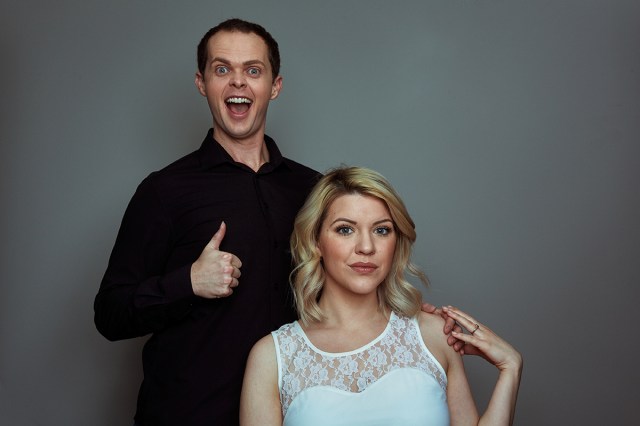
If there ever was a play that domesticates a big issue, to find a more expansively human one, The Children is it.

To help support 12thnight.ca YEG theatre coverage, click here

By the hot young Brit playwright Lucy Kirkwood, the fascinating  2015 “eco-thriller” that Wild Side Productions has brought to the Roxy (a venue, incidentally, set up for 90-seat houses) has as a given a nuclear disaster. Imagine, if you will, a play with a nuclear disaster in it that isn’t about nuclear disasters.

It’s set in a non-rustic English seaside cottage in the aftermath of a meltdown at the local nuclear power plant. That’s where a couple of retired nuclear scientists, Hazel (Coralie Cairns) and Robin (David McNally) are holed up, just outside the “Exclusion Zone.” Life apparently goes on, though it has a kind of improvised scramble about it: the electricity is intermittent, the menu is limited, and there’s a Geiger counter at hand to measure radiation.

What triggers this absorbing play, from the outset, is a mystery: the unannounced visit of Rose (Ruth Alexander), an ex-colleague of Hazel and Robin they haven’t seen for 38 years. Hazel turns around, and there she is, with a bleeding nose. Why has Rose come? 

At first, along with Hazel, we think we know. In the chit-chat between the two women — barbed from Hazel, evasive from the more ebullient Rose — we get, for example, the information that the former has four children, the latter none. And we catch the vibe of sexual tension and hostility, that Rose may have had a thing, long ago, with Hazel’s husband.

As Cairns conveys in an alert performance full of prickly cordiality and too-quick retorts, careful Hazel — her mantra: ‘if you’re not going to grow, why live’ — is on red alert for signs that the visit is all about reviving that past. It’s a very English kind of social hostility.

The Children unfolds like a particularly subtle thriller, in dropped hints and pauses and inflections, and the odd startling declaration and curved ball, that director Jim Guedo (who’s also the designer of the set, the pulsing score, the overcast lighting) orchestrates in an adept and savvy way with his three actors. As Rose, Alexander captures a disconcerting mix of forthrightness and retreat into more conciliatory tones. And McNally, making a welcome return to the stage, has a kind of remembered ease as Robin, the scientist-turned-farmer who makes his own wine and goes off into the Exclusion Zone daily to tend cows. 

Why has Rose come? What signifies the play’s elusive title? The intimate way The Children introduces and escalates ever-thornier questions about guilt and the responsibility of the older generation to fix the messes it’s made — and the younger generation have inherited — is surprising, ingenious, and disturbing. More I mustn’t tell you, except to say that The Children could hardly be more topical, though not in ways you might predict. The two women of the play have opposing views, and there are moral footholds on both sides.

So, two visions of the future and its orientation to the past. The one moment of accord is a giddy dance to the pop music of the three characters’ shared memory bank. It’s an unexpected, strangely perfect moment in Guedo’s production. The revelations mount incrementally; the ending is shattering.

Check out the 12thnight PREVIEW, with director Guedo, here.

REVIEW

The Children

Roxy Performance Series

Theatre: Wild Side Productions

Written by: Lucy Kirkwood

Directed by: Jim Guedo

Starring: Ruth Alexander, Coralie Cairns, David McNally

Where: Roxy on Gateway, 8529 Gateway Blvd.

Running: Thursday through March 22

Posted in Reviews | Tagged , , , , , | Comments Off on The Children: a mystery, and a subtle Wild Side production. A review

Wild Side Productions brings a hot-button ‘eco-thriller’ to the Roxy: The Children

The Children, Wild Side Productions.

By Liz Nicholls, 12thnight.ca

The wild side (to borrow the name of the indie theatre company) is where the questions live. The answers are conditional, elusive, to be discussed. 

To help support 12thnight.ca YEG theatre coverage, click here 

“I’m drawn to plays that ask more questions than give answers,” says Jim Guedo of Wild Side Productions and its tilt towards the powerful contemporary repertoire. “Plays that embrace contradictions, that can’t be boiled down to a TV Guide synopsis….” And you don’t have to hunt them down. As Guedo puts it, “the plays find you.”

The 2016 play that opens Thursday in the Roxy Performance Series is one of those. There’s a mystery attached to The Children, a suspenseful “eco-thriller” by the rising young Brit theatre star Lucy Kirkwood. In the aftermath of a nuclear power station meltdown on the English east coast, a couple of retired nuclear physicists have put a life together in a seaside cottage. And they’re visited by an ex-colleague of 40 years ago they haven’t seen for 38. Why has she come? “No one knows. That’s the elephant in the room.”

“There’s a slow burn to it,” says Guedo, who’s just finished directing another slow-burn play, Arthur Miller’s The Crucible, at MacEwan University where he’s head of the theatre department. “You don’t find out till two-thirds through The Children where it’s going….”

An eco-disaster, a poisoned environment — they give The Children an immediate sort of topicality. But the surface “subject” isn’t why he picked it for Wild Side. “I wanted to do a play about characters who are … seniors,” he says. “People who are over the age of 60 and they’re smart, they’re sexy, they’re clever.”

“Which opens things up to broader questions about what responsibility does the older generation have to the young. Name your topic … we helped build it,” says Guedo. “We made the mess. Should we be part of the solution to fix it?” The Children expands from its setup to embrace thoughts about that.

An immediate inspiration to direct The Children came from reading an interview with Patti Smith, in her younger years a New York avant-garde punk queen and now in her ‘70s. “Do the rebellious, revolutionary icons still have something to say?” Guedo was struck by Smith’s declaration that “I’m more worried about bumble bees than terrorism.” 

The generation that “broke the ground for all of us” has aged. So, muses Guedo at 62, “is it ‘I’ve done my bit, time to relax in the sunset!’ or do you keep going? People (at that age) are forced to make a decision to stay engaged. Or not.”

Guedo agrees that in the set-up, the arrival of “the other woman” who rattles the equilibrium of a couple, there are echoes of Harold Pinter, with his sinister outsiders, pauses, verbal fragments. “You don’t know what games are being played. But this is less oblique…. Once (the visitor) reveals her real intent, everything falls into place — ah, so that’s why this, or that, happened…. “ It all unspools in one room, in real time.

Interestingly,  of the seven plays Guedo has produced for Wild Side Productions since he arrived back in Edmonton from years in Saskatoon, five (“without planning it”) happen to be by female playwrights: Sarah Ruhl, Anne Washburn, Bess Mohl, and now Lucy Kirkwood. In The Children, the latter, in her mid-30s, has written a play about characters in their mid-‘60s. “Without lecturing, with haranguing, she challenges our perceptions,” says Guedo. “Everyone’s flawed. And she touches on hot-button topics without there being a political soapbox.”

“It straddles so many levels…. But all we can play is the human, what happens in that room in an hour and 50 minutes. It’s more about taking responsibility than it is about climate change, or the danger of nuclear power…. It’s fun. Funny. And the characters, nuclear engineers are intelligent and quirky.” Guedo ponders to land the right comparison for this unclassifiable play. “OK, if Noel Coward met Edward Albee in a back alley and wrestled, with a bit of Pinter, and some Caryl Churchill thrown in….”

PREVIEW

The Children

Roxy Performance Series

Theatre: Wild Side Productions

Written by: Lucy Kirkwood

Directed by: Jim Guedo

Starring: Ruth Alexander, Coralie Cairns, David McNally

Where: Roxy on Gateway, 8529 Gateway Blvd.

Running: Thursday through March 22

Tickets: 780-453-2440, theatrenetwork.ca


Posted in Previews | Tagged , , , , , , , | Comments Off on Wild Side Productions brings a hot-button ‘eco-thriller’ to the Roxy: The Children

Heisenberg: the Uncertainty Principle comes to theatre, at Shadow. Meet Amber Borotsik

Amber Borotsik, Glenn Nelson in Heisenberg, Shadow Theatre. Photo by Marc J Chalifoux.

By Liz Nicholls, 12thnight.ca

If you watch something closely enough you realize you have no possible way of telling where it’s going or how fast it’s getting there. Did you know that?” Heisenberg

“It’s a slippery thing,” muses Amber Borotsik. “I love it; it’s so complex. It makes me exhale (she does, like someone about to whistle), and shake my head.”

She’s talking about Heisenberg — and Georgie Burns, the mercurial character, wildly unpredictable and volatile, she plays alongside Glenn Nelson in the Simon Stephens two-hander that opens Thursday in a Shadow Theatre production. “It captivated me and scared me at the same time.”

To help support 12thnight.ca YEG theatre coverage, click here

Heisenberg, the scientific “uncertainty principle” we all remember (in my case pretty vaguely) from school, is all about randomness. The Wikipedia oracle says the idea is that you can measure the velocity or the position of a subatomic particle, but not at the same time. “The act of watching something changes it,” ventures Borotsik. She cites the user-friendly analogy provided by her partner actor/ dancer/ improv star Jesse Gervais, who’s currently in Edmonton Opera’s Candide. “If you lose your lighter between two cushions on the couch, when you reach down to find it, you’re pushing it farther away, harder to find….”

Glenn Nelson, Amber Borotsik in Heisenberg, Shadow Theatre. Photo by Marc J Chalifoux.

The 2015 play by the Brit writer who adapted The Curious Incident of the Dog in the Night-Time, joins a cluster of hits — like David Auburn’s Proof, Tom Stoppard’s Hapgood, Michael Frayn’s Copenhagen, Nick Payne’s Constellations — that take physics into the theatre, and the laboratory of human relationships. Here, an off-centre romance is launched when, out of the blue, Alex (Glenn Nelson), a solitary, mild-mannered 75-year-old butcher of Irish origins, is suddenly kissed on the neck by a much younger, free-spirited stranger as he sits on a bench in a London railway station.

That would be Georgie, “possibly winsome and maybe psychotic” as she says of herself. She is, in a word, a handful. For actors, whose natural tendency is to apply themselves vigorously to figuring out intention in every moment of a script, Georgie is a challenge, possibly a nightmare. “Her flips, from moment to moment, even in a sentence …” Borotsik shakes her head, in wonder at the contradictions. Logic and causality have nothing to do with her, “not in any way,” says Borotsik. “Quicksilver, I like that word.”

Does Georgie have an agenda, a plan? “I don’t know that she goes into it with any intention,” muses Borotsik, who recently co-starred (with Nathan Cuckow) in another difficult two-hander, last season’s Wild Side production of Poison. “She’s beyond that, not destined for a traditional relationship in any way…. The through line is all over the place.”

Glenn Nelson, Amber Borotsik in Heisenberg, Shadow Theatre. Photo by Marc J Chalifoux.

“I find this play really hard, really complex, challenging in a good way. I have to ground myself. Go for a walk. Take a breath.”

Borotsik’s multi-faceted career, as an actor/dancer playwright/choreographer, has always been about marrying contemporary dance and theatre. “It’s exciting to see so many more opportunities for that,” she says. Her year has included time in Montreal working with the innovative dance company O Vertigo in a project that brought together three artists from Montreal, three (including Borotsik) from the rest of Canada and three Europeans.

In Montreal, too, Borotsik was part of a “remix project” which had choreographers play DJ with the work of other choreographers. “Mile Zero has been the driving force in connecting me with these opportunities, and mentors,” she says.

The idea of uncertainty, though not in a Heisenbergian sense, infiltrates her latest interdisciplinary “make-it-up” with Gervais. No Guesses Found, which premiered in Mile Zero Dance’s Dance Crush series (directed by Dave Horak) last April, explores, in a physical way, ideas of loss and human fragility. “We’re making it into two pieces,” says Borotsik. The first part has an ensemble backdrop (“and a candy floss machine”). In the second, No Guesses Alone, she’s alone onstage, inhabiting the bodies of other people, a kind of reverse haunting. The plan is to tour, to both dance and theatre festivals.

Mentorship figures prominently for Borotsik. She teaches movement for actors at both the U of A and MacEwan. She works with students at the Nina Haggerty Centre.

The day after Heisenberg closes, Borotsik is off to Toronto, and a Factory Theatre revival (with the original cast we saw years ago in Edmonton) of One, Jason Carnew’s re-imagining of the Orpheus and Eurydice myth. Then, immediately after that, Newfoundland, and a project with director Charlie Tomlinson, who’s adapting poetry for the stage.

Meanwhile there’s the fun of Georgie, in company with Nelson. Fun? Borotsik, a thoughtful sort, considers that possibility. “I think she’d be really loving it, to be described as a fun person. In certain moments. Absolutely.”

PREVIEW

Heisenberg

Theatre: Shadow

Written by: Simon Stephens

Directed by: John Hudson

Starring: Amber Borotsik, Glenn Nelson

Where: Varscona Theatre, 10329 83 Ave.

Running: through March 29

Tickets: 780-434-5564, shadowtheatre.org

Posted in Previews | Tagged , , , , , | Comments Off on Heisenberg: the Uncertainty Principle comes to theatre, at Shadow. Meet Amber Borotsik

The Blue Hour: nobody writes ‘prairie plays’ like it these days. Some thoughts on the SkirtsAfire premiere

Helen Belay, Nicole St. Martin, Isaac Andrew in The Blue Hour, SkirtsAfire Festival.

By Liz Nicholls, 12thnight.ca

Just in the nick of time I finally got a chance on the weekend to catch The Blue Hour

Named for the magical moment of ambiguity when light shades into darkness, Michele Vance Hehir’s new play was the centrepiece of this year’s SkirtsAfire Festival, the annual celebration of the work of female artists, which ended Sunday.

To help support 12thnight.ca YEG theatre coverage, click here

It’s an unusual piece in every way. For one thing, no one writes this kind of kind of spacious, full-bodied two-act prairie play any more. I say “prairie” because there’s a long tradition in these parts of plays that have the same expansive reverb as the landscape. Cloistered small-town characters have tantalizing glimpses, or ecstatic long-shots, of unapproachable horizons. Time doesn’t have an urban momentum to it; the past and the future merge into a perpetual present.

Under flat, un-flamboyant surfaces extending into the distance, dark secrets lie buried, but not deep enough to stay that way. In the prairies you get lulled into a false sense of security, because you can see tragedy, like storms and grain elevators, coming miles away.

Vance Hehir’s plays make you think like that. The Blue Hour is the third of her Roseglen plays, a trilogy that takes us, in contrasting forms, to that fictional prairie town at different moments in its history. Ruination (3 short stories) is an artful construction of three interlocking monologues from which a mystery gathers during Depression era Roseglen. One Polaroid visits two aging sisters in Roseglen, in its last gasps in 1973. In The Blue Hour, a (possibly) final instalment, it’s 1947. And the post-war narrative of hope and new starts is as foreign to Roseglen as the Eiffel Tower and people who speak French.

It’s a harsh town in a harsh landscape. And it’s steeped in death, loss, and accommodation to grief and disappointment. In short, it’s perfect soil for proscriptive lake-of-fire type fundamentalism. 

Recent arrivals 15-year-old Bonnie (Helen Belay) and her kid brother  Jonas (Isaac Andrew) are, in different ways, chafing at the bit under the distracted parenting of their single mother (Nicole St. Martin), struggling to put food on the table. Bonnie, circumscribed by punishing limitations of church and place, dreams of escape, of taking her musical gifts out into the big wide world; Jonas has left childhood behind to be the family breadwinner, a junior prairie entrepreneur who barters the fish he catches for sugar and flour.

Behind other doors in town are other stories, and The Blue Hour takes its time, over two acts, to letting their secrets get aired. The new pastor (Ian Leung) and his young wife (Bonnie Ings) have a baby in progress after many miscarriages she can’t help interpreting as God’s punishment for “fornication” (that’s a word they use in Roseglen). The affable mayor (Robert Benz) is up against his purse-lipped church-y wife (Elinor Holt). Marriages are straining at the seams, resentments are festering, prayers are not getting answered, gossip is getting hatched and overheard on the party line. And other people’s sins are being enumerated (the list of the good lord’s do-not’s always comes with fiery or-else’s).

For a small town, it’s a high-traffic intersection of subplots, dreams of the future and mistakes of the past. And a collision between right and wrong, free will and inherited guilt, has a kind of inevitability. Tragedy is coming. And the “villain,” a man of the cloth with flaws, has plenty of time, and a lot of words, at his disposal, to regret his bad choices.    

Annette Loiselle, the artistic director of SkirtsAfire, makes her directing debut with the production. She sets it in motion with a first-rate cast and design. Megan Koshka’s wood-slatted set lets slivers of light through, as the days roll into evenings. T. Erin Gruber’s atmospheric lighting is a character in itself.

The actors are excellent. Benz, for one, knows how prairie minimalism works. He can do more with an uninflected pause, a moment of stillness, a reassessing glance, than many actors can do with a long speech. And the play gives him a chance to work with all of the above.

The Blue Hour is not quite so judicious with other characters, though; it occasionally does seem overwritten instead of leisurely. Angst from the guilty pastor, for example, gets long speeches to go with it — they seem especially overlong given the actorly skills and charisma (the excellent Leung) available. Act I seems to end twice. 

Perhaps a trim is in order for subsequent productions of The Blue Hour. Especially since its accomplished playwright savours mysteries and nuances in her characters, and a lyrical sense of the thorny small-town prairie inheritance in her writing. It’s time for the mysteries and nuances of acting to get more credit.

Posted in Reviews | Tagged , , , , , | Comments Off on The Blue Hour: nobody writes ‘prairie plays’ like it these days. Some thoughts on the SkirtsAfire premiere