Fringe review: Multiple Organism

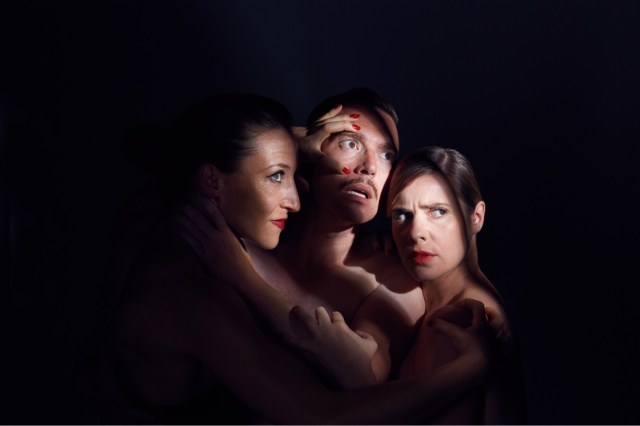
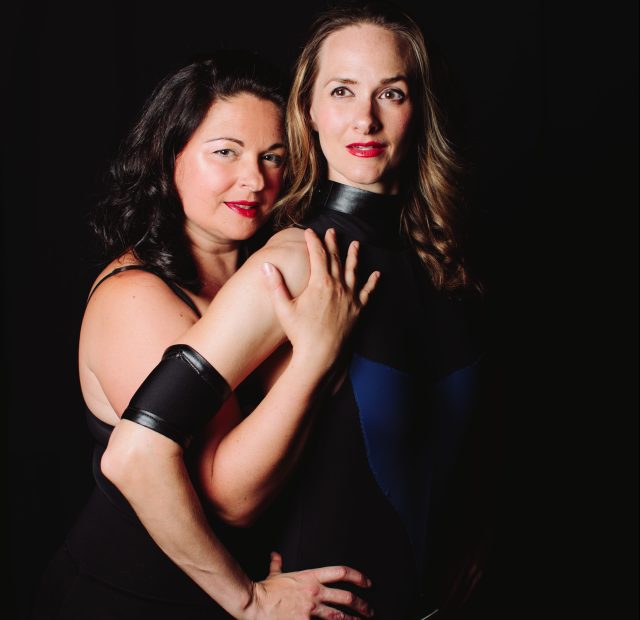
Multiple Organism, Mind of a Snail. Photo supplied.

By Liz Nicholls, 12thnight.ca

Multiple Organism (Stage 36, L’UniThéâtre)

A lyrical pas de deux between two horny toothbrushes in love isn’t something you’re likely to see any time soon on the country’s mainstages. Who does that?

Which might be reason enough to catch the latest interactive live actor/shadow puppet/live projection mash-up from the imaginative Vancouver duo (Mind of a Snail) who have brought us Caws & Effect and Curious Contagious in summers past. But, although Multiple Organism begins with the question “So, are we ready to see some art?!” you can’t help feeling that Multiple Organism just doesn’t live up to the artfulness of its predecessors.
Multiple Organism, Mind of a Snail. Photo supplied.


“Sometimes,” as the MC (a talking naked torso with a pubic hair goatee) explains helpfully, “it’s good to take a closer look at your own shit.” And that’s exactly what this show does, in a journey down a talking toilet through the pipes of a sewage system onto an idyllic beach where the toothbrushes wash up, and have a destination wedding.

It’s playful. The original music is an animated soundscape of jazzy  riffs. And nobody uses old-fashioned projection technology with more inventive sophistication than Chloe Ziner and Jessica Gabriel,. The effects range from the raucously jokey — a live actor squeezes out a projected turd that turns out to be a stray toothbrush — to the dreamy, as layers of colours wash across the screen.

But, unlike the grand surreal journeys of past Mind of a Snail shows, this one feels a bit like a variety show, a best-of vaudeville of special effects stitched together. And the interplay between screen and live action, while artfully accomplished, has little resonance in the story.  

Mind of a Snail has set the bar high in imaginative storytelling. But this time, the premise — an artist free-associating into inspiration and ending up examining her own shit — turns out to be a little too true.


Posted in Fringe 2017 | Tagged , , , , | Comments Off on Fringe review: Multiple Organism

Princess Confidential: Fortress Falls. A guest Fringe review by Todd Babiak

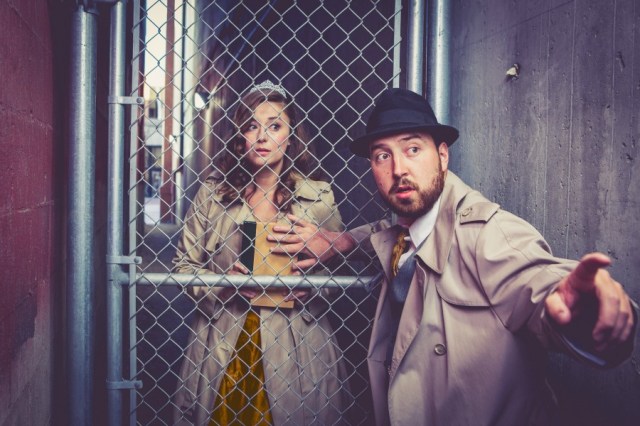
Merran Carr-Wiggin and Neil Kuefler in Princess Confidential: Fortress Falls. Photo supplied.

Princess Confidential: Fortress Falls (Stage 11, Studio Theatre)

by Todd Babiak

The third instalment in the Princess Confidential series, a Fringe favourite, continues the ingenious mash-up of the first two: film noir plus fairy tales.

Princess Abigail (Merran Carr-Wiggin) and Detective Reid (Neil Kuefler) have found stability in their lives, after episodes of amnesia, missing women, and the off-stage havoc of the villainous Fortress Jones. They’re both married — Abigail to the handsome Prince Rupert, played by Evan Hall — and the city is finally calm… or is it?

Fortress Falls begins with the princess discovering her crown is missing. There’s only one person who can help her: Detective Reid. And there’s only one way to discover anything in a Princess Confidential play: re-enact some fairy tales, ideally with the detective playing female characters.

Carr-Wiggin and Kuefler have more fun than any detectives in history. Acting out fairy tales as an investigative tactic is absurd, but playwright and director Ellen Chorley understands that kids like to take their absurdity with absolute commitment and sincerity — not winks.

This is why it is not uncommon for the children of Edmonton to wonder, in the middle of February, whether or not there will be another Princess Confidential at the next Fringe festival.


Posted in Fringe 2017 | Tagged , , , , , , | Comments Off on Princess Confidential: Fortress Falls. A guest Fringe review by Todd Babiak

Fringe review: The Small Things

Brian Dooley, Nadien Chu in The Small Things. Photo by Ryan Parker.

By Liz Nicholls, 12thnight.ca

The Small Things (Stage 37, Suzanne Thibadeau Auditorium)

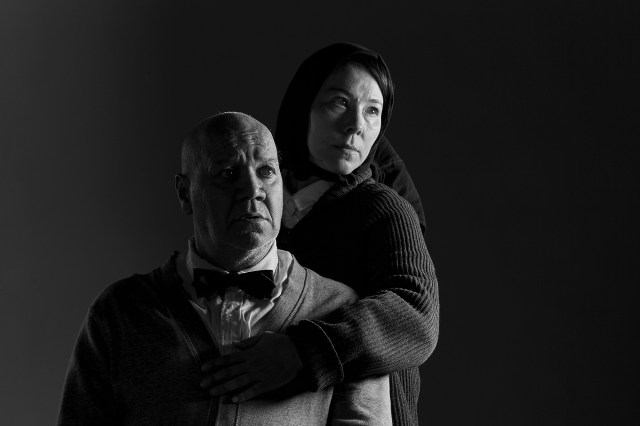
An old man and an old woman, the two old characters in this chilly 2005 play by the Irish playwright Enda Walsh, sit separately onstage, lost in their recollections. They talk and talk; they dare not stop talking. When the flow of words stop, life stops. There’s nothing small about small talk. 

In introspective soliloquies punctuated by an alarm clock, the Man (Brian Dooley) recalls his mother, his three-year-old self, bits of this and that about his childhood, his shoes with the red laces, his current bodily state. At a table, the Woman (Nadien Chu) talks to her knickknacks, and chit-chats away about her father, a tyrant who ruled the household, and “the shape of the day,” with a stopwatch, warding off chaos with a timetable.

Gradually, their memories intersect, and in the most harrowing way — with the horrific story of an unspeakable regime that keeps order and routine safe in the world by enforcing silence. It cuts out the people’s tongues. The Woman’s father and the chip shop man work for The Boss Man slicing them out. “The chip shop man has killed his only son.”

They share a breathless story of escape in the woods, in the present tense. In this bleak Beckettian landscape, the Man and the Woman seem to be the last people talking and alive. One of them will have the last word.

Dooley and Chu embrace the weird poetic rhythms of this harsh fable about the power of words in different ways, in Wayne Paquette’s production. He’s piecing together his memories, word by word, in a chain of thought. She’s a warmer, more impulsive sort who speaks words in tumbling bunches, lingers over favourites, and wonders where words “float to” once you’ve said them. “And are you listening to me?” she asks. “Am I the last to speak?” he asks.

The rest is silence. Powerfully acted, and scary. 


Posted in Fringe 2017 | Tagged , , , , , , , | Comments Off on Fringe review: The Small Things

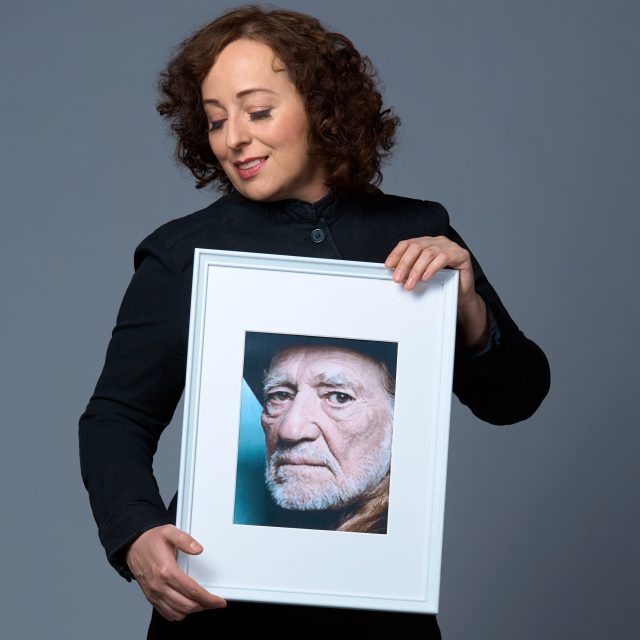
Chasing Willie Nelson, a guest Fringe review by Marc Horton

Andrea House in Chasing Willie Nelson. Photo by Ryan Parker.

Chasing Willie Nelson – A Tribute (Stage 39, CKUA)

By Marc Horton

What to leave in? What to leave out?

In tracing the history of the remarkable and remarkably durable Willie Nelson, should you put in Hello Walls and leave out Blue Eyes Crying in the Rain?

And does San Antonio Rose, written and made famous by Willie’s idol Bob Wills, belong? Maybe One for the Road instead? And what about Whiskey River? Can you really leave that out? And Funny How Time Slips Away? And Mama Don’t Let Your Babies Grow Up to be Cowboys?

For Andrea House, the playwright/actor/songwriter/tremendous singer who is the driving force behind this winner of a show, it must have been an embarrassment of riches.

Editing the career of the 83-year-old hit maker down to a much-too quick 80 minutes, while also acknowledging his influences – Hoagy Carmichael, Django Reinhardt, Bob Wills et al – would seem to be impossible.

Well, House did the impossible. Like this show itself and the incredibly tight five-piece band backing her up, the choices were flawless.

Chasing Willie Nelson isn’t really a play, nor is it a concert. It’s not a musical either, although there is plenty of great country music in it. Think of an old-timey radio show where stories butt up against songs and your hostess, House, is welcoming, knowledgeable, unpretentious, sweet. Add in a dream sequence, the ghost of Willie Nelson, played by Dana Anderson, and the ghost of Willie’s son Bob, played by Mat Busby, and you’ll understand at least part of the dazzling ingenuity that powers this outstanding production.

Best-of-show must go to House’s version of Stardust, the Hoagy Carmichael tune that headlined Nelson’s gazillion-selling album of the same name. With an arrangement by pianist Chris Andrew, we’re rewarded with a fine, new take on one of the best tunes in the Great American Songbook. House makes it completely her own.

Ditto for Crazy, the Willie Nelson song made into a classic by Patsy Cline. House’s version won’t make you forget Ms Cline, nor should it, but she makes you feel the ache of loving too much.

Kudos as well to House for including, Fire, one of her own songs, in the lineup. She’s up against some of the best here, and she’s not out of place.

– Marc Horton is the former film reviewer and books editor at the Edmonton Journal. The best concert he ever attended was at Clarke Stadium in 1979. It featured Willie Nelson and Leon Russell.


Posted in Fringe 2017 | Tagged , , , , , , | Comments Off on Chasing Willie Nelson, a guest Fringe review by Marc Horton

Fringe guest review: Beau and Aero: Crash Landing

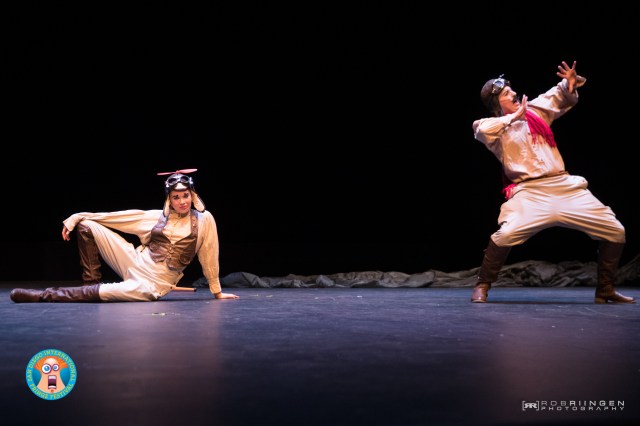
Beau and Aero: Crash Landing. Photo supplied

Beau & Aero: Crash Landing (Stage 3, Walterdale Theatre)

by Todd Babiak

An airplane crashes on the stage. Beau (David Cantor) helps his co-pilot Aero (Amica Hunter) to her feet and they do what any incompetent aviators would do. They play with balloons and soda crackers, they battle and contort themselves, they dance, they flirt, they throw silent tantrums.

We would watch these lithe, delightful clowns do just about anything.

Cantor and Hunter, from Portland, were the talk of last year’s Fringe with Bella Culpa. Beau & Aero: Crash Landing is another energetic and hilarious blend of old fashioned vaudeville and modern clown.

Swiss circus master James Thierrée, grandson of Charlie Chaplin and great-grandson of Eugene O’Neill, is an inspiration for Cantor and Hunter. Their work is silly and sophisticated at once, and as much fun as you can have in a theatre.

They know just how to involve the audience in their antics, with a hint of naughtiness and a lot of charm.


Posted in Fringe 2017 | Tagged , , , , | Comments Off on Fringe guest review: Beau and Aero: Crash Landing

Fringe review: Legoland

Rachel Bowron and Jenny McKillop in Legoland. Photo by Ryan Parker.

By Liz Nicholls, 12thnight.ca

Legoland (Stage 36, L’UniThéâtre)

In this oddball, highly entertaining comedy by Victoria’s Jacob Richmond  — which predates another oddball, highly entertaining Richmond, Ride The Cyclone — we meet the Lambs, two precocious home-schooled siblings from the Elysium Community Farm near Uranium City, Sask.

Penny Lamb, 15, is the beaming, emotional, beaming hyperactive one (Jenny McKillop). Her 13-year-old bro (Rachel Bowron), has a unnervingly intense demeanor and a penchant for puppet shows exploring German nihilism. They’re onstage, and we’re in the audience, because by the terms of their 200 hours of community service arrangement, they’re making a presentation.

Legoland is all about performance, both in premise and execution, in Luc Tellier’s bright, vaudevillian production. It’s self-consciously quirky that way. The resourceful Ezra, who’s the sound technician, art director, props runner, stage manager, and annotator has fashioned a make-shift theatre. Penny starts by explaining — “let me whisk you away to happier times!” — that Elysium is the kind of hippie grow-op haven of enlightenment where everyone comes first in humanistic talent shows and “the kids are all named Rainbow, Sunshine, Trotsky.”

Their odyssey through Legoland, the land beyond Elysium, is an escape from the St. Cassian Catholic boarding school regimen to which the Lambs were consigned after their parents got busted for cultivation and trafficking. And this journey through the Walmarts and McDonalds south of the border — the “land of silicone breasts and fundamentalists” as Ezra puts it — is fuelled by his “drug money,” i.e. sales of his Ritalin and Dexedrine supply.

The goal? the re-enlightenment of a boy band pop star Penny adores, who’s turned to gangsta rap thuggery.

The play has sassy fun mocking pop culture, new age-y clichés, consumerism, as well as putting the adult voice — grave in the case of Ezra and breezy from Penny —  in the mouths of babes. It’s satire, but of the quirky-playful not the withering kind.

The performances are a hoot. McKillop turns in a sweetly addled performance as Penny, the “aspiring animal conservationist” who smiles in a conciliatory, indulgent way over the excesses around her. Bowron is hysterical as the gloomy but wired Ezra, whose cultural and political references are all apocalyptically bleak. He has much to work with in the new America. 

Hanging out with the Lambs for an hour is, well, inspirational. 

Posted in Fringe 2017 | Tagged , , , , , , | Comments Off on Fringe review: Legoland

Jean-Paul Sartre makes his Fringe debut: a review of No Exit

Belinda Cornish, Ron Pederson, Louise Lambert in No Exit. Photo by Ryan Parker.

By Liz Nicholls, 12thnight.ca

No Exit (Stage 12, Varscona Theatre)

In one way it’s the ne plus ultra of roommate plays: remember those completely incompatible losers you were trapped with for a whole term who are probably in jail by now?

What if the term lasted for … eternity?

Hell is not some fiery brimstone gulag, presided over by torturers.  “Hell is other people,” proposes the French existentialist Jean-Paul Sartre in his ruthlessly witty and geometric 1944 one-act No Exit. And there’s nothing random about those other people: they’re chosen, with exquisitely torturing precision, to be each other’s mirrors.

In the Bright Young Things production directed by Kevin Sutley, a panicky man in a formal suit (Ron Pederson) arrives in hell, a followed by a bellhop (George Szilagyi) with a strangely fixed smile. “So this is it” is both question and answer.

In life Cradeau was a journalist. And you’d think there’d be other professionals there. Not in this play. Two other arrivals follow: Inez (Belinda Cornish), a cold, hard-eyed, brisk, sardonic secretary; and Estelle (Louise Lambert), a coquettish socialite in full evening regalia who tips the bellhop out of habit.

In the hour that follows, a kind of lethal philosophical drawing room comedy, the facades with which each faced the world on earth will get peeled away. Their moral evasions and self-justifications will be shattered. The terrible crimes that each committed — their tickets to hell — will be revealed, And it will transpire, as Inez gleans faster than her roommates, that the three are uniquely qualified to be each other’s torturers.

Cradeau, for example, is desperate to be validated against the charge of cowardice; Estelle can’t reassure him since she’s a sensualist and attaches more importance to kissing than cowardice. Only Inez, who sees right through his moral dodges, can do that. And she hates him. But, oh, she desires Estelle, who desires Cradeau….

And so it goes. Every possible angle and alliance is tested, for some respite from the torture of being seen for what one really is — and gets foiled, or rejected, or cancelled out. It’s a perfect triangle of torture, played out by an excellent trio of actors in Sutley’s tight, tense, detailed production. 

An arresting hour of tensile theatre.

Posted in Fringe 2017 | Tagged , , , , , , | Comments Off on Jean-Paul Sartre makes his Fringe debut: a review of No Exit

Fringe review: The Effect of Gamma Rays on Man in the Moon Marigolds

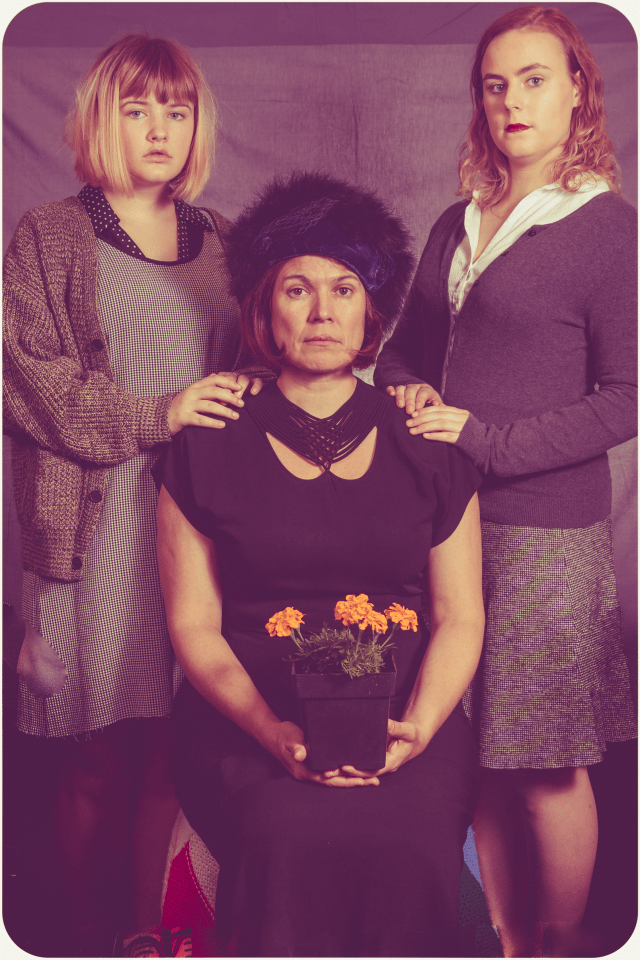
Sadie Bowling, Kate Ryan, Emma Wilmott in The Effect of Gamma Rays on Man in the Moon Marigolds. Photo by db photographics.

By Liz Nicholls, 12thnight.ca

The Effect of Gamma Rays On Man In The Moon Marigolds (Stage 3, Walterdale Theatre)

At the centre of this ‘60s play (and 1971 Pulitzer Prize winner) by the American writer Paul Zindel, is a mom that makes bad mothers everywhere — Amanda Wingfield to Mama Rose to Medea — look like Hallmark contenders.

Beatrice Hunsdorfer has a nasty streak, a short fuse, and a sardonic edge that could cut through tile. She threatens to commit one daughter, Ruth, who suffers from seizures. The other, Tillie, who’s fascinated by science, is “let’s face it, not a pretty girl.” They are “stones around her neck.”

She showers the ancient and unresponsive $50-a-week lodger, who may or may not be deaf, with verbal tirades. “Quite the little cross to bear aren’t ya, Nanny?” She waves a chloroform bottle in the direction of Tillie’s beloved pet rabbit from time to time.

This is the juicy, dramatic villain’s role that Kate Ryan takes on in Amy DeFelice’s production, a rare departure for The Plain Janes from their usual musical theatre repertoire. It’s a far cry from the more wholesome lustre of Ryan’s usual leading lady roles. And Ryan, who played the daughter Ruth in an all-Ryan production 31 years ago (with her mother Maralyn, her sister Bridget, and directed by her father Tim), makes a meal of it. 

I say villain, but what Ryan really delivers is a portrait of disappointment and despair gone rancid. Beatrice, a damaged soul, spreads damages around her as she rampages through her end-of-the-world Staten Island apartment, tending her own grievances and paranoia as she goes.

The central metaphor, as per the title and Tillie’s science project, isn’t exactly hidden from view in Zindel’s play: proximity to dangerous radiation creates mutations. And that can go either way.  Ruth (Emma Wilmott), who’s already taken on some of her mother’s nastiness, is clearly damaged by the toxicity. But quiet, shy, determined little Tillie (Sadie Bowling) unexpectedly blossoms against the odds, like her strange marigolds.

There’s a big wide world of discovery out there, full of molecules and atoms. And she can’t be contained, as Tillie’s ecstatic presentations confirm.

It’s a family dysfunction play with old-fashioned clutter about it, set-pieces, lots of exits and entrances, and a certain artifice about its bookend structure the production does nothing to conceal. But it still packs a wallop. And when you see Bowling’s Tillie escape from her domestic chains you feel like cheering. 

Posted in Fringe 2017 | Tagged , , , , , , | Leave a comment

Fringe review: The Superhero Who Loved Me

April Banigan and Kristi Hansen in The Superhero Who Loved Me. Photo by Mat Simpson.

By Liz Nicholls, 12thnight.ca

The Superhero Who Loved Me (Stage 28, The Playhouse)

“Nobody expects an extra-dimensional portal to open in the world.”

Generally true. And nobody expects to go home with a superhero, drink too much vino, and hear about her workplace issues — fighting interplanetary terrorism on top of the sexism and homophobia of the military and all that.

You’re in luck if it happens, though. Chris Craddock’s new play, his first at the Fringe in half a dozen summers, lets us do all of the above, and more. It’s clever, it’s funny, it’ll unexpectedly touch your heart with thoughts about human mortality and the life arc of relationships.

The Superhero Who Loved Me takes behind the scenes in the life of Sam (Kristi Hansen) aka The Governess (“we suit up, and go!”) and Georgie (April Banigan), the woman she loves. They’re high school friends who re-connect after The Invasion through the old-fashioned techno-magic of Facebook messaging: “I know it’s been forever….”

There is nothing more complicated, in this world (or any other) than the back story of a superhero. And Sam’s, which involves a 10-year coma and a cure for fatal infirmity with super-power side effects, is no exception. And it’s sneakily woven into the play, with Craddock’s usual dexterity in dialogue, assisted materially by the actors. Hansen is a rueful and lonely closeted superhero under intricate constraints of disclosure. It’s for Banigan’s Georgie to convey the wonder, the terror, the incredulity of a mere mortal, falling in love across all kinds of lines. And she does. Their scenes together are sexy and romantic.

As you might expect, an unconventional relationship hits the usual rocky patches —hard. The friction between splashy superhero career vs. anonymous home/motherhood takes on new dimensions when one partner goes to work every day armed to kick ass and save billions of lives. The Superhero Who Loved Me sets two different sets of dramatic expectations (and entire lexicons, for that matter) against each other in a witty way.

And speaking of heroic tasks, it’s for director Wayne Paquette to figure out how on earth to make action-thriller scenes be jazzy on a tiny stage, and then flip into a domestic family drama side. And damn, he does it: his production is theatrical and fun.     

Posted in Fringe 2017 | Tagged , , , , , | Comments Off on Fringe review: The Superhero Who Loved Me

Fringe review: The Apple Tree

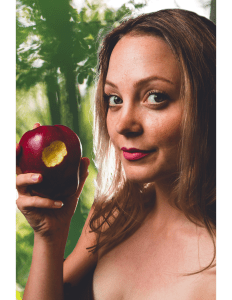
Madelaine Knight in The Apple Tree, The Plain Janes at the Fringe. Photo by db photographics.

By Liz Nicholls, 12thnight.ca

The Apple Tree (Stage 12, Varscona Theatre)

Contrary to popular Fringe belief, God is not a Scottish drag queen. He’s a man in a natty white suit, who lets there be light and then immediately repairs briskly to the piano, and works his expert magic there.

That would be Ryan Sigurdson. And this obscure, modest little charmer of a musical comedy fable, revived for us by The Plain Janes, who are into musical resurrections, is lifted from the 1966 triptych by the Broadway heavy-hitters who created Fiddler on the Roof (Jerry Bock and Sheldon Harnick).

The story, The Diary of Adam and Eve by Mark Twain, takes us to that business in the Garden. Adam wakes up to discover he is “the sole and single man…. Single? Hmmm.” Not for long. And Eve, shortly after making her debut, says “I want to talk about us.”

There’s a kind of lightly floating but hoary old-school romantic comedy about all this: opposites who disagree about everything and are therefore made for each other. It’s a vintage vaudevillian view of the battle of the sexes. And yes, you’ll hear “the world’s first joke” and several from the first 10.

While the first man is anxiously trying to name the creatures in the Garden and making only rudimentary progress, Eve is an instant expert, much to his irritation.“Put that pickerel down!” Soon she is decorating a hut, to make it a home.

What are the chances she’ll follow the rule about the apple?

In Dave Horak’s production, Graham Mothersill is Adam, puzzled and grouchy, a potentially lovable dope who needs taking in hand to discover the pleasures of the world. Madeleine Knight is adorable as Eve, sweetly relentless and bossy, with a smile that lets there be light all over again.

They’re both first-rate, resourceful musical theatre singers. And so is the Snake, who makes a striking appearance (and case for forbidden apple consumption) in the form of Jocelyn Ahlf. The tuneful, only slightly memorable songs are delivered with the kind of pizzaz and charm that makes them seen fresh not mouldy.

The touch is exactly right for the material. Magically, a tear will appear in your eye later on, and there’s an enchantment in that. 

Posted in Fringe 2017 | Tagged , , , , , , | Comments Off on Fringe review: The Apple Tree