We’ve lost a giant: Thomas Peacocke, the small-town kid who changed Canadian theatre

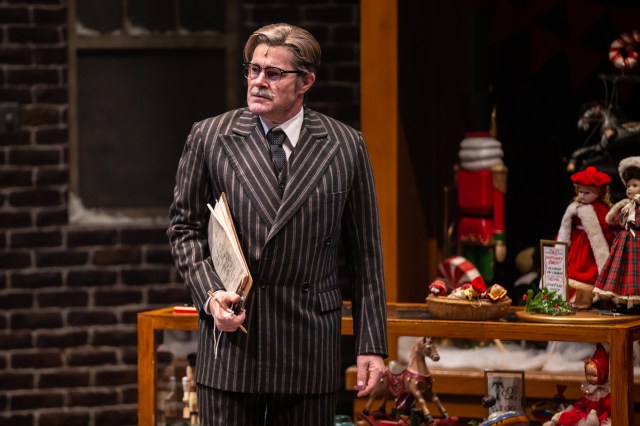
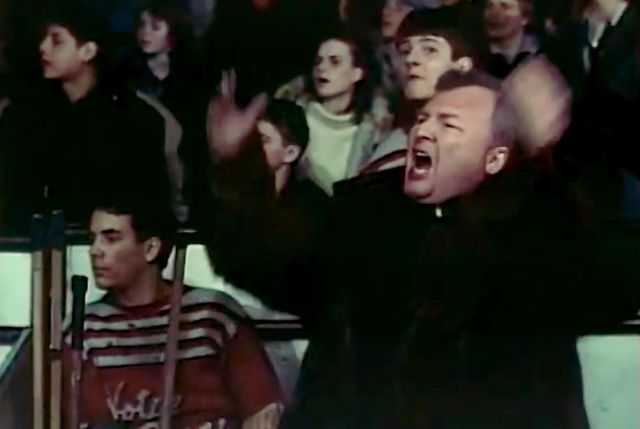
Thomas Peacocke as Père Athol Murray in the 1981 film The Hounds of Notre Dame. Photo supplied by TW Peacocke.

By Liz Nicholls, 12thnight.ca

A giant is gone. 

With the passing of Thomas Peacocke last week at 89, we’ve lost at one go an actor/director/teacher/mentor/administrator/advocate who has played a leading, vivid role in building and shaping theatre here in this theatre town and across the country. Making it better, and kicking its butt when it fell short.  

Thomas Peacocke

Larger-than-life in personality, fierce and fearless, loyal and challenging in equal measure, Peacocke didn’t tiptoe through the world. The rumble of his footsteps onstage and off- could be felt everywhere in Canadian theatre. And that distinctive bark-laugh of his has echoed through the years too.

To help support 12thnight.ca YEG theatre coverage, click here.

There’s a subtext in the multitude of Peacocke tributes that have flowed our way from east and west: the suspension of disbelief hasn’t come easy. I guess we all assumed Tom was immortal. And in that Canadian theatre is full of working professionals — actors, directors, theatre founders and artistic directors and, hey, the odd critic — who’ve been inspired by him to up their game, that’s not entirely far-fetched. 

The ripples go beyond theatre, of course, from the artist and the mentor to manifold arts initiatives that have a Peacocke hand in them, the countless committees, panels, juries, and boards on which he sat, from the Alberta Motion Picture Development Corporation to the National Theatre School, the National Screen Institute to the Neighbourhood Playhouse School in New York City. 

There are improbabilities — and a play, a Canuck Our Town perhaps — in the story of the prairie kid from Barons, AB (population then and now 365). He grew up in a two-room shack with his dad, the town telephone’s switchboard whose headquarters was the back room. Maybe there’s a segue to theatre — to Willy Loman, Big Daddy, and Père Athol Murray — in that back story, a visceral connection to the real world that gave dimensional heft to his performances on stage and screen. 

Thomas Peacocke as Willy Loman in Death of a Salesman at the Vancouver Playhouse. Photo supplied by TW Peacocke.

Peacocke’s sons Chris and TW Peacocke (the former a retired school principal and the latter a Toronto-based TV and film director) remember their dad saying that “the gossip he’d overheard was the reason he got involved in theatre in the first place.” And they figure he wasn’t entirely joking. 

First he got a U of A education degree and taught drama at Vic (the future Edmonton arts high school) in the late ‘50s. Then he got a master’s degree and assistant professor teaching gig at Carnegie Mellon in Pittsburgh. It was another Peacock (this one without an ‘e’), Gordon Peacock, who lured him back across the border in the early ‘60s to teach acting —  and to fashion the country’s first Bachelor of Fine Arts professional actor training program — in the U of A’s new drama department. Quickly, the U of A became one of Canada’s top theatre schools. And Peacocke was head of drama at the Banff School of Fine Arts in the ‘70s, too. 

He was a builder, says U of A drama professor Jan Selman, like him a sometime department chair and one of Peacocke’s MFA directing students.“He built it, led it, protected it,” she says of the U of A’s influential acting program. “And Tom never blew his own horn about it, endlessly advocating, getting scholarships, teaching, supporting, mentoring … for five decades of actors. He was hugely important. Can you tell? I’m a fan!”

Thomas Peacocke as Big Daddy in Cat On A Hot Tin Roof, 1966. Photo supplied by TW Peacocke.

This is the story of a small-town kid who arrived in the big city — and changed it. There’s a veritable history of Edmonton theatre written in the 11 pages of Peacocke’s crammed resumé. A recurring theme, as Chris points out, was his dad’s efforts to integrate the university and the professional arts community. 

In the late ‘50s and ‘60s, theatre here was a  town-and-gown affair, a mixture of students, amateurs, professionals, in shows at Studio Theatre, Torches Theatre (the U of A’s outdoor summer courtyard theatre headed by Peacocke), Walterdale, the Citadel.… And they were all family chez Peacocke, as TW and Chris describe the expansive household where they and their sister Jill grew up. 
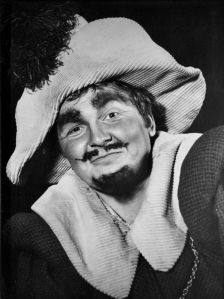
Thomas Peacocke as Sir Toby Belch in Twelfth Night, 1960. Photo supplied by TW Peacocke.

The hospitality was both artistic and domestic. “There were always actors hanging around,” says TW, remembering “fun, late-night piss-ups” and his dad’s “legendary omelette parties.” And “at the end of every production, there’d be a big meal, and mom cooked….. As little kids we knew all the students in all the classes.”

The young Peacockes got enlisted. “I was in The Trojan Women,” says Chris of his single-digit-age self. His bro was in Antigone. Jill was in Thieves’ Carnival. Later TW would gravitate toward film. “Dad helped me make a movie when I was 10. Dr. Jekyll and Mr. Hyde: Chris was Dr. Jekyll; my best friend was Mr. Hyde; my eight-year-old cousin played a whore.” Chris became an educator, and carried the Peacocke sense of priorities, “the importance of fine arts,” into every school where he was a teacher or principal.

The Peacockes presided over an all-ages post-show late-night salon of sorts. Actors everywhere, from every cast in town. “And our friends loved coming over, too; mom and dad engaged them in conversation.” But “you knew you were up against the real thing,” says TW. He and Chris are amused to remember a boyhood friend playing the guitar, and their dad plying the youthful guitarist with questions. “What are you playing? Did you write it? No? No wonder. You don’t play like you mean it!” 

Playwright Wilfred Watson and director Thomas Peacocke, in rehearsal for Oh Holy Ghost, Dip Your Finger in the Blood of Canada, And Write I Love You.” at Studio Theatre, 1967. Photo supplied by TV Peacocke.

What made Peacocke the ideal mentor? “When he was working with you,” thinks Selman, “from that moment he was completely with you, 100 per cent…. It fits with being a really good actor. You felt extremely seen and heard.”

“He was both kind and fierce,” she says. “It was always always about making the work better.” That’s a thought echoed by director Stephen Heatley, a former artistic director of Theatre Network and now the chair of the UBC drama department. He was another of Peacocke’s MFA directing students. “Curmudgeonly but SO fiercely loyal!” says Heatley of his gruff mentor. “He was one of a kind. They don’t build ‘em like that any more.” 

“Tom was always challenging, but in the best possible way,” says Heatley. “He was supportive; he was always pushing me to be better. Such a huge influence on me…. I remember trying to make up a name for some ‘style’ I was proposing for a production, and him just looking at me for a moment and then saying “and what does that mean?” 

As a theatre reviewer, a line of work about which he had his doubts, I can conjure that signature Peacocke look, a bit amused, worldly, quizzical, and a lot skeptical. He wasn’t a hedger. “Liz, I read your review,” he’d say. “And I have to say that I couldn’t disagree with you more!”

Colleen Dewhurst and Thomas Peacocke in Road to Avonlea. Photo supplied by TW Peacocke.

He dismissed jargon like so much lint off a lapel. And you’d be on the spot to account for yourself. “What,” he’d say emphatically (meaning ‘what on earth?’), are you talking about?” I learned a lot from every encounter — about plays, making theatre and writing about it, the state of the culture (not to mention the dismal disrepair of the media). 

With Peacocke mentorship didn’t stop with graduation. Gerry Potter, the founder of Workshop West Theatre, calls him “one of my special teachers and mentors who always supported my learning and later my work in theatre, but was always honest enough to advise on areas that needed improvement.” Potter, like others, says he still uses what he learned from Peacocke; he’s the voice in your ear that doesn’t go away.

“He was a father figure to us,” says opera and theatre director Brian Deedrick. “I consider him my theatre dad. And I bet countless people feel that way.” And Tom’s lively, charming wife Judy, who passed away a year ago was “den mother.” Chris Peacocke laughs. “We have a lot of surrogate brothers and sisters.” 

Opinionated? Deedrick laughs. “You always knew where you stood with Tom! You always knew he’d be dead honest.” So when Deedrick ventured from theatre into directing operas, Peacocke’s was the assessment he most valued and feared. “I did a Turandot in Edmonton, and he left a phone message after the show: ‘you know, kid, that was really good’. And it meant more to me than what anybody else thought.”

Thomas Peacocke directing Francis Damberger in Saturday, Sunday, Monday at Studio Theatre. Photo supplied by Francis Damberger

“Tom was our first-year acting teacher,” says filmmaker Francis Damberger, another Peacocke student and friend. “And since I was from Tofield we used to kid around a lot about small-town Alberta.” Last year Damberger sent Tom a new screenplay he’d written. “He called me a couple of days later cussing. He thought it was really funny and powerful. He was mad because he started it reading, stopped to go to bed, then got up during the night and kept reading till late morning. So, no sleep.” 

“He had a huge influence on my life as he did with so many others,” says actor/ director/ filmmaker/ teacher Larry Reese, who was in The Hounds of Notre Dame with him. He cites “his role as as a humanitarian, mentor, teacher, father figure, and friend, who passionately went all out to inspire and help change lives….” 

Peacocke himself talked about heroism when he got up onstage in Toronto to receive a best-actor Genie Award for his charismatic star performance as Père Murray in The Hounds of Notre Dame. He was funny, people laughed, and then you can hear the silence.I’m playing a Canadian hero, and no one’s seen the movie,” he declared. “And that says a lot about our industry. And our country.”

Heroes step up and speak out. And so did Peacocke.  


Posted in Features | Tagged , , , , , , , , , | Comments Off on We’ve lost a giant: Thomas Peacocke, the small-town kid who changed Canadian theatre

The fascinating journey of painter Agnes Martin: The Innocence of Trees premieres at Theatre Network’s new Roxy

Maralyn Ryan, The Innocence of Trees, Theatre Network. Photo by Ryan Parkeer.

By Liz Nicholls, 12thnight.ca

“I would like my pictures to represent beauty, innocence, and happiness…. I would like them all to represent that. Exaltation.” — Agnes Martin

To help support 12thnight.ca YEG theatre coverage, click here.

Theatre Network formally launches the beautiful new Roxy on 124th Street, and their 48th season with the premiere of a new Canadian play about a painter from our part of the world. As we’ll discover in Eugene Stickland’s The Innocence of Trees, the distinctively original abstract expressionist art of Agnes Martin took her on a fascinating journey from a brutal childhood on a rural farm in Saskatchewan to international prominence on the walls of the big New York galleries — from Macklin to MOMA, in a nutshell. And from there to a kind of reclusive stardom on a mesa in New Mexico 12 miles from the nearest paved highway. And her canvases (take note, in the unlikely event you should ever stumble across one) sell for double-digit millions. 

But have you heard her name? Maybe not. Probably not.  

Calgary-based Stickland, a playwright with a long and distinguished six-play history with Theatre Network, never had — not at the time he read a 2004 piece in the New Yorker. What intrigued him first, Stickland says, was exactly that. “How is this possible? I’m from Regina. And when you’re from Saskatchewan, it’s a small artistic community, and we tend to know one another across disciplines.” 

And then there was the inspiration of the late lamented New Yorker art critic Peter Schjeldahl’s comment that “geography matters,” as he mused on Martin’s origins “up north on the tabletop of the Great Plains.… The god of the Plains is an orthodox minimalist. There is nothing cuddly about nature in that neck of the non-woods….”

As Stickland says, “it’s a part of the world where everything is laid out on a grid; nothing gets in the way.” And that has something to say about Martin’s artistic signature, six by six-foot canvases with airy washes melting over grids. 

Martin abruptly left her New York life and stopped painting in 1967 for a time to wander across the continent in a camper van for a couple of years (and maybe back to Canada) before alighting, in a Martin-esque irony way off the grid. Twelve miles from the nearest paved highway in New Mexico she built her own adobe house, and fired the bricks herself.

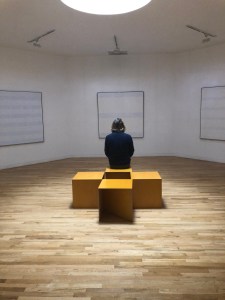
playwright Eugene Stickland in the Agnes Martin room at the Harwood Museum of Art in Taos. Photo supplied.

Her story set Stickland on his own journey interruptus of discovery that led him, six years later, to the Harwood Museum in Taos, NM, the only permanently hanging collection of the artist’s work. It’s the kind of “serene and beautiful, chapel-like room, refreshing, light-filled” that, as Stickland says, invites a meditative mystical state of mind in harmony with the paintings themselves. 

The conclusion for a man of the theatre as he sat looking at the paintings: “I should write a play.”  

Further drama-inciting discoveries followed. Martin, a lesbian, emerged from terrible, isolating childhood abuse at the hands of her mother, and lived for her 92 years with schizophrenia, at crisis moments signing up for electroshock therapy. “It was the voices in her head who told her to paint grids,” says Stickland, who dove into Martin’s own writing as they tuned to Taoism and Zen Buddhism. “The voices that could be quite sarcastic, and became such a part of her life.…” 

The Innocence of Trees, a decade in the making and opening Thursday in Bradley Moss’s production, has the older Agnes meeting her 10-year-old self, locked out of the family farmhouse all day long by her mother. In a resonant connection, they’re played by Maralyn Ryan and her granddaughter Emma Ryan.   

 “I loved the idea of casting an older woman and a young girl,” says Stickland of the new play Theatre Network was able to commission with the help of the Morris Foundation. It’s the infrastructure of his play Queen Lear, an 80th birthday present to his friend actor Joyce Dolittle, where an aging actor, apprehensive about taking on the most daunting role in the repertoire, enlists a teenage girl to help her learn all those lines. 

As Stickland acknowledges, The Innocence of Trees is a departure for a playwright best known for “funny dark comedies,” A Guide To Mourning, Some Assembly Required, Excavations among them. But the TN production reunites a creative team, starting with director Moss he’s worked with before (“there’s lots going on in this little play”). 

A projection-scape by video designer Ian Jackson played a huge part in Excavations. Live music has been part of many Strickland plays. Cellist Morag Northey, with whom Stickland collaborated (as narrator) on her performance piece 17, plays live in The Innocence of Trees, on top of  underscoring. That’s the joint work of Northey and Darrin Hagen, another Stickland collaborator of yore  (“and an Edmonton treasure” as Stickland says), who’s devised a way to realize the voices in Martin’s head. 

Maralyn Ryan has been in Stickland plays before now, including A Guide To Mourning and Some Assembly Required. True, Maralyn and Emma have been onstage together before, in shows such as A Christmas Carol at the Citadel. And Maralyn has directed Emma, who’s also a director (and choreographer, filmmaker, and writer-in-progress), starting with years of Northern Light Theatre summer camp shows. Theatre, after all, is a family affair chez Ryan (Kate Ryan’s Plain Jane production of Sweeney Todd has just finished its run).  

“But we haven’t worked together in five years,” says Emma of her grandmother. And appearing onstage as different versions of the same character  in the production that launches Theatre Network’s new space is “a dream come true,” both say, in a post-rehearsal conversation.

The subject of Martin’s life as an artist living with schizophrenia is close to Emma’s heart, a recent U of A theatre grad and “an activist in mental illness and neuro-divergent myself, with role models like Brian Wilson and John Nash (A Beautiful Mind).” The stigma attached to schizophrenia is addressed in The Innocence of Trees, she thinks, by the way “it could also be helpful and inspiring for an artist.” 

Maralyn sees the play as “Agnes hoping to find a different version of herself,” and confronting childhood trauma. “Trying to heal the inner child,” as Emma puts it. The abuse young Martin, of all her siblings, endured was physical and also psychological. “Her mother gave her the silent treatment for days at a time,” says Maralyn. And Martin turned inward: “she found inspiration and independence on (a reliance) on the self, her own  thoughts and visions.” 

The mystical thrust of Martin’s thinking is, she thinks, “about feeling and not thinking, experiencing without fear or judgment…. For Agnes, beauty was life, something beyond materialism and competitiveness. And part of her creative process was a brain that wasn’t cluttered.” 

“The process of making art should be happy,” says Maralyn. And the esprit de corps at Theatre Network these days, as the theatre prepares to welcome its first full mainstage season,s is a positive demonstration. 

PREVIEW

The Innocence of Trees

Theatre: Theatre Network at the Roxy, 10708 124 St.

Written by: Eugene Stickland

Directed by: Bradley Moss

Starring: Maralyn Ryan and Emma Ryan

Running: Thursday through Dec. 11

Tickets: 780-453-2440, theatrenetwork.ca

Posted in Previews | Tagged , , , , , | Comments Off on The fascinating journey of painter Agnes Martin: The Innocence of Trees premieres at Theatre Network’s new Roxy

From a big bad dangerous world, to us: Evandalism, a surprising original at Fringe Theatre. A review

Henry Andrade (aka MC RedCloud) in Evandalism, Edmonton Fringe Theatre. Photo supplied.

By Liz Nicholls, 12thnight.ca

It wasn’t a promising start to a life: “a little Mexican Indian whose mom and dad didn’t want him.”

To help support 12thnight.ca YEG theatre coverage, click here.

The guy who stands before us, tattooed and smiling in front of a big magic board, is telling the class — us — a story. It’s set in a big bad dangerous world of L.A street life, exotic to us and full of size x-large characters, suspense, stress, crime, violence, wild detours, startling discoveries. And the protagonist, who’s worked his way through that world against the odds to get to us, is … him.

He’s Henry Andrade (aka MC RedCloud). Evandalism, directed by the Fringe’s Murray Utas, is his own personal once-upon-a-time. And since RedCloud, an engaging Indigenous Mexican of Wixárika heritage, is a visual and hip-hop artist, an award-winning rap warrior (and, hey, a playwright), his presence onstage is, in a dramatic way, his own dénouement.

Evandalism (look up the term on Google, it’s wittily applied here) is a surprising original of a show. It’s  funny, it’s tense, it’s horrifying and charming. And yes, it’s inspirational, but not in the ways you might expect. As a fascinating projection-scape (designed by Matt Schuurman) documents from RedCloud’s own photos, real life constantly side-steps expectations. Or kicks them in the ass. 

It’s a story of changing a life, of finding one family after another. At the outset, jettisoned by his mother (a 17-year-old Huichol from Jalisco) and a father he’s never met (“his family can’t know about me”), “I was raised by a whole new family,” he tells us. They’re Chicanos in a tough part of L.A. dominated by street gangs like Hawthorne Lil Watts 13 (LWS). RedCloud conjures a dangerous environment with some warmth, through the eyes of a self-styled crybaby — the sweet mom and a brood of brothers and cousins and uncles and a dad who are destined to be forever in and out of jail. There’s a funny story involving a Toys R Us truck, but I wouldn’t dream of spoiling it for you. 

Anyhow, suffice it to say that the family is pretty much the conceptual opposite of any heartwarming ‘dysfunctional family’ sitcom you could name. The anecdotes have a vivid dark humour about them, and RedCloud is an amused, self-deprecating story-teller. And the school — 55 kids in a class, equally divided between Mexicans, Chicanos and Blacks — makes the average coming-of-age angst story smear into pastels. It’s a tough world (“I wanna be a Grade 8 Black kid when I grow up!”). And young Andrade, a little guy in the realm of fearsome giants, finds a place for himself as a performer when he discovers rap battles as a way to fight street wars “by making it funny … without blood or getting expelled.”

He seems to have a natural gift, as he casually demonstrates from the stage; his mentor is an older kid, a rapper who gives him a sense of possibility. And he also discovers in himself a talent for drawing and calligraphy —  acquired by copying the lettering of prison envelopes from relatives in the slammer — and graffiti. Utas’s production is clever about including the graffiti possibilities of the magic board along with Schuurman’s projection design. The Evandalism program itself is a work of art, a sort of black-and-white tapestry of Andrade life themes that include Aztec warrior, prison, church, theatre, love. 

Anyhow, the fraught environment has its own drift towards another sort of family, in the gang. By Grade 6, Andrade has been inducted. And this is followed by a traumatic recruitment out of the gang (it’s called “getting jumped out of the game” for a reason, as you discover) into another family, church.  

Henry RedCloud Andrade in Evandalism, Edmonton Fringe Theatre. Photo supplied.

Which might lead you to anticipate a certain conventional narrative wrap involving salvation. You’ll be surprised. Andrade is more than skeptical. Organized religion?  Well, it might give you a safe place to stay when your options are “jail or die,” true. But he steps up to the big negatives:  says, “it made me a homophobe, a xenophobe … it made me sexist.” 

Evandalism is evidence that RedCloud got himself a new family —in art,  music, rap, theatre — that’s got his back. What gives this show its unusual kick is that the goal, in the end, isn’t salvation through some sort of conformity or alignment, whether religious, social or political. It’s happiness. And he traces his sense of possibility back to boyhood and the slightly older rapper kid who told him to practice daily: “you can be the best; you’ve got this!”

It’s a moving, but curiously unsentimental, arc. The slides at the end of Evandalism  document the characters we meet in RedCloud’s story of changing, moving on. Many are in jail. Resolutions are few and far between. But there they are, too: a beautiful wife (actor Crystle Lightning, co-creator with him of the hit Bear Grease, an Indigenous version of the blockbuster musical which returns to the Westbury Dec. 6 to 8) and his own kid. It’s a real-life story. I won’t be forgetting it soon. 

Check out 12thnight’s interview wth MC RedCloud here.

REVIEW

Evandalism

Theatre: Edmonton Fringe Theatre

Created by and starring: Henry ‘RedCloud’ Andrade

Directed by: Murray Utas

Where: Backstage Theatre, ATB Financial Arts Barn, 10330 84 Ave.

Running: through through Nov. 26

Tickets: fringetheatre.ca, or at the box office “offer what you will.”

Posted in Reviews | Tagged , , , , , | Comments Off on From a big bad dangerous world, to us: Evandalism, a surprising original at Fringe Theatre. A review

A comedy thriller inside a comedy thriller: Deathtrap at Teatro Live! A review

Ian Leung and Geoffrey Simon Brown in Deathtrap, Teatro Live!. Photo by Ian Jackson, Epic Photography

By Liz Nicholls, 12thnight.ca

If there ever was a play that judges success when the audience gasps together, then laughs at its own collective surprise, it’s the one that opens the season at Teatro Live! (the newly renamed Teatro La Quindicina), a company devoted to snapping the elastic of the concept ‘comedy’.

To help support 12thnight.ca YEG theatre coverage, click here.

That’s the fun, potentially, and the intricate challenge of Deathtrap, the vintage 1978 hit by Ira ‘Rosemary’s Baby’ Levin. It’s both a comedy thriller and a parody of comedy thrillers: a case of cracking a chestnut and finding another chestnut inside. 

And the production directed by Nancy McAlear, in her Teatro debut, is the fun that can happen when a cast of top-drawer pros apply themselves expertly to a devious play-within-a-play, possibly within-another-play, a classic of its kind that’s expressly designed to be conniving, calculating, misleading — and also make people laugh.

The Deathtrap setting is pure murder mystery à la Dame Agatha: an isolated country house, full of old-school stage weaponry, on a dark and stormy night. The handsome two-storey set is by Chantel Fortin, lighted from a variety of atmospheric sources by Alison Yanota. The characters themselves place it in the lethal world of old-school Broadway theatre, or at least on the Connecticut outskirts, since its two principal characters are playwrights. 

Ian Leung in Deathtrap, Teatro Live!. Photo by Ian Jackson, Epic Photography

Sidney, the elder of the two, and the owner of the house, is a has-been writer of stage thrillers, fretting away in perpetual writer’s block. His last hit, The Murder Game, was 18 years ago; there are only flops on his resumé since. Ian Leung, an actor who really knows how to get the gravitas into a comic performance, puts the stakes back into writer’s block. Even his beige patterned sweater (costume designer: Leona Brausen, apt as ever) has the mothball flavour of word block about it. 

In Leung’s performance Sidney exudes the cynical pomposity and world-weariness of the veteran who has basked in the limelight and can’t reconcile himself to outsider status.  He name-drops and sneers; his studiedly casual insider throw-away references to Hal Prince, David Merrick, Michael Caine or George S. Kaufman, aren’t random at all. And the arrival on his desk of a brilliant first script by a young playwright protegé, a brilliant thriller called Deathtrap that Sidney recognizes as a sure-fire Broadway hit  (“even a (famous) director couldn’t hurt it,” he sighs), sets the ever-oiled always idling machine of his jealousy in motion. 

Ian Leung and Kristin Johnston in Deathtrap, Teatro Live!. Photo by Ian Jackson, Epic Photography

An invitation to the young man ensues. And Sidney’s sour jokes with his wife Myra (Kristin Johnston) about offing the young man and claiming the play as his own seem to be making her ever more apprehensive in the very first scene.  “What’s the point of having a mace if you don’t use it?” he says to her, a (possibly) light-hearted reference to Chekhov’s famous dictum about introducing a gun in Act I.  

Then the young theatre aspirant arrives with the only copy of Deathtrap (Sidney calls it “an enormously promising … first draft”), a script no one else has seen. This is the moment, early in Act I, that I have to stop telling you about the plot.  Except perhaps to suggest that the off-the-rack advice to “write what you know” should be offered cautiously when it comes to comedy thrillers involving murderous intent and whole walls of weaponry. In that vein, the standard practice of workshopping a play “on its feet” takes a shiv too in Deathtrap. 

Anyhow, Clifford is played with a very amusing wide-eyed comic bustle by Geoffrey Simon Brown — all lanky physical exuberance (he seems to bound, on springs, across the room and up the stairs), flamboyant deference (there’s a theatrical oxymoron for you), and the kind of irrepressible good cheer that is bound to grate on Sidney and bring out the pompous in him. So do Clifford’s breezy assessments about the shallow, “arthritic” conventions of comedy thrillers (Deathtrap is nothing if not self-referential). Clifford, as Brown’s performance captures to a T, doesn’t deflate easily.

Gianna Vacirca has a riotous time with a preposterous Dutch psychic character, Sidney and Myra’s neighbour with an outsized accent, who arrives head-first sniffing the floor and furniture and detecting “pain.” She has a stake in showbiz circles, too, as references to Merv Griffin or The Amazing Kreskin attest.

A thriller with five characters about a thriller with five characters does shortchange Myra. But Johnston captures a certain period cadence, and her mounting nervousness, carefully calibrated, ups the tension in McAlear’s production. And Corben Cushneryk, whose ‘70s hair sits solidly on his head like a helmet, is a theatre-loving lawyer who’s just there to notice things. 

In a theatre town the opening night audience, full of theatre people and playwrights, had a fine time of it Thursday. After all, it’s full of nods to theatre conventions, jokes about directors and producers, collaboration (a theatre favourite, that one), writing credits and  plagiarism, the archive of venerable thrillers from Sleuth to Dial M For Murder. Will it lag in Act II, characters ask each other about Deathtrap. Well, yes, it does, a bit. But how can you resist that entertaining kind of self-knowledge? Sit back, relax, get tense, and gasp away. 

REVIEW

Deathtrap

Theatre: Teatro Live!

Written by: Ira Levin

Directed by: Nancy McAlear

Starring: Ian Leung, Geoffrey Simon Brown, Kristin Johnston, Corben Kushneryk, Gianna Vacirca

Where: Varscona Theatre, 10329 83 Ave.

Running: through Dec. 4

Tickets: teatroq.com


Posted in Reviews | Tagged , , , , , | Comments Off on A comedy thriller inside a comedy thriller: Deathtrap at Teatro Live! A review

A life transformed by hip-hop: Evandalism opens the Fringe Theatre season

Henry RedCloud Andrade in Evandalism, Edmonton Fringe Theatre. Photo supplied.

By Liz Nicholls, 12thnight.ca

Henry Andrade (aka MC RedCloud) has a story. It’s personal, it’s dramatic, it’s hopeful, it crucially involves hip-hop.

To help support 12thnight.ca YEG theatre coverage, click here.

And, starting Friday on the Westbury stage, he’s sharing it from the stage in a one-man storytelling performance/show directed by the Fringe’s Murray Utas.   

In Evandalism, which opens the first Edmonton Fringe Theatre season in three years, RedCloud, born and raised in L.A., tells his own story of being a kid there, growing up Indigenous Mexican (Wixárika). 

Exuberant and personable in conversation (and onstage as we saw in an excerpt at the Fringe’s season launch), RedCloud explains that “I was a product of my environment.” And that environment had a lot to do with gangs. “My brothers, cousins, uncles, even my dad, were in and out of jail my whole life. Everybody in my family was, in one way or another, affiliated with gangs…. I don’t want to give away too much of the play (laughter), but I was slipping into the gang life with its own culture; I got initiated into a gang in the 6th grade.” 

“Music, dance, and especially hip-hop, really helped me take a big turn in my life,” says RedCloud. I really fell in love with this art. It helped carry me.” And so did the whole movement in which Indigenous people, including Chicanos and Mexicans, are “re-discovering pride in our culture, our roots and our ancestry, our language … taken away during colonization.”

“We’re a generation of people exploring our roots together!”

Henry Andrade (aka MC RedCloud) in Evandalism, Edmonton Fringe Theatre. Photo supplied.

Showbiz is a theme that runs through RedCloud’s history (which includes more recently roles in the TV series Yellowstone. Theatre has always attracted him: “A Midsummer’s Night Dream, Romeo and Juliet, Grease … we did ‘em all in high school. As I got older I started to get typecast as the gangster or thug.” 

It was in hip-hop and rapping that RedCloud really made his mark, bringing the themes of his Indigenous heritage to that field, with a whole discography and, as the Fringe program mentions, a former Guinness World Record for longest freestyle rap (at 18 hours one minute 14 seconds). 

Lightning Cloud Presents Bear Grease, at pêhonân, Edmonton Fringe 2021. Photo supplied.

The divergent paths in the RedCloud biography cross in Edmonton, where he lives with his wife, actor/ musician/ hip-hop MC Crystle Lightning (a Canadian Film Award winner for Trickster) who’s from the Enoch Cree First Nation.  And Evandalism isn’t the first time RedCloud and Edmonton Fringe have cohabited the same sentence. He and Lightning premiered their co-creation Bear Grease, an Indigenous version of the iconic musical/movie blockbuster that was instantly the Fringe’s hottest ticket in 2021. It’s been touring on both sides of the border ever since. And it’s back at the Fringe’s Westbury Theatre (“where it was born”) Dec. 8 to 11 after another Calgary run. 

Evandalism, as RedCloud describes, is the result of the workshops he takes to young people in schools and Indigenous communities “to share my story.” He credits the idea of the show to the Fringe’s Utas, a fomenter of new work who insisted “this story has got to be an actual performance.” 

It’s a story of transformation, and “there’s hope and happiness at the end…. I want people to see that I’m happy and I love life,” says RedCloud. When asked for the Fringe Theatre blog about what advice he’d give his younger self, he says “Oh, f*cking chill out. Chill out…. Everything’s going to be okay.”  

It’s a mantra of hope. “I beat the dragon and married the princess and got the castle!” 

PREVIEW

Evandalism

Theatre: Edmonton Fringe Theatre

Created by and starring: Henry RedCloud Andrade

Directed by: Murray Utas

Where: Westbury Theatre, ATB Financial Arts Barn, 10330 84 Ave.

Running: Friday through Nov. 26

Tickets: fringetheatre.ca, or at the box office “offer what you will.”

Posted in Previews | Tagged , , , | Comments Off on A life transformed by hip-hop: Evandalism opens the Fringe Theatre season

Two sparring playwrights in a vintage thriller: Deathtrap opens the Teatro Live! season

Ian Leung, Geoffrey Simon Brown in Deathtrap, Teatro Live!. Photo by Ryan Parker Photography.

By Liz Nicholls, 12thnight.ca

The twisty comedy thriller that opens the Teatro season on the Varscona stage Friday is a classic, Ira Levin’s vintage 1978 Broadway hit Deathtrap. 

But the production that launches the Teatro La Quindicina of old into its 40s, though, is all about announcing the new. There’s the streamlined new name and logo, Teatro Live!, with its own built-in exclamation mark! and foolproof spelling. There’s the stepping away from the summer- and Fringe-centric into a more conventional seasonal calendar for their shows, one that takes winter into account and leaves August out.  

And with this Teatro Live! revival of Deathtrap, a whole coterie of artists are making their debuts with the company, starting with director Nancy McAlear. Of her five member cast, four are Teatro newcomers. Ian Leung and Geoffrey Simon Brown (who are, incidentally, both playwrights themselves) star as the play’s two playwrights, the road-weary veteran and the bright up-and-comer, with Kristin Johnston as the former’s wife and Corben Kushneryk as Deathtrap’s lawyer character.

To help support 12thnight.ca YEG theatre coverage, click here.

The sole Teatro “veteran” in the cast, in the role of the next-door clairvoyant with the weird accent, is Gianna Vacirca, most recently seen this past season in her own Teatro debut as the title mystery woman in Evelyn Strange.

In itself a 44-year-old comedy thriller of Broadway provenance (by Levin, of Rosemary’s Baby fame) isn’t a new departure for a company whose mission in life is exploring and expanding the spectrum and reach of comedy. In addition to the plays of founder and resident playwright Stewart Lemoine, the Teatro production archive, after all, includes such vintage thriller offerings as Sleuth, Rope, The Bad Seed. 

With its two playwrights, its play(s)-within-a-play, and its intricate cross-hatching of revelations and reversals, Deathtrap is lethally resistant to commentary. Speaking of traps, everything, potentially, is a spoiler. But you find out pretty quick that Sydney Bruhl’s last Broadway hit was 18 years ago, followed by a series of flops. “Nothing recedes like success,” as he famously says of his flagging career. When Clifford, a bright young playwriting protegé shows up at Sydney’s isolated country house with the only copy of a script he’s written, a sure-fire hit called Deathtrap, Sydney’s extended “dry spell” might well be over. And the plot does what thriller plots do: it thickens.  

We caught up with Leung and Brown, the production’s Sydney and Clifford, to find out what it’s like to be playing wary playwrights — and multiple layers of deceptions and clues.

The pair arrive in their first Teatro production — specifically, in a bourgeois Connecticut country house full of (possibly) ornamental weapons — from very different theatrical locations.  For Leung it’s an arrival from a contemporary Ibsen sequel, Lucas Hnath’s A Doll’s House Part 2, in which he powerfully played the abandoned husband Torvald. Brown was half the cast of Even Gilchrist’s Re:Construct, a playful deconstruction of gender from the optic of being trans in a world of orthodoxies (it’s been picked up for the High Performance Rodeo in January). 

“So many challenges for an actor in this play,” says Leung of Deathtrap, “so many layers,” including the trickiness built into “the actor knowing much more than the character does … the problem of not knowing how much you know at every point.” He laughs. “It’s like that game where you make the little ball roll through a maze into a hole…. It’s called Deathtrap for a reason. Everyone in it is in a trap of some kind in their lives.”

Actor/playwright Brown is most associated with off-centre experimental theatre (and the innovative artist-run collective Major Matt Mason), witness such plays as Michael Mysterious, The Circle, and Night, a drive-by theatre experience which ran at twilight in Rundle Park in 2021. But he’s been in “scripted theatre-y shows” before now, as he says, though not recently. Brown is the author of a 23-actor adaptation of A Christmas Carol,  a hit at Theatre Calgary n 2019 and 2020. He’s even been in the ultimate murder mystery chestnut, Agatha Christie’s The Mousetrap at Vertigo Theatre in Calgary. 

“It feels … nice to be able trust the structure, to be able to lean on that,” Brown says of Deathtrap. “Maybe it’s where I am in my career, but I sympathize with my character wanting mentorship, trusting this older playwright. I just think how much I looked up to my mentors…. If they’d been menacing or duplicitous, I’d have been very vulnerable to that.” 

Actors are trained to make feelings and motivations expressive, available to the audience. Thrillers are all about the finesse of concealing, gauging how much and when to reveal — “how not to give away too much,” as Brown says. “It’s ‘what are you feeling?’ versus what you making someone else feel? And trying to be aware of both those things at the same time.”

Which sounds awfully complicated. But Leung thinks that the when and how much of clues and red herrings of Deathtrap are set up for actors in Levin’s script. “It’s a thriller where the characters play with each other as much as they play with the audience.”

Do they consider it a comedy? Like Leung, Brown calls it instead “a thriller with laughs, but first and foremost a thriller…. And it also pokes fun at the form and the fact it’s a play. It’s aware of what it’s doing and it kind of lets you in on the joke.”

Leung agrees. “There’s humour and wit mixed in….” He quotes one of the characters who analyzes the premium thriller form as “a juicy murder in At I, unexpected developments in Act II. Sound construction, good dialogue, laughs in the right places.” 

He’s having fun. “For me, it’s a new company; also I’ve never worked with anybody in this cast before. And they’re all wonderful to work with!” 

“How many laughs, how many gasps will go through the crowd?? wonders Brown. “I can’t say too much about it.” He laughs. “Just ‘I am in it. And it will be good’.” 

PREVIEW

Deathtrap

Theatre: Teatro Live!

Written by: Ira Levin

Directed by: Nancy McAlear

Starring: Ian Leung, Geoffrey Simon Brown, Kristin Johnston, Corben Kushneryk, Gianna Vacirca

Where: Varscona Theatre, 10329 83 Ave. 

Running: Friday through Dec. 4

Tickets: teatroq.com


Posted in Previews | Tagged , , , , , | Comments Off on Two sparring playwrights in a vintage thriller: Deathtrap opens the Teatro Live! season

Is that a giant ice cube I see before me? Titanical the Musical at Spotlight Cabaret, a review

Aimée Beaudoin, Tyler Pinset, Jamie Hudson, Jeff Halaby in Titanical The Musical, Spotlight Cabaret. Photo supplied.

By Liz Nicholls, 12thnight.ca

“How are we doing … emotionally?” the Unsinkable Molly Brown (Aimée Beaudoin) asks us at the outset, from the stage of the Spotlight Cabaret. 

Well, pretty darn chipper, actually.

To help support 12thnight.ca YEG theatre coverage, click here.

The joint is packed on a Sunday evening for Titanical The Musical, Spotlight’s latest show-with-trimmings. The cocktails have arrived. The soup and salad instalments of an amazingly elaborate (and delicious) four-course dinner have been served. And the Spotlight’s co-proprietors, Beaudoin and Jeff Halaby, musical theatre triple-threats  with a gift of the gab, who preside like genial, amused hosts at a festive house party, are hanging out having fun with the audience. 

Any birthdays? Anniversaries? Weird Tinder dates? Before we set sail on the Titanic (hey, what could go wrong? it’s big), know that Molly Brown is willing to share her Valium. Ah, share and share alike: that’s the thing about the art of cabaret; it’s built on audience interaction,  sans fourth wall. 

In a theatre town with a curious shortage of cabarets, the Spotlight  owns a niche — with chandeliers. It’s a smallish and elegantly appointed second floor venue in Strathcona up the stairs in a brick building across the street from Meat and the Next Act, a couple of doors down from the new Pip. As billed online it’s “a restaurant, bar, rooftop and live venue that features dinner theatre, burlesque, drag, improv, comedy, and live music.”

As you’ll glean from the title Titanical The Musical is a song-and-dance spoof, a vaudeville version, with laughter on its mind (written by Beaudoin and Halaby) of the inflated eminently spoofable movie melodrama. You know, the name you can’t even think of without hearing Celine popping a gusset on the high notes in your mind’s ear for at least three days.  

An extremely busy and able-voiced cast of four (including the co-writers, plus Jamie Hudson and Tyler Pinset), kitted out in an amusing scramble of Edwardian duds and shameless accents, tuck energetically into a song list of hits of every stripe and quite a few decades — pop, rock,  hip-hop, a bona fide cabaret chanson: Estelle, Styx, Lorde, Christopher Cross, Luther Vandross, The Proclaimers, the Bee Gees.…  The sound is first-rate, the work (along with the arrangements) of Aaron Macri. 

Jamie Hudson and Tyler Pinset, Titanical The Musical, Spotlight Cabaret. Photo supplied.

And the songs are fitted, with the odd nip and tuck and a view to comedy, to the big Titanic themes — you know, the upstairs-downstairs class struggle, eye-watering romance across the class divide, a love triangle, rebirth across the sea in the land of opportunity where there’s liberty “for most people,” the variation on Murphy’s Law about using the word “unsinkable” too many times. 

“You worry too much,” the callow controlling rich bloke Zane (Halaby) tells his poor but aspirational fiancée Rose (Hudson) who wonders about the lifeboat shortage because she’s a university graduate. Love’s young dream Jack (Pinset) introduces her to the pleasures of life with the common people below deck: “cholera, open sores, religion, moonshine …”. 

Get a grip, Liz; telling you the plot is the height of insanity. OK, there’s a love story, count on it.  “You make life without money sound so dreamy,” declares the conflicted Rose, as they sing Sailing (“takes me away to where I’ve always heard it could be …”) together. And, ah, the Big Moment on the railing? Bowie’s Under Pressure. Staying Alive finds its natural home in comedy.    

All of this is interrupted from time to time with vaudevillian annotations, running gags,  assorted sight gags, blithely peripheral moments of comedy at the bar or at an audience table. Hudson is the strongest singer of the four; Pinset has a daffy round-eyed charm as the dazed Jack. Halaby and Beaudoin are naturally adept improvisers.

Putting the Titanic on the Spotlight’s tiny half-moon stage is pretty amusing in itself. But then the show director Trevor Schmidt, whose Northern Light Theatre shows play the small Studio Theatre in the ATB Financial Arts Barn, is an expert on matters of cheap-theatre ingenuity in small spaces. I particularly enjoyed the jolly encounter between the  fateful iceberg (Halaby) and a plucky small boat (Beaudoin).

It’s musical comedy at the kind of close quarters that are part of the joke (choreographed by Sarah Dowling). Audience participation — as we all know from shrinking into our theatre seats praying for invisibility — is a tricky thing. Have no fear: the Spotlight treats the audience gently, with casual good humour. It’s a party with strangers. And it runs through New Year’s Eve. 

Tickets: 780-760-0202, spotlightcabaret.ca.


Posted in Reviews | Tagged , , , , | Comments Off on Is that a giant ice cube I see before me? Titanical the Musical at Spotlight Cabaret, a review

From Plain Jane, Sweeney Todd in close-up: feel the rage. A review

Sheldon Elter (centre) in Sweeney Todd, The Demon Barber of Fleet Street, Plain Jane Theatre. Photo by Mat Simpson

By Liz Nicholls, 12thnight.ca

You don’t want to think too hard about the dark smudges on the tiled wall. Or that loud industrial metallic grinding noise. Or the Please Remove Your Rubbers sign. 

We’re in the spartan break room of a meat-packing factory (designer: Trent Crosby). The bell clangs; the whistle shrieks. And the eight-member cast of Plain Jane Theatre’s chamber-sized revival of Sweeney Todd, The Demon Barber of Fleet Street arrive fresh from the killing floor — an ensemble still in work smocks and hairnets — to tell a story. A story in which blades and meat figure prominently.

To help support 12thnight.ca YEG theatre coverage, click here.

We’re awfully close on three sides at CO*LAB (a tiny and infinitely adaptable 60-seat downtown arts space). Is it mere fancy to realize that they seem to be eyeing us, appraisingly?

For a decade and a half the Plain Janes have been exploring the musical theatre repertoire in theatrically ingenious (and of necessity) low-budget ways — reclaiming neglected or forgotten gems, re-polishing the tarnished, de-cluttering the over-produced. OR in the case of Kate Ryan’s exciting minimalist production of Sweeney Todd, bringing us into direct contact with an extraordinary masterwork. A year after the great man’s death, Stephen Sondheim’s innovative, grisly (and funny) 1979 marvel of a musical/melodrama/operetta is set before and among us, in a small-scale version with an orchestra of one. That, not incidentally, would be Shannon Hiebert, pianist cum musical director; she has to be, and is, exceptional.  

Eight actors and one piano player and no microphones, in a 60-seat house: it feels personal. 

Built into the Janes archive, too, is a history of match-making: introducing emerging artists and challenging multi-talented theatre veterans in unexpected ways. Both happen in this Sweeney Todd. It’s led by the multi-talented husband-and-wife pairing of Sheldon Elter and Kristi Hansen, as the murderous barber Mr. Todd, a dab hand with the razor, and his resourceful sidekick/accomplice Mrs. Lovett who bakes the deceased into meat pies. And the cast includes young singer-performers; theatre newcomers scouted by the Janes include Erin Selin and Aran Wilson-McAnally as the piece’s young beleaguered lovers.  

Sheldon Elter as Sweeney Todd, Plain Jane Theatre Company, Photo by Mat Simpson

Elter, a charismatic actor/musician of startling range and intensity, arrives on Fleet Street, blade in hand, from an original movement piece (Bears), an Indigenous drama (Where The Blood Mixes), and Shakespeare (King Lear and Queen Goneril at Soulpepper). He extends an already impressive skill set further still, to take on some of the most difficult music in the repertoire as the celebrated 19th century serial killer, in the penny dreadful tale of a raging barber bent on exacting vengeance on the corrupt judge who’d exiled him unjustly 15 years before. 

In Elter, the seething rage of Sweeney’s glare might melt the buttons off your coat at close range. And his fists have a built-in clench; you feel he’s barely holding himself back from flattening someone. He is, as the actor powerfully conveys, a tortured soul, raddled through and through with a sense of injustice that’s become his life-force obsession. You can’t take your eyes off him, and you really shouldn’t.  

Elter is a dexterous singer. True, his lower range is more of an ominous subterranean rumble, but that works too. This is a score that counterpoints the jagged intervals and cross-cut rhythms of Sweeney’s rage (“there’s a hole in the world/ Like a great black pit”) with the unexpectedly lyrical, as in Sweeney’s love song to his razors (My Friends). 

Most recently the star of A Doll’s House Part 2, Hansen crosses a wide patch of theatrical real estate from re-worked Ibsen to arrive at Mrs. Lovett, that exemplary capitalist — Make Something Fleet Street? — with a business plan to not waste the raw materials at hand. Hansen has a long list of distinguished musical theatre and comedy credits, and she’s an agile singer. Still, her singing here will surprise you: she tucks apparently easefully into the macabre black comedy with carnivorous comic zest and outsized good cheer. 

Kristi Hansen and Sheldon Elter in Sweeney Todd, Plain Jane Theatre. Photo by Mat Simpson

The moment that transforms Sweeney’s despair at missing his chance at Judge Turpin’s deserving throat (Epiphany) into rampaging serial murder (“we all deserve to die”) is the very moment that Mrs. Lovett has her own bright idea. And the result is the shared brainstorming number A Little Priest (“we have shepherd’s pie peppered/ with actual shepherd/ on top”), exploring new possibilities in meat pie fillings and arguably the funniest song in the whole musical theatre canon. We hear Sweeney laugh. It’s a highlight.

The throat-slitting rampage — more, more, faster, faster — is stylized (perhaps too much?) to the point of lurid lighting flashes, the swipe of Sweeney’s razor, and the period emptying of metal buckets of blood. 

Sheldon Elter and Kristi Hansen in Sweeney Todd, Plain Jane Theatre, Photo by Mat Simpson

Under Ryan’s direction Elter and Hansen embrace the heightened performance style of melodrama. And so, in a more restrained way, does deep-voiced Vance Avery as the respectable, loathsome and lustful Judge Turpin, that representative of the powerful, privileged upper class and scourge of the working man. His designs on his captive ward Johanna (sweet-voiced Selin), Sweeney’s long-lost daughter, make our fists, right along with Sweeney’s, clench ever more tightly.  

Josh Travnik’s performance as Beadle, the Judge’s vile fixer, is neither gleeful nor greasy, repulsive qualities more usually associated with this vivid character. Here, cold-eyed and expressionless, he seems to be upwardly mobile, aspiring to the upper-crust imperviousness of his boss.

The young lovers Selin and Wilson-McAnally, are fine singers, if not quite the last word in swooning romance. Jacqueline Hernandez, recruited from the world of opera, rises to the joint assignment of the flamboyant Italian scammer Pirelli, and the mysteriously persistant Beggar Woman drawn over and over to Sweeney’s barber shop. Mark Sinongco is genuinely affecting as little Toby, Mrs. Lovett’s bakeshop assistant, in the lovely, unexpectedly affectionate Not While I’m Around. As she admits,  Mrs. Lovett’s maternal side is a little rusty.  

And the whole thing builds dramatically, with revenge as its out-of-control engine, to a tense and horrifying conclusion. It takes theatrical savvy to make that happen with lighting, a few simple props, a setting that’s only suggested, and a doorway, even if it’s to the Great Beyond. Intimacy can be chilling in the theatre. And the Janes have given us a rare chance to savour a great work again, in a moment when rage is building all around us in the world, in frightening ways. 

REVIEW

Sweeney Todd: The Demon Barber of Fleet Street

Theatre: The Plain Jane Theatre Company

Written by: Stephen Sondheim, book by Hugh Wheeler based on the play by Christopher Bond

Directed by: Kate Ryan

Starring: Sheldon Elter, Kristi Hansen, Vance Avery, Josh Travnik, Erin Selin, Aran Wilson-McAnally, Jacqueline Hernandez, Mark Sinongco

Where: CO*LAB, 9641 102 A Ave.

Running: through Nov. 20

Tickets: at the door or  tickettailor.com

Posted in Reviews | Tagged , , , , , | Comments Off on From Plain Jane, Sweeney Todd in close-up: feel the rage. A review

Almost A Full Moon at the Citadel: Canada has a new holiday musical, full of snow, stories, and soup. A review

Almost A Full Moon, Citadel Theatre. Photo by Nanc Price.

By Liz Nicholls, 12thnight.ca

In Almost A Full Moon, the oddly joyous and insightful new holiday musical premiering at the Citadel, generations jostle together on the stage.  

Wispy stray people, strangers, somehow find each other, get connected, and become families. Stories both happy and sad unspool backwards into the past in search of their own echoes. And every humble object and tiny moment — soup ladle to tree ornament,  song to kiss to phone call — gathers meaning.

To help support 12thnight.ca YEG theatre coverage, click here. 

This is a holiday musical with its own kind of charm that knows that time acts all weird at Christmas (or maybe that’s when we notice). The past won’t stay put, and neither will the present: it’s a haunted season. The musical created by playwright Charlotte Corbeil-Coleman, with music by Hawksley Workman (especially his hit Christmas album of 20 years ago), is all about that. And it’s actually constructed that way, taking its cue from the quirky, distinctively oblique angles of Workman’s songs themselves. 

Would anyone but Workman have written A House Or Maybe A Boat, where the vague urge to build something solid mingles with smell of clementines at Christmas? Or an ode to a brand of notebook (“Claire Fontaine/You seem to bring/ The best out of me…”)? The images of the Workman songbook glint off Corbeil-Coleman’s characters. They bring the particular inspirations of this off-centre material to their uncertainties and their memories as it occurs to them to wonder, sometimes in song sometimes not, if they’re in love, or what they’re meant to do in life … or whether they’ll be home for Christmas.  

In a sense, the play, commissioned by the Citadel and directed by Daryl Cloran, is a story about how stories, like families and like happiness, have to be constructed, from the bits and pieces of human experience, including memory. The narrative is assembled, artfully, before our very eyes. Magic is something to be arrived at, by human agency; it takes work. It’s like theatre that way. 

And in the intersection of short, telling scenes and time periods in Act I — identified without exposition in tiny fragments of dialogue and in costumes designed by Jessica Oostergo — you wonder how it will fit together. It took me a while to catch the drift, but that feels active and intriguing, like putting together a human, intergenerational puzzle. 

Amanda Mella Rodriguez and Felix de Sousa in Almost A Full Moon, Citadel Theatre. Photo by Nanc Price.

An amusingly precocious take-charge little boy (Felix de Sousa as Phillip) insists on striking up a friendship and a sledding date with his droll and phlegmatic new neighbour (Amanda Mella Rodriguez as Tala) in the snow (First Snow of the Year). Both young newcomers are talents to watch. 

Two fearful soldiers (Luc Tellier and Kaden Forsberg) from a war long gone arrive by parachute (Bullets), literally dropped by danger into friendship. In a diner on Christmas Eve, an airline stewardess (Patricia Zentilli) on the lam from “the tyranny of family” strikes up a conversation with a musical stranger (Kendrick Mitchell) escaping from his own family, and leaves him with a notebook (Claire Fontaine) containing a family recipe. 

Alicia Barban and Kaden Forsberg in Almost A Full Moon, Citadel Theatre. Photo by Nanc Price.

In a way Almost A Full Moon could hardly be more quintessentially Canadian. Winter’s big. There are moments in both our official languages (and others). Snow is everywhere. In Kimberly Purtell’s lighting design it falls from the sky in vertical icicles of lights. Cory Sincennes’s set design is dominated by a self-contained three-doored wall-less room that is, like Christmas, both inside and outside — with a frost-covered floor and a snow-covered tree. It’s surrounded by unmarked cardboard boxes where the past is contained, and is set down in the enveloping darkness of a big stage. 

That’s Mimi’s home turf, a mysterious foreigner in Act I and the family grand-matriarch in Act II. She’s played with an amusingly un-sentimental edge by the excellent Lyne Tremblay, who has a line in epigrammatic wisdom. Love, she says in answer to a grandson’s query, is “everything that’s left after the party.”

Chariz Faulmino, Lyne Tremblay, Luc Tellier, Patricia Zentilli, Kendrick Mitchell in Almost A Full Moon, Citadel Theatre. Photo by Nanc Price.

Mimi presides over the making of “magic soup,” as per Workman’s title song Almost A Full Moon. It’s a multi-generational family tradition of making something delicious by throwing in a mismatched assortment from every left-over on hand, which is something like a cooking up family if you think about it and try to ignore the parsnips. Anyhow, improvised soup, an unusual through-line for a musical, recurs in every holiday crisis; like charades (but way less stressful), everyone can join in.

You could make a dramatic case for having the winter gathering room surrounded by a dark world; people arrive in families from vast distances in time and space. But human exits do take a while under the circumstances. Set pieces — diner, bedroom, radio station, car —  mysteriously arrive and then disappear, in a way that could probably use a tune-up.

Under Cloran’s direction, though, the piece is in constant motion. And the musical numbers, accompanied by a seven-piece band (musical director and orchestrator Ryan DeSouza) don’t feel placed or delivered in a studied inert way. The songs feel spontaneous, like thinking or reacting, sometimes by characters who are actually writing them, or testing them out on an onstage audience. And Cloran’s 10-actor cast are all good, confident singers.

The audiences has the fun of see the same characters in different times at different ages, as love stories begin to emerge from the weave of memories. Corbeil-Coleman writes Sébastien, one of the two soldiers who was an aspiring actor in civilian life, in a particularly amusing way. And Tellier, who has natural comic chops, slides right into it, as the character writes a romantic letter in French to Marie-Ève (Alicia Barban) for his tongue-tied lovestruck buddy Reuben. The playwright gives the most comic opportunities to De Sousa and Peter Fernandes as the younger and older Phillip; they’re first-rate. And Mella Rodriguez and Chariz Faulmino as the younger and older Tala have their funny moments, too, and also provide a moving insight into the immigrant experience of arriving in Canada with luggage full of grief. 

Patricia Zentilli and Kendrick Mitchell in Almost A Full Moon, Citadel Theatre. Photo by Nanc Price.

As in romantic comedies with their built-in array of obstacles, the prickly, tentative coupling of Clementine and Lewis takes some doing to resolve. The latter has a career (he’s a rock star); the former is adrift and afraid of commitment. Performances by Zentilli and Mitchell capture that romantic uncertainty. Workman’s lovely Wonderful and Sad drifts into the play in a skilful way, as a love-lost duet between sadder and wiser Lewis and the older Phillip: “Where have I gone? How long ago did I leave?”

The beauty of Canada’s new holiday musical is the way it wraps itself around a season that seems designed for happiness but can be weighted with sorrow. Maybe worst of all is the compelling need for it to be special, and the feeling that you’re somehow letting the whole human team down by not being festive enough. 

Almost A Full Moon isn’t unaware that a sense of loss can come down the chimney at Christmas time. “No one is different, everyone’s alone,” as Workman tells us in the title song. “We’ll make enough soup to feed everyone we know; we’ll make enough to feed everyone we don’t.” But Corbeil-Coleman unwraps a sense of hopefulness too in this new musical. A family, after all, is something that can be created, from scratch if need be. Strangers can join. It’s heartwarming stick-to-your-ribs knowledge for the holidays. 

[Meet the playwright in this 12thnight preview here.]

REVIEW

Almost A Full Moon

Theatre: Citadel

Written by: Charlotte Corbeil-Coleman

Music by: Hawksley Workman

Directed by: Daryl Cloran

Starring: Alicia Barban, Felix deSousa, Chariz Faulmino, Peter Fernandes, Kayden Forsberg, Kendrick Mitchell, Amanda Mella Rodriguez, Luc Tellier, Lyne Tremblay, Patricia Zentilli

Running: through Nov. 27

Tickets: 780-425-1820, citadeltheatre.com 


Posted in Reviews | Tagged , , , , | Comments Off on Almost A Full Moon at the Citadel: Canada has a new holiday musical, full of snow, stories, and soup. A review

Newly rock-ified and fast on its feet: Jesus Christ Superstar arrives at the Jube. A review.

Jesus Christ Superstar, Broadway Across Canada. Photo by Evan Zimmerman for Murphymade.

By Liz Nicholls, 12thnight.ca

There’s a rush down the aisles, a veritable runners’ stampede onto the stage at the start of the Broadway Across Canada touring production of Jesus Christ Superstar that exploded into the Jube Tuesday. And it reimagines for us, in a stunningly physicalized way, a 50-year-old Andrew Lloyd Webber/ Tim Rice musical that feels newly rock-ified and fast on its runner-clad feet.

To help support 12thnight.ca YEG theatre coverage, click here.   

Is the unstoppable crowd heading pellmell towards the light? the great band? the pounding rhythm of the famous opening guitar licks? In this revival, the 2017 Olivier Award-winning production from the Regent’s Park Open Air Theatre in London, it’s the irresistible allure of celebrity-in-the-making that propels them. It’s a theme that links stardom to religious and political movements through a canon of hit musicals that includes Joseph and the Amazing Technicolour Dreamcoat and Evita. 

Nowhere is that link more audaciously set forth than Jesus Christ Superstar, which started life as a single in 1970, then a concept album before it hit Broadway in 1971, and the West End and theatre immortality thereafter. It gives the story of the last seven days in Jesus’s career a showbiz rethink, through the eyes of his betrayer,  railroaded into infamy. The early controversies that surrounded this rock opera are long gone (even the Vatican relented in 1999). But what we see is the history of a rising rock star who overcomes his humble origins to achieve mega-wattage in the galaxy … by a spectacular early death, made possible by not just some Judas but the Judas. 

This revival is by no means the second, third, or 103rd coming. What gives this production directed by Timothy Sheader, its mesmerizing momentum (90 minutes goes by in a flash) is, for one thing, its stunning stagecraft and rock concert accoutrements. 

No desert scenes with the odd palm tree or hippie tickle trunks of costumes here. The cast are in runners and agelessly draped work-out sweats and leggings (set and costume designer: Tom Scutt). The stage is backed with towering multi-level metal grid-work, with windows like an eerie modern tenement (the band is visible in one or two). And it’s dominated by a raked cruciform shape and dramatic high-beam arena lighting, which bathes tableaux in light or picks out soloists from the darkness, lights up hand-held portable crosses, or glints off the metallic palm fronds the ensemble are waving, a witty reference to Bic-flicking fandom. 

Weapons are microphones. The menacing high-command brigade of Jews led by Caiaphas arrive on the raked cross with shoulder-height staffs; they flip them to become microphone stands. When Jesus is roused to anger at Judas’s dismissive treatment of Mary Magdalene, he grabs the mic from him. Judas’s own end has to do with his microphone cord, in a memorable image.

The other outstanding feature of the production is the compulsively physical choreography by Drew McOnie for a cast of 26. They are, it must be said, an ensemble of powerful singers (more about this in a sec). And incidentally, the sound, for once at the Jube, is impeccable, so you can hear Rice’s witty lyrics as well as the big rock rearrangements. But in many ways, this is Jesus Christ Superstar reinvented as a movement piece. 

You eye is drawn over and over to hands, lots of hands over eyes or pushing back. Bodies flung robotically to the side or down, jerked into cultish frenzy by forces beyond themselves. It adds up to a powerful insight into how crowds work, how groups become mobs.

The ever-louder crowd of supplicants demanding miracle cures encircles Jesus closer and closer; it’s stressful work being a superstar. With the addition of white choir smocks, the energetic acolytes of Jesus become the bloodthirsty rabble that call for his crucifixion. And blood they get, in a strikingly gruesome evocation of Jesus battered and beaten, lashed by glitter. There is a heavy price exacted for celebrity, and it’s about to be paid.  

Jesus Christ Superstar, Broadway Across Canada. Photo by Evan Zimmerman for MurphyMade.

Judas, “your right hand man all along,” has been on the money about this. He predicted in his opening number Heaven On Their Minds that things will end badly since Jesus has started to believe his own press, so to speak. “You started to believe the things they say of you.”

The performances are compelling. As Jesus, Jack Hopewell, an actor of delicate frame, is mild-mannered in a pop star sort of way, with a line in homilies — “save tomorrow for tomorrow/ think about today instead” — and (understandable) anxiety issues. That is, until he’s provoked to anger by the venal mob in the temple and really lets loose a high rock tenor. He’s often carrying (and sometimes playing) a guitar. 

Judas, as played by Elvie Ellis, is the more passionate figure — as a performance full of edgy, furious, exasperated angles both physical and musical, conveys eloquently. He’s being set up for the label of eternal villain, as the enabler of his friend’s superstardom ambitions, and he knows it. The money he gets for betraying Jesus sticks to his hands, indelible silver stains, an inspired image.  

Faith Jones, the possessor of a silky and lustrous voice, plays Mary Magdalene. She delivers the detachable hit I Don’t Know How To Love Him in an appealingly simple way. And then she melts back into the ensemble.

The villains are striking, especially Isaac Ryckeghem as Caiaphas, he of the rib-rattling bass voice, and Erich W Schleck as Herod, here a ruthless high-camp satyr with a major codpiece whose followers are served up as bodiless heads on golden platters. 

Jesus Christ Superstar, Broadway Across Canada. Photo by Evan Zimmerman for MurphyMade

The show’s big moment of silence, memorable because it’s the only one, comes at the Last Supper, inventively staged by Sheader. And the ending, which leaves Jesus and Judas together in a light that’s almost companionable, is the capper to an exciting and breathless production. Even if you think you know Jesus Christ Superstar, catch this one if you can. It rescues the piece from the stable where warhorses live, and sets it running again, wearing its 50 years lightly.

REVIEW

Jesus Christ Superstar

Theatre: Broadway Across Canada

Written by: Andrew Lloyd Webber and Tim Rice

Directed by: Timothy Scheader

Starring: Jack Hopewell, Elvie Ellis, Faith Jones, Isaac Ryckeghem, Nicholas Hambruch, Kodiak Thompson, Joshua Bess

Where: Northern Alberta Jubilee Auditorium

Running: through Sunday

Tickets: ticketmaster.ca   


Posted in Reviews | Tagged , , , , , | Comments Off on Newly rock-ified and fast on its feet: Jesus Christ Superstar arrives at the Jube. A review.