Nextfest at 26: catching the drift of the new wave of artists, online again for a second year

It’s the eve of Nextfest, the freewheeling multi-disciplinary Edmonton festival that for more than a quarter of a century has sought out, showcased, and celebrated the original creative ideas of the next generation of emerging artists. You’ll meet some of them in upcoming 12thnight posts. But first, meet Nextfest Director Ellen Chorley and survey the festivities with her. 

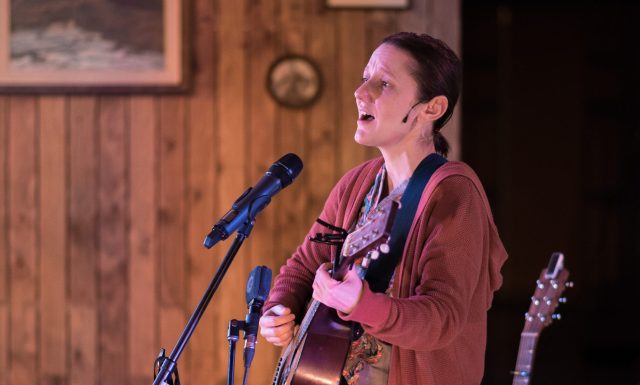
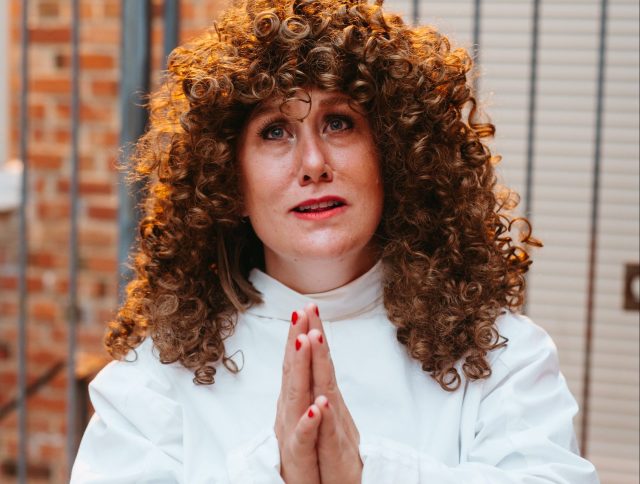
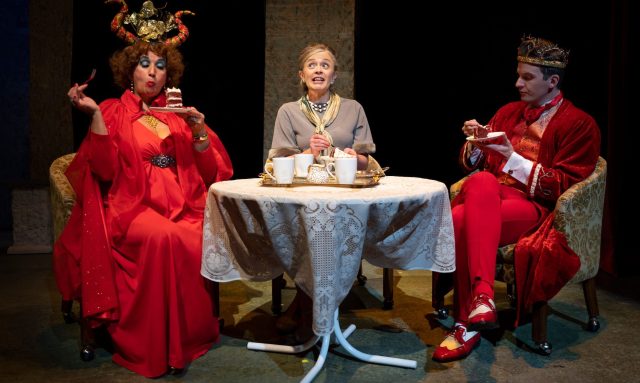
Nextfest 2021 image by Taylor Danielle. Photo supplied.

By Liz Nicholls, 12thnight.ca

What’s happening? What’s next? Those are the very questions that are Nextfest’s raison d’être, both for its artists and for us. The idea dreamed up at Theatre Network in 1996 has been a way of connecting with creative minds and possible answers.

That has never seemed more crucial. In a year of grinding devastation in the arts, when the past seems mythical and the future has never seemed less knowable, Nextfest’s coterie of 400-plus artists have taken up the festival’s invitation to collaborate and experiment — online. And come Thursday for 11 days (through June 13) we’ll find them on you computer screen playing with others across the wide spectrum of theatre, dance, clowning, burlesque, comedy, music, film, poetry, spoken word, visual arts.…

To help support 12thnight.ca YEG theatre coverage, click here.

“Just to see the diversity, how many ways artists have gone about telling their stories … it’s really beautiful!” says Ellen Chorley, director of Nextfest and — as playwright/ actor/ director/ dramaturg/ mentor/ curator/ artistic director — an artist of prodigious versatility herself.       

Nextfest turned 25 last June by taking its multi-limbed self entirely online, an impressively transformational high-speed two-month pivot of a whole festival of live performances to the digital realm. “‘It’s April 1; can you come up with something digital?’ we asked our artists,” says Chorley. “And they all said yes.”

Year 26 is different. “There were so many factors at play we decided in December to go all online,” she says of this year’s edition, restriction-proof in an unpredictable world. “Right from the start, with every submission, we asked ‘how is your idea going to be an online digital project?’ And we partnered with GIFT (Girls in Film and TV, an organization devoted to providing tools and instruction in film-making) who supplied free equipment and mentorship…. Quality is definitely enhanced!”

Submissions for the January deadline came from all over the world, says Chorley. “In theatre (alone) 120 scripts arrived in my inbox,” at least as many as usual, maybe more. Which is also a sign of theatre deprivation, “a comment on the situation of people eager to practice their art during the pandemic.”

If you’re in “whither theatre?” pondering mode, tune in to Nextfest’s range of “mainstage” offerings. As Chorley surveys, the new generation of theatre artists are inventive in the ways they go about connecting digitally with an audience. There is, for example, “a short play that’s completely animated” (Butterflies: A Broadcast From The Digital Neon Jungle by Caitlin Kelly). Emily Anne Corcoran’s Artists & Love: the Instagram Miniseries is “a three-part series designed specially to be watched on Instagram’s “story” function. There’s even “a nature podcast,” Sam Jefferey’s Would You Wander, six stories to be experienced while you’re walking outdoors in nature.

And there are plays (Liam Salmon’s sci/fi horror production Arkangel) and solo performances (among them Lebogang Disele’s The Space Between, a movement and poetry meditation on “being Black, African, and a Woman”).

Chorley, a theatre artist by experience who discovered her career more than half a lifetime ago at Nextfest, has been particularly fascinated to see how other art forms imagine virtual performance. “I don’t know as much about dance and film,” she says of the lineup curated by Rebecca Sadowski. “And dance films are blowing my mind! So artfully done…. I love the way that art form makes you zero in on specific movement, on what they want you to look at. The lighting choices! Fascinating. It’s made me fall in love with that form.”

Because the Nextfest offerings were rehearsed and filmed in socially distanced ways during the pandemic — mostly since January and mostly outdoors, an achievement in fortitude, to say the least — and “the regulations changed so often,” the cast sizes are smaller than other years. And the projects are shorter. “People have learned more about digital storytelling,” says Chorley, “more efficient storytelling.”

A celebration of innovators it may be, but Nextfest has always had its  traditions. Arts industry mentoring workshops for artists crossing the fateful theshold into the professional world — on everything from voice acting to audio engineering to decolonizing the arts, are back. Chorley herself coaches ‘playwriting basics’.

Back, too, are the signature Nextfest performance Nite Clubs. The spontaneous intermingling on the dance floor of audience and performance artists is a fantastical impossibility at the moment. But the nite clubs have been reinvented for the times as online “variety shows, hosted live,” as Chorley describes. The Pride edition of the three, June 12, is Hot Mustard, a veritable extravaganza of fast food allusions presented by Hot Girl Accounting. Party-ers are encouraged to “dress to impress” (sequins are appreciated).

And, yes, for the sixth year, Nextfest contributes an original wall mural to the scene: look for Haylee Fortin’s work on the Backstage Theatre shop doors.

Nextfest is one of those festivals that eludes easy quantification. But in all, there are about 90 events, six or so more projects than last year. After a 2020 edition in which they weren’t included, the visual arts are back. As Chorley explains, the work of 10 artists is  showcased in three festival galleries: the windows at the defunct Strathcona Army and Navy (for street viewing), the Next Act Pub (restrictions permitting, six in-person viewers at a time may be allowed in), and Lowlands Project Space in Highlands (single-household groups, by appointment only). And curator Rebecca Pickard has created a film round-up (available June 11 and 13).

Nextfest (ASL-captioned in every particular) is free for the watching; you don’t need a ticket — thanks to the continuing support of Theatre Network, funders, the adopt-an-artist program, and your welcome donations. All you need to ride the next wave is your wi-fi connection.

PREVIEW

Nextfest 2021

Theatre: Nextfest Arts Company

Where to watch: free online

Running: Thursday through June 13

Full schedule and program: nextfest.ca


Posted in Features, Previews | Tagged , , , , | Comments Off on Nextfest at 26: catching the drift of the new wave of artists, online again for a second year

Lost sock? Ghost in the garage? Investigators from the Ministry of Mundane Mysteries to the rescue, by phone

The Ministry of Mundane Mysteries, Outside the March. Photo supplied.

By Liz Nicholls, 12thnight.ca

What on earth could have happened to my copy of Alice in Wonderland? I’ve looked everywhere. And while we’re on the subject of missing, my polka-dot frame cheap-o sunglasses have been AWOL for 18 months? And what is that odd ticking sound on the side of the shed?

To help support 12thnight.ca YEG theatre coverage, click here.

Existence is mysterious in the largest sense, true, and the future is one big unknown. But there’s this: life is riddled with minor, mundane bafflements, nagging little mysteries that might not strike society as a whole as urgent but …   

They are meat and drink for the intrepid Investigators from The Ministry of Mundane Mysteries. In a series of five phone calls to you (and your family) in the course of an hour, these alert private detectives will unleash their powers of deduction and undertake to solve your own particular case. it happens here as part of  the International Children’s Festival of the Arts for 10 performances Saturday and Sunday.

The Ministry of Mundane Mysteries, Outside the March. Photo supplied.

Custom-tailored on a case-by-case basis, The Ministry of Mundane Mysteries is an immersive theatre adventure, telephonic in delivery, by Toronto’s innovative Outside The March. Since its premiere in March of 2020, it’s played in more than 210 cities across the country and around the world, including Lima, Peru and Mumbai, India, two places hardest hit by the pandemic (you can check out the global map on the Outside The March website).

It was created 14 months ago to reimagine live theatre for a time when live performance was abruptly shut down, says Mitchell Cushman, Outside the March co-artistic director along with Simon Bloom. “It was devised largely to replace a couple of projects we had lined up,” including “a walk-about immersive production of Sweeney Todd that was all set to open.”

Outside the March is that kind of company. There are award-winning productions of hot existing plays, The Flick and Jerusalem among them, in the company archive. But OTM is  particularly known for inventive site-specific immersive productions that take audiences out of traditional “theatres” and into unexpected theatrical encounters. A Toronto native who came west to get a master’s degree in directing at the U of A, Cushman went back to his home town in 2011 with an Edmonton collaborator (Amy Keating) and a company named for a line from Tom Stoppard’s Arcadia, “one of my favourite playwrights and one of my favourite plays,” as he says. “It appealed to us; we wanted to do things that were out of the ordinary.”

Their second production Mr. Marmalade, about a kid and her very flawed imaginary friend, was promenade-style, and happened in an actual kindergarten classroom where the audience mingled with the actors.

In his time in Edmonton Cushman says he’d been most inspired by a site-specific piece he’s caught at the 2010 Fringe here: Theatre Yes’s production of Mark Ravenhill’s Shoot/ Get Treasure/ Repeat, which took audiences on a “tour” of highly disturbing theatrical experiences in four startling locations, including a Strathcona parking garage. “That piece stayed with me,” Cushman says, “the proximity, the unexpected journey of it.”

Since then Outside The March has gathered audiences and multiple awards in taking audiences into such non-traditional venues as a funeral home, an abandoned movie theatre, a video store. In one way, the company has specialized in “intimate proximity, when we cram people into small spaces,” an aesthetic that comes with queasy overtones in this world of ours. In another, though, “we’re into theatre that re-imagines what the theatre experience can be, and that has been very useful in this time,” Cushman says. And it’s been a bonus to be a company that doesn’t run a venue, as he points out.

Zoom was a possible choice for The Ministry of Mundane Mysteries, of course. Much of theatre has scrambled to find a footing on that platform in the last year. “But we began from the premise that Zoom was what we didn’t want it to be,” Cushman says. Instead, its venue, a retro one, is the phone. “There’s an intimacy and a focus about the phone,” he thinks. “By phone you can enlist the audience imagination. Which theatre is very good at doing.” And there’s an unmistakeable liveness about having an actor talk to you, converse with you, improvise from your responses.

In the interests of wider accessibility, when the phone isn’t viable, Cushman and co-director Griffin McInnes have adapted the show as a video call for an ASL version that played the Sound Off Festival of Deaf Theatre here in March. That adaptation has “other fun elements to it; the actors are in costume….”

For theatre the silver lining to the very dark cloud that is the pandemic, is “that you can cross borders.” as Cushman points out citing OTM’s new world-wide connections. “It’s a way of creating opportunities for actors and other theatre companies to produce work in this time…. I’ve never felt like geographical borders and boundaries have mattered less!”

Originally the production was designed as a series of daily 10-minute phone calls for a week. “That felt right when everyone was really stuck at home and life had even less structure…. But now, as people have found ways to return to their work lives, that no longer felt feasible, for the actors, too.”

Outside the March got funding last fall to adapt the work of the Ministry for front-line workers at a Toronto hospital “and it was just too hard to figure out their schedules.  So we adapted it for an hour, and that ended up feeling more conducive to the time,” says Cushman. “A power hour.”

When you buy a ticket to The Ministry of Mundane Mysteries, you fill out a small questionnaire. “It gives the audience members a bit of a sense of the experience. And it gives our team (of actor/improvisers) a couple of key details about the person, including the real mystery from your life you’d like solved … so we can create a personalized story.”

Very occasionally, the cast gets prompts that might be too dark or heavy to work as well (“very rare”), in an experience designed to be “light and fun.” Co-directors Cushman and McInnes have an “all-service help line for actors” in stories that “require a bit of extra attention.”

“Kids often use their imaginations to invent things, and that works well for them. We encourage adults not to make things up. But that’s flexible too,” says Cushman. “What I love about this is that there is no external audience; the only people in the audience are the ones receiving the call. There’s no other audience (the actors) need to please…. It’s custom-made and the calls are very different.”

As the pandemic grinds on and in-person restrictions change, “like everyone in the industry we’re always planning and re-planning,” he says. “We’ve reinvented a previously produced musical (yet to be announced) as an audio broadcast that we’re also hoping to play on people’s porches and in backyards this summer.” And since a pandemic side-effect is the favouring of more spacious venues over intimate spaces, Outside the March “is putting a lot of energy into a large-scale project for the summer of 2022.”

Look for Cushman’s film version of Lessons in Temperament, James Smith’s solo hit from the SummerWorks of 2016, shot in shuttered theatres around Toronto. Originally, they’d planned to bring this very intimate live piece, performed around a piano, to the High Performance Rodeo in Calgary. “If we’d called it theatre we wouldn’t have been able to shoot it, but it’s a film,” Cushman sighs.

Meanwhile, the Investigators from the Ministry are prepared to solve your personal mystery for you over the phone. “Last March we thought we’d do this piece for a couple of weeks until the the pandemic blew over. And here we are! Wonderful and unexpected all the places it’s happening.”

PREVIEW

International Children’s Festival of the Arts

The Ministry of Mundane Mysteries

Theatre: Outside The March

Created and directed by: Mitchel Cushman and Griffin McInnes

Running: June 5 and 6, various times

Tickets: $30 per household, stalbert.ca


Posted in Previews | Tagged , , , , , | Comments Off on Lost sock? Ghost in the garage? Investigators from the Ministry of Mundane Mysteries to the rescue, by phone

Solving a mystery, being Hamlet, streaming a play, climbing a mountain, and other theatrical pursuits this weekend

S.I.S.T.E.R., The Fox Den Collective. Photo supplied

By Liz Nicholls, 12thnight.ca

In a puzzling world where much has gone way wrong, cause and effect have gone their separate ways, and logic has gone AWOL, there’s satisfaction to be had in collaborating with others to consider evidence and solve a mystery.

And, yes, among the possibilities for your weekend entertainment in this theatre town, there’s a theatre ‘experience’ for that. S.I.S.T.E.R., an interactive online mystery presented by The Fox Den Collective, is back after an sold-out run last fall. It’s one possibility, and there are others — streamed plays, an audio theatre participation adventures (no kidding), digital solo interpretations of classics, an audio song cycle…. Here’s a selection.

To help support 12thnight.ca YEG theatre coverage, click here.

•Trust theatre artists, whose ingenuity has been taxed beyond all reasonable limits by the pandemic, to come up with a virtual “play” — part-improv, part-game — that you (stuck at home, possibly alone, feeling your powers of deduction atrophy by the minute) get to be in. And not only that, you get to discuss this “play” as it’s happening, with your team-mates (a nightly audience of 25 is divided into five five-person teams).

S.I.S.T.E.R. is named for the investigative team (Squadron for the Investigation of Sorority Transgressions, Evil-Doing, and Rapscallionism) you join when the most valuable artifact belonging to Gamma Gamma Gamma vanishes from that sorority house on the University of Edmonton campus one night.

Who stole the ceremonial mace? Thursday night I had the fun of meeting up with people I didn’t know to try and find that out, and nail the culprit. We got to sift through links emailed to us earlier in the day. When show-time came, each team repaired to a Zoom break-out room, and we were visited in turn by the suspects. We got to ask questions, listen, discuss our reactions and our deductions, discuss what we thought was being revealed and what concealed by the characters, sort the clues from the red herrings, devise more questions to ask….

I was lucky to be with quick-witted, smart people who reacted in different ways to the suspects’ answers and evasions. One thing I did deduce was just how much the pandemic has robbed us of the fun and liveliness of unexpected, improvised encounters.

Another deduction: mysteries are devilishly tricky to construct — layers of information, what to let slip when, what to hold back, what to leave to actors to hint at, as alternative possibilities. S.I.S.T.E.R. is cleverly done.

Directed by Carmen Osahor, the production stars Jessy Ardern, Michelle Diaz, Chariz Faulmino, Sara Feutl, Marina Mair-Sanchez and Kristen Padayas. This return run lasts through June 5. And since this is an entirely online investigation, you can team up with friends and relatives from afar, or you can do what I did, meet some quick-witted strangers. Tickets: eventbrite.ca. Check out the 12thnight interview with Jessy Ardern last October here.      

•This is the night Kiana Woo, the second of Thou Art Here’s weekly series of six Hamlets, appears (on your screen) to reveal to you the Prince of Denmark’s existential anxieties, solitary self-doubts, ruminations on mortality and meaning. All very Of This Moment, don’t you think? Hamlet in Isolation, an experimental mini-series from the “site-sympathetic” Shakespeare company, starring diverse Alberta performers who have never been Hamlet before, runs through June 25 on Friday nights.  Tickets: fringetheatre.ca (pay-what-you-will). 12thnight talked to Thou Art Here’s Andrew Ritchie about the series here.

Lora Brovold in The Ugly Duchess, Northern Light Theatre. Photo by Epic Photography.

•This is the finale weekend for Northern Light Theatre’s streamed production of Janet Munsil’s The Ugly Duchess. So … your last chances (through Sunday) to catch a smart, confidential, and affecting performance from Lora Brovold in creating a multi-dimensional portrait of the intrepid 14th century Countess of Tyrol  reputed to be the ugliest woman in history. Trevor Schmidt’s production, beautifully designed and lighted, lingers in close-ups on “the goddess of ugliness,” an outsider in a man’s world where her wealth and strategic location make her an eligible catch. Give Darrin Hagen’s original soundscape a particular listen; it has narrative implications. Tickets: northernlighttheatre.com. Check out the 12thnight preview interview with Lora Brovold here, and the review here.

Helen Belay, Like This, Transformations Project, Concrete Theatre. Photo supplied.

•The national Transformations Project hosted online by the National Arts Centre offers two new short videos by Edmonton artists, commissioned by Concrete Theatre, to address the question of what it would take to change the world.

Actor/dancer/choreographer Richard Lee, a witty skeptic, wonders about the question in Side Shave: “a reflection on collective experiences, hope at the end(s) of the world, and dancing like an idiot.” In the light of the distorted pseudo-universality founded on  colonialism, able-ism, late-stage capitalism, etc. what in the end do people share as common experience — except “gravity, the passage of time, and a body”? It is enough to work with, he says. “It is a lot.”

Richard Lee, Side Shave, Transformations Project, Concrete Theatre. Photo supplied.

Helen Belay’s lyrical Like This is inspired by an immigrant inheritance, and finds in the beauty of the natural environment, the seasons, the feeling of being enclosed but open to the world, a continuity that crosses all backgrounds. “It’s like this,” she says “It’s just like this.”

You can catch the videos on the NAC website through Tuesday, and after that at Concrete Theatre. Catalyst’s trio of commissioned Transformations videos (from Chris Dodd, Kristi Hansen and Rebecca Sadowski) continues too. 12thnight talked to the three here.

Mountain Goat Mountain, Theshold. Photo by Lakshal Perera.

•The Australian innovators from Theshold have contributed an ingenious piece of “audio theatre” to this year’s virtual MainStage lineup at the 40th anniversary International Children’s Festival of the Arts, which starts next week. You and your family at home are the cast of Mountain Goat Mountain; the digital prompts set you forth on an adventure. “You can work up a sweat!” promises co-creator Tahli Corin, in a 12thnight preview. Tickets: now available here till June 6 and good for 30 days.

•Have you seen Asha and Ravi Jain’s A Brimful of Asha or Tai Amy Grauman’s Métis version of Mary’s Wedding yet? The Citadel productions continue streaming, the former through Monday and the latter through November 30. Tickets: citadeltheatre.com. 12thnight has reviewed both: A Brimful of Asha and Mary’s Wedding. Tickets: citadel theatre.   

Posted in Features, News/Views | Tagged , , , , , , , , , , | Comments Off on Solving a mystery, being Hamlet, streaming a play, climbing a mountain, and other theatrical pursuits this weekend

A theatrical adventure at home: Mountain Goat Mountain at the Kids Fest

Mountain Goat Mountain, Theshold. Photo by Lakshal Perera

By Liz Nicholls, 12thnight.ca

“I think you’re going to like it. I really do…. It’s designed, choreographed, and performed by you.”

To help support 12thnight.ca YEG theatre coverage, click here.

A bright and empathetic eight-year-old (Henrietta Mettler), is leading us through our Act I preparations for a family alpine adventure that will have us sallying forth together into caves, leaping across rivers, encountering strange creatures — in our own home.

We do the creating en famille in Act II, following a narrative soundscape. And all we’ll need is an audio device (computer, cellphone or tablet), a bed sheet, a blank piece of paper, and a pen or pencil.

Mountain Goat Mountain, an “audio theatre” production for families by the innovative young Australian company Threshold, is one of the featured virtual performances at this year’s all-digital 40th annual edition of the International Children’s Festival. And, says Theshold co-director Tahli Corin, it was especially designed to address the disconnectedness of this isolating time in which we live.

Zooming from the “Australia performing arts market” in Adelaide, Corin explains that even before the pandemic hit, she and her Threshold producing partner Sarah Lockwood — theatre artists with small children who live and work in Kyneton, a small town of 8,000 an hour outside Melbourne — “had already been pondering accessibility.”

“How can we bring theatre to the ‘regions’ in a way that doesn’t rely on travelling vast distances?” Kyneton isn’t far from the big city, “but that’s significant when you’re taking kids to the theatre.”

Mountain Goat Mountain, Theshold. Photo by Lakshal Perera.

The pandemic, with its attendant shutdowns and travel restrictions,  was “an opportunity to stretch the form,” says Corin, who thinks of Mountain Goat Mountain as “digital prompts for real-world interaction…. Not something you watch, instead something that connects you with the people you share space with. Lots of theatre companies have turned to streaming. But we wanted to do something different, something that connected people to each other in their homes.”

And in COVID-ian times, connection is a rare and precious commodity. “When you have small children,” says Corin, an actor-turned-playwright, “in a lockdown you become everything — the mother, the grandmother, the playmate, the teacher.” Theshold “wanted to create a little circuit-breaker to that, and let adults drop into play with their children.”

“And everything you need is in the room.… We need to be reminded of that in times of anxiety and uncertainty.”

Named with the aim of “looking at life’s big moments,” Theshold was designed from birth in 2019 “to use theatre to create moments of connection,” as Corin puts it. “Sometimes that’s with digital tools, sometimes with analog.” Theshold’s Feather Quest, for example, sends theatre-goers a set of cards through the mail that “lead families through an (interactive) quest in their homes.”

After weighing the options, the Mountain Goat Mountain team opted for audio over screen-based experiences. For one thing, “it democratizes the family…. You don’t have to know how to read to follow the prompts; adults don’t need to be the boss .” For another, you’re not shackled to a screen; you’re free to move away from the device, a liberation in itself.   

Corin cites seminal American research into why people attend cultural activities. Eighty per cent of respondents (“a powerful statistic for us!”) put connection with their event-going companion(s) as their chief motivation, ahead of the event itself. For Corin and Lockwood, the attractions of immersive, interactive, intimate theatre far outweigh the theatrical illusions created in traditional proscenium theatres.

From its premiere in the darkest days of the pandemic mid-May 2020, Mountain Goat Mountain has caught on with audiences across Australia, in Europe, and in North America. “We made it for our own families, our own community, our own state (Victoria, in strict lockdown at the time),” says Corin. Since then, it’s been hosted by festivals and theatre companies across six English-speaking countries (the Kids Fest in St. Albert is its 18th engagement). And it’s currently being translated into Mandarin.

The thing Corin misses, she allows, “is the ability to observe audiences, hear them as they gasp and laugh or clap so you know you’re on the right track.” But “our job in this form is to create the structures that allow audiences to connect with each other and have those moments of magic and delight that theatre is for!”

PREVIEW

International Children’s Festival of the Arts

Mountain Goat Mountain

Theatre: Threshold

Created by: Tahli Corin and Sarah Lockwood

Starring: you and your family

Where: online

Running: available now, tickets good anytime for 30 days following ticket purchase (last day to purchase a ticket June 6)

Posted in Previews | Tagged , , , , , , | Comments Off on A theatrical adventure at home: Mountain Goat Mountain at the Kids Fest

‘Just write your truth’: Songs To No One, a new audio song cycle from Dammitammy Productions

By Liz Nicholls, 12thnight.ca

In one way, of course, it’s been a suffocating year for artists. In another, an invitation to unusual breakout pathways of creativity.

To help support 12thnight.ca YEG theatre coverage, click here.

“It feels like I’m holding my breath,” Chariz Faulmino sings in the Rebecca Merkley song Come Clean. “I’m drowning … I’m letting go … I’m breaking free.”

That song, which takes aim at the heart of the experience in all its contradictions, is part of the new “audio song cycle” Songs To No One, opening May 31 online. Billed as “an audio commentary on the human condition,” it’s the work of Dammitammy Productions, an indie collective of remarkable versatility — witness the array of stage musicals (Rivercity The Musical), plays (The Unsyncables, Bountiful, 5 South) , radio plays (CAMP!), a Christmas show (They Wanted To Do Chekhov), an evolving circus cabaret (Merk du Soleil) in its unclassifiable archive.

Dammitammy artistic director Merkley, musician/composer/arranger/playwright/ director/ producer, explains that Songs To No One is a sequel of sorts to Letters To No One. The prevailing idea of that filmed Dammitammy production, which played in March, was the stash, in everyone’s bottom drawer, of letters written but never sent. The cast provided their own letters, and they performed each other’s (unattributed) contributions.

“I had such a good time collaborating with artists … a magical experience, all created by the cast!” says Merkley “who knew northing about photography” when that project began.

Songs To No One is similarly collaborative. And this time Merkley, a great self-educator, learned audio-editing to make it happen. The cast all wrote poems, lyrics, or spoken word pieces, revealing something about their experience during the pandemic. And Merkley, a musician by trade before her theatre life began, “transformed them into songs,” something that comes naturally to her. “I’m always writing songs, and I just love doing it!”

She didn’t specify subject or theme. “I just said ‘write your truth, write something you want to say, something you don’t get to talk about’.” And lo and behold, a theme emerged: identity and the loss of that precious commodity — particularly acute for artists — in this mapless shut-down world of ours. “It happened magically,” and that warmed Merkley’s heart. “There’s no outlet for artists to be … themselves. It’s cool to know, it’s empowering, that we’re all part of this, that we’re in this together!”

There are seven songs in the piece, with poetry and spoken word between them. But Merkley, who played piano and keyboards and wrote all but two of the songs — Darrin Hagen wrote Finally I’ll Be OK and the bonus song Sing Me — doesn’t consider it “a full-on album.” She calls it instead “a theatre experience,” one in which imperfections of balance and acoustics (different microphone qualities, some cast members recorded at home) contribute to a sense of liveness, of real people performing. “Acting and storytelling come first.”

As recording engineer Shayne Ewasiuk puts it, “you just don’t get to hear the human voice much in professional recordings,” so meticulous re-buffed and polished as they are. COVID restrictions meant that each artist had a scant hour to record (“45 minutes plus sanitizing time,” as Merkley puts it). “It took the pressure off, and there’s something really special about it. Something that makes live live!”

PREVIEW

Songs To No One

Theatre: Dammitammy Productions

Created by: composer/ editor/ creator Rebecca Merkley and the cast

Starring: Andrew Brostrom (guitar), Bret Jacobs, Carol Chu, Chariz Faulmino, Cameron Chapman, Jameela McNeil, Jasmine Khokhar, Maya Baker, Kristina Hunsziner, Sue Goberdhan, Sam O’Connor, Sammy Lowe, Vanessa Wilson, Will Smith (bass), Rebecca Merkley (piano, keyboards)

Where: dammitammy.com/tixevents

Running: from May 31, 7 p.m.

Posted in Previews | Tagged , , , , | Comments Off on ‘Just write your truth’: Songs To No One, a new audio song cycle from Dammitammy Productions

Through the looking glass: The Ugly Duchess, streaming at Northern Light Theatre. A review

Lora Brovold in The Ugly Duchess, Northern Light Theatre. Photo by Ian Jackson, Epic Photography.

By Liz Nicholls, 12thnight.ca

At the start of The Ugly Duchess, a woman seen from the back walks away from us to approach an elaborate golden altar constructed of mirrors. When you look in the mirror, who looks back?

Trevor Schmidt’s beautifully filmed Northern Light Theatre season-ender, starring Lora Brovold, has everything to do with the intricate questions of the mirror image: the self-portrait and the image created by the public gaze and in time, history. The production plays with the multi-angles at which a story emerges, from the ways images resist each other, intersect, merge, diverge.

To help support 12thnight.ca YEG theatre coverage, click here.

The 1993 hit solo play by Vancouver playwright Janet Munsil, finally getting its professional premiere in Schmidt’s production, re-imagines from the inside out the strange story of 14th century Margaret, the last countess of the strategically located Tyrol, a rich and desirable catch as a bride, and by reputation the ugliest woman in history.

Her cruel nickname Maultasch, “bag-mouth” or “pocket-mouth,” has stuck (witness a startlingly grotesque Flemish portrait c. 1513 hanging in the National Gallery in London thought to be her likeness). And the historical libel trails political and moral ambiguities about ugliness, medieval gender politics, and the precarious place of a clever wealthy woman in authority playing in the world of men. Ring a bell perhaps?

In Brovold’s captivating performance, fierce and moving, the duchess sits at a vanity table loaded with make-up pots, powders, paints, perfumes. Like Alice, the quester in Wonderland, she has gone through the looking glass. And she speaks to us, conversationally, musingly, eye to eye, from the other side of time: the mirror as window.

Lora Brovold in The Ugly Duchess, Northern Light Theatre. Photo by Epic Photography.

Close-ups transform the world, as Schmidt’s direction, Ian Jackson’s inventive cinematography, and Roy Jackson’s lighting propose. Suddenly you realize that the decor of the vanity table, up close, is skulls, gruesomely masked in gold, their cavities threaded with golden chains. The duchess is transformed from a warm golden light of a hopeful younger, more naturally beautiful self, who can say “I know they don’t mean to be cruel; they need time to get to know me,” and decide to run with that thought. In the continuous weave of scenes, she becomes a more sardonic, wry, knowing commentator, seen at oblique angles, given to casual witty asides and narrative updates about her relatives, and bathed in greenish light. Or a pale-lipped white-faced fury, an assessor in lurid red lighting.

Is she talking to us? To herself? To history? In extreme close-ups, Brovold negotiates the multiple possibilities of the narrative with virtuoso precision, in adjustments of voice and eye contact.   

The performance has a kind of confidential, in-your-ear quality. And it engages smartly with one of the tricky challenges of Munsil’s play — writing a historical figure with contemporary resonance. Without anachronisms per se, the language is mostly successful at being both of its time, and of now. “No one is ever loved by everyone,” says the duchess, who has an uncanny ability to shore up her own resolve with a plucky shrug. “Life is too short to spend much of it in childhood.”

Lora Brovold in The Ugly Duchess, Northern Light Theatre. Photo by Ian Jackson, Epic Photography

What will touch your heart about the character, in Brovold’s performance, is the fortitude with which Margaret faces up to the horrifying cruelties of her life — the skin-flaying insults, the public burning of effigies, the scapegoating for fire, flood, locusts and the plague, the marital abuse and humiliations. “I am the goddess of ugliness…. The ugliest living thing is not as ugly as the dead,” is a thought from a medieval existentialist of sorts.

Schmidt’s artful production is bookended by the duchess’s exit from the swirling mists of the vanity table she’d approached at the beginning. Darrin Hagen’s score, with its vaporous hints of the medieval, is particularly evocative; voices nearly emerge from the air, like a wisp of smoke. It’s a metaphor of sorts for whole production.

And the duchess leaves us, and her rightful homeland, with a resolve that will warm you: “I long to surround myself with art, with beauty, with new ideas.” Can there be a better way to leave a familiar world for a new one? To be discussed.

REVIEW

The Ugly Duchess

Theatre: Northern Light Theatre

Written by: Janet Munsil

Directed by: Trevor Schmidt

Starring: Lora Brovold

Where: online, from northernlighttheatre.com

Running: through Sunday, and May 27 to 30, various times

Tickets: northernlighttheatre.com

Posted in Reviews | Tagged , , , | Comments Off on Through the looking glass: The Ugly Duchess, streaming at Northern Light Theatre. A review

The journey of the outsider: The Ugly Duchess, streaming finale of the Northern Light Theatre season

Lora Brovold in The Ugly Duchess, Northern Light Theatre. Photo by Epic Photography.

By Liz Nicholls, 12thnight.ca

“That night I dreamt of the faraway land where the ugly women are loved by the blind men, the men that were the pincushions of cupid’s arrows….” The Ugly Duchess by Janet Munsil

Direct to you from the 14th century, the character we meet in The Ugly Duchess, the solo play by Vancouver-based Janet Munsil that opens Friday streaming digitally as the Northern Light Theatre season finale, is a celebrity of a very particular sort. Margaret, the last Countess of Tyrol, has the peculiar distinction of being memorialized as the ugliest woman in history.

To help support 12thnight.ca YEG theatre coverage, click here.

Her nickname Maultasch means “bag mouth,” or “pocket mouth.” During outbreaks of the plague, her subjects had someone, a monster, to blame. The famously grotesque portrait of an extravagantly dressed old woman by Flemish artist Quentin Matsys (c. 1513) hanging in the National Gallery in London is thought to be a depiction of her. And that portrait was the model for the Duchess in the classic Tenniel illustrations for Alice in Wonderland.

The Look, produced by Northern Light earlier this season, explored beauty: the worship of it, the profession of it, the personal (and corporate) implications of it. In The Ugly Duchess, a 1993 multi-Fringe hit, the theatrical gaze turns about-face, on ugliness. We meet a woman who was, in view of her wealth and the Tyrol’s strategic location, one of Europe’s most eligible catches as a bride — except in appearance, that is, if the mythology attached to her has historical legs.   

Written originally for the playwright’s husband (actor Paul Terry), and widely produced, travelled, and awarded on both sides of the Atlantic, The Ugly Duchess gets its professional premiere in Trevor Schmidt’s NLT production. It marks the return to the company, after nearly a decade, of Lora Brovold, back to star as the beleaguered, vilified outsider Margaret. In a long and varied resumé of star performances  at Edmonton theatres of every size, the Citadel, Shadow, and Theatre Yes included, her history with Northern Light history is a trio of high-intensity plays that are nothing if not visceral.

Brovold’s last appearance with the company 10 years ago was Karen Bassett’s Heroine (sword in hand, as one of two formidable 18th century female pirates). Before that, the Toronto native who’d moved West to go to theatre school at the U of A, was in Neil LaBute’s Fat Pig (as confrontational as you’d imagine) and Gary Henderson’s downright shocking Mo and Jess Kill Susie.

Now, a play about a famous misfit, recipient of a barrage of public loathing, including the charge she was a witch. The historical research, Brovold she says, has been full of fascinating questions. “So much is conjecture…. Was she demonized for her looks? Or for her (marital) behaviour? Or both?  Was morality the issue? Or her face?”

“At a certain point, I surrendered!,” Brovold laughs. She gave up the actor’s quest for historical certainties. “You know what? She was demonized, and that was the point!”

Lora Brovold in The Ugly Duchess, Northern Light Theatre. Photo by Epic Photography.

Visually re-creating the ugliest woman in history with a beautiful actor is a job would require contortionist ministrations from a make-up and prosthetic artist. “In the playing, Trevor chose not to go after visual replication,” says Brovold. What’s crucial to the story is that “people think of her this way, and she thinks of herself this way. She feels (the ugliness) herself, how she sees herself is based on how people see her.”

It’s “the psychology of being ostracized,” that drives the theatrical portraiture. “The slings and arrows that have become part of our psychology, and what we really believe about ourselves…. Hurt gives way to anger and anger gives way to rage. Does that make her a monster? Or does that make her human?”

The pandemic devastation has been a year to erode the resolve and confidence of any performing artist. As Brovold puts it, “when life throws you curveballs it upsets your centre of gravity. When I read the script I felt an affinity and compassion for the character…. Going through a period where your self-worth has taken a hit, how do you keep going? How do you push forward? I related to that!”

“There was something to this person that I wanted to understand; her strength really resonated with me,” says Brovold of Margaret, who survived broken marriages, betrayals public abuse, ugly intrigues in the gendered politics of the time, and finally exile from her homeland. “I was feeling a little bereft: personal things, then COVID…. You’re on the journey of life, but you feel like you’re ricocheting off events.” Then came Schmidt’s enthusiastic invitation to do The Ugly Duchess. “I thought ‘OK, I’m going to have a creative renaissance with myself, make something creative at a very creatively tamped-down time!”

“What makes human beings keep going? The questing spirit in me was intrigued by the question. What else can you do but keep trying? And that’s what this play is about!”

Thoughtful, funny and self-deprecating in conversation, Brovold says she was “coming from a place of ‘I don’t know if I know how to be an actor any more because it’s been so long’, living life in such an overwhelming time’.” And then came The Ugly Duchess.

COVID restrictions on theatre meant that filming happened at the photography studio of cinematographer Ian Jackson. And Margaret’s story arc  — stylized since Schmidt’s production is a filmed play and not a movie — happens in front of (and through) a vanity table mirror, from a variety of angles. “Trevor is really good at taking risks, trying new things in very imaginative, specific ways.”

Brovold laughs. If she was looking for a sign that, hiatus notwithstanding, she was still heart and soul an actor, “here’s the age-old actor question, arghh, that never goes away: where do I put my hands?”

Making a solo play into “a filmic piece” had its own particular challenges, Brovold found. The segments might not be shot chronologically, but “you still have to learn the whole arc of the play in order to have emotion continuity,” she says. “You really have to know who you are, what the moments are about.” And since there’s no moving about a stage physically, or projecting to the back row of a theatre, that knowledge has to be very particular, revealed in close-ups. “It’s a more intimate relationship, in a way. A breath, a flicker of a thought, and the camera is with you.…”

“We can’t know what we’re making yet! We creatively make choices, individually and as a team. But only the audience knows what we’ve made,” says Brovold, who’s looking forward to seeing how the contributions of director Schmidt, cinematographer/editor Ian Jackson, lighting designer Roy Jackson, sound designer Darrin Hagen, fit together, when the production starts streaming Friday.    

And there’s the story of a character who “goes out fighting.” Says Brovold, “it’s so great to work on a play that reminds us that we all suffer; the degree and the reasons are unique, but we all do. And we all deserve and need kindness. I’m so thankful to re-learn that.”

Stories, muses Brovold, are what the theatre is for. “I’m so hopeful that when we return to theatres (in person), communities will flood the halls, and give it a big welcome. People need stories to feel they’re not aliens! They need to sit together in the dark, and agree to hear a story together, witness something together, breathe together.”

PREVIEW

The Ugly Duchess

Theatre: Northern Light Theatre

Written by: Janet Munsil

Directed by: Trevor Schmidt

Starring: Lora Brovold

Where: online, from northernlighttheatre.com

Running: Friday through Sunday, and May 27 to 30, various times.

Tickets: northernlighttheatre.com

Posted in Features, Previews | Tagged , , , , | Comments Off on The journey of the outsider: The Ugly Duchess, streaming finale of the Northern Light Theatre season

Concrete Theatre’s Sprouts Festival grows new plays, online

By Liz Nicholls, 12thnight.ca

Edmonton’s Concrete Theatre, a company with a national profile in theatre-for-young-audiences, is into its mid-30s with a new pair of co-artistic directors — and in this strange pandemic time, the need to re-invent one of its prime raisons d’être.

Live theatre? Plus school touring? In a plague year? Now there’s a mind-expanding multiple suspension to wrap your imagination around.

To help support 12thnight.ca YEG theatre coverage, click here.

They have different ages (by a couple of decades), different theatrical specialties, connections, and cultural perspectives, as you might expect. But, as they take over the artistic directorship of a company named for its street-level savvy, what Tracy Carroll and Corben Kushneryk share is a zest for young audiences and the creation and showcasing of new plays to reflect kids’  experiences growing up in a complex, diverse Canada.

Both partners have roots in Concrete, so to speak. “I directed Lig and Bittle (by Elyne Quan and Jared Matsunaga-Turnbull) 20 years ago!” says Carroll. Kushneryk’s Concrete debut was as an actor in The Bully Project five years ago (Carroll directed, and stage managed). 

As Carroll points out, a complementary co-artistic directorship is nothing new for a company that was born as a five-way collective in 1987. For much of its life since, it’s been run by partnerships of artists, and more recently, a pair of artistic directors, Mieko Ouchi and Caroline Howarth.

And now, by a pair of theatre artists with a skill set of striking breadth. Carroll is a veteran dramaturge and director, with a formidable record in new play development. Kushneryk, a bona fide triple-threat, is an actor/ director/ designer and an up-and-coming producer with indie cred: he’s a co-founder of the indie company Impossible Mongoose (The Fall of the House of Atreus, Prophecy).

Corben Kushneryk

“It’s such an interesting time to join a (theatre) that’s primarily a touring company!” says Carroll, with a wry laugh. “It’s fun to come up against these barriers!” declares Kushneryk cheerfully. “I love controlled chaos; it can be a beautiful thing!”

On the eve of the annual Sprouts Festival, a Concrete spring-planting tradition of some two decades standing that happens (all online for the first time) next weekend. The Concrete partners were on Zoom together this week — a platform where they spend a lot of Concrete brainstorming time — to share their thinking.

“I love having a partner!” says Carroll. “We share a brain.” Says Kushneryk, “it’s such a helpful thing in a partnership to have different generations and perspectives…. I love having Tracy’s experience as a writer, a dramaturge, a director — and as a mother!”

As the name will hint, Sprouts plants theatrical seedlings: new and original playlets, 10-minutes or so in length, collected from unusual artistic, cultural, ethnic, and professional sources — designers, actors, novelists, journalists, improvisers, playwrights who’ve never before written for kids.… Some of the sprouts they create grow up, get fully produced (and re-produced), tour, “and join the canon,” as Carroll puts it. “Some live in that (10-minute) time.”

The trio of short plays we’ll see at this year’s edition (acted by a cast of three, directed by Kushneryk, dramaturged by Carroll) were inherited from Ouchi’s tenure as artistic director. They all started pre-pandemic, and have had an extra year of seasoning, thanks to the COVID hiatus of 2020.

With The Colour Keeper, Patricia Cerra, best known to Edmonton audiences as an actor (and currently in an artistic director internship at the Nepture Theatre in Halifax), tries her hand at playwriting. As Carroll describes, it’s a story about girl on a quest to bring the joy of colour back into a world where it’s missing.

The title character of Mika Laulainen’s Wag is a Dalmatian who had an epic adventure in company of a friend. The Enchantment is by the multi-tasking team of Dave Clarke (also in charge of Sprouts sound) and Marissa Kochanski, whose designs have been part of Sprouts for many years.   

“We rehearsed over Zoom,” says Kushneryk. “It’s been all about how to connect, and make (the experience) as live as we can.” And the cast of three — Chariz Faulmino, Andrés Moreno and Christine Nguyen — “jumped right into the characters; they’re so infused with joy.” Technical director Bobby Smale “drove bags of mics, and lights, and props (design by Heather Cornick) and costumes (by Betty Kolodziej) to the actors at their homes.

A pandemic year gives all three plays different layers, as Carroll and Kushneryk report. A play about a world without colour, for example, and a quest to restore it, has gained a heightened social reverb in a new alertness to diversity. A play about friendship and anxiety is bound to have a different force field, too, in these isolating times.

For live theatre, the times are a test of creativity. When the pandemic closed the theatres suddenly 14 months ago, Concrete’s Pia and Maria by Josh Dalledonne and Bianca Miranda, fully rehearsed and ready to go, got cancelled on the eve of opening. The intergenerational play about two elderly Italian sisters bonding with a young Filipina girl is back in June, adapted as a radio play (directed by Mieko Ouchi).

Acting Our Colours, a Concrete in-school residency designed to celebrate the richness of cultural diversity, is currently being adapted in a digital version. The plus side to the pandemic has been accessibility to new communities, new audiences, beyond the city and across the country.

“At heart Concrete is issue-based theatre,” says Carroll. We can expect to see new plays, yes, but it’s not as if the issues that kids confront vanish from the scene, as the perpetually timely repertoire of Concrete shows — The Bully Project, Consent (sexual coercion),  Routes (family violence), or Under Cover (cultural prejudice) — confirms. “Kids grow up; there’s a new audience every year.”

Last word to Kushneryk. “It’s such a gift to be working in theatre for young audiences…. From my experience there’s no audience like a TYA audience. They’re so with you, so alive!”

PREVIEW

Sprouts New Play Festival For Kids

Theatre: Concrete

Written by: Patricia Cerra, Mika Laulainen, Dave Clarke and Marissa Kochanski

Directed by: Corben Kushneryk

Dramaturged by: Tracy Carroll

Where: online, concretetheatre.ca

Running: May 22 and 23, 2 p.m.

Tickets: concretetheatre.ca


Posted in Previews | Tagged , , , , | Comments Off on Concrete Theatre’s Sprouts Festival grows new plays, online

To be or not to be: Hamlet served six ways, from Thou Art Here Theatre

By Liz Nicholls, 12thnight.ca

The time is out of joint (I think we can all agree with Prince of Denmark on that).

Isolating, infuriating, anxiety-making, rippling with hints of mortality and “the heartache and the thousand natural shocks that flesh is heir to” … does that ring a bell at this moment of history where we’ve found ourselves.

To help support 12thnight.ca YEG theatre coverage, click here.

Hamlet was on it, four centuries ago. And an experimental mini-series created by the adventurous Edmonton indie theatre Thou Art Here — a “site-sympathetic” company that takes Shakespeare on location to the people — will deliver six different Hamlets, one a week, direct to your place.

With Hamlet in Isolation, every Friday for six weeks starting May 21, we’ll get to see a different Albertan actor (one who’s never played Hamlet before) have at the most celebrated role in English theatre. And as befits the COVIDian regulations of the moment, the complex and compelling character that every actor dreams of making their own, won’t have to share “the stage” with anyone else.

In partnership with three directors and an original (eight-page) script fashioned from Hamlet’s seven signature soliloquies, the six actors, one a week, perform from their homes, solo and live-streamed on a variety of digital platforms, including YouTube and Twitch. Thou Art Here co-founder (and now artistic associate) Andrew Ritchie says the instruction to director-actor partnerships was alluringly open-ended. “Here you go! Run with this and see where you take it.”

Shrouded in mystery Hamlet may be, as four hundred years of wildly divergent interpretations attest, but the guy is voluble, no question. He has more lines to speak, by a ratio of nearly two to one, than any other character in the Shakespeare canon. And he talks to himself. In his pinnacle soliloquies — “to be or not to be,” “O what a rogue and peasant slave am I,” “how all occasions do inform against me” and the other heavy-hitter monologues — Hamlet thinks aloud; he shares his thoughts with the audience; he meditates; he assesses and reassesses what it means to be human.

The play he stars in is Shakespeare’s longest — so long it’s almost never performed un-cut. Hamlet in Isolation takes that trimming further (into bite-sized pieces of half an hour or so), directly into Hamlet’s consciousness. Ritchie cites a scene in the very funny Canadian series Slings and Arrows, set at a Stratford-like Shakespeare festival, in which an actor freaking out as he prepares to be Hamlet gets sage advice: “just nail those monologues, and everyone will go home happy.”

Via the soliloquies we venture into the minds and sensibilities of six different Hamlets, chosen, says Ritchie, “from a public audition call that got a big response. So many artists looking for work….” And there’s a striking variety in their backgrounds, in experience, in aesthetic, in gender. “We’ve never collaborated with any of them before,” says Ritchie, one of the three Hamlet in Isolation directors, of the artists assembled for the project. “And that’s very exciting.”

Director Sydney Campbell, for example, is an improv and sketch comedy star, half of the queer sketch duo Gender? I Hardly Know Them. Desirée Leverenz, who also directs, is the artistic director of the experimental performance ensemble The Orange Girls. Marguerite Lawler (Lavinia in Theatre Network’s The Society for the Destitute Presents Titus Bouffonius), one of the Hamlets, is an actor with starry improv cred.

The original Thou Art Here idea, he says, was to “take Hamlet to five different sites.” Act III, in which the court gathers to watch a play, was to be in a theatre; Act V, when the bodies really pile up, in a graveyard.…

The current pandemic restrictions in Alberta made that unworkable. Instead, you get a one-on-one with Hamlet. Scenographer Elise Jason has extrapolated for their design from the soliloquies and the enforced intimacy, in the six at-home settings where we find the performers.

“When you watch several (episodes), the pieces will be in conversation with each other,” Ritchie hopes, “an interesting exploration of the text” affected by who the actors are since they’re filmed in their own personal habitat.

PREVIEW

Hamlet in Isolation

Theatre: Thou Art Here

Directed by: Sydney Campbell, Desirée Leverenz, Andrew Ritchie

Starring as Hamlet: Philip (Lin Hackborn), Dayna Lea Hoffmann, Deedra Salange LaDouceur, Marguerite Lawler, Andrés Moreno, Kiana Woo

Where: performed and streamed live online

Running: May 21 through June 25, Fridays at 7:30 p.m.

Tickets: fringe theatre.ca, pay-what-you-will

Posted in Previews | Tagged , , , , , | Comments Off on To be or not to be: Hamlet served six ways, from Thou Art Here Theatre

‘Questions that make the house shake with silence’: Something Unspoken streamed at Northern Light. A review

Davina Stewart and Patricia Darbasie in Something Unspoken, Northern Light Theatre. Photo by Epic Photography.

By Liz Nicholls, 12thnight.ca

Northern Light Theatre’s exquisite little streamed version of Something Unspoken, a rarely produced Tennessee Williams’ one-act from the ‘50s, is a bit like a whisper in a bubble. Breathe too hard and it will vanish.

To help support 12thnight.ca YEG theatre coverage, click here.

In Trevor Schmidt’s production, beautifully filmed by Ian Peter Jackson and running a swift 45 minutes, we arrive by air, floating down from above onto a stage (the Varscona) that seems to be a theatrical capture of a fleeting moment in the mind’s eye. An artful dream, perhaps? A clock is ticking.

We touch down in a rosy perfumed world of pale pinks and mauves, right down to the juice on the table and the jam on the toast (the design is by director Schmidt). There’s a romantic glow to the lighting (by Adam Tsuyoshi Turnbull); a chandelier seems to have broken through a paper ceiling. The windows and walls give on cascades of suspended pink-hued fantasy blossoms. In short … a rarefied world, cocooned in a sense of unreality.

Davina Stewart in Something Unspoken, Northern Light Theatre. Photo by Marc J Chalifoux.

That’s our introduction to Cornelia (Davina Stewart), a wealthy grande dame of the Southern belle stripe, and Grace (Patricia Darbasie), her secretary — or is it companion? — of 15 years. And their relationship in the South of the ‘50s is the play’s mystery, approached with delicate ambiguity in the script, the performances, and the assortment of closeups — eyes, mouths, hands — in Schmidt’s production.

It’s election day for the local chapter of the Daughters of the Confederacy, a stronghold of white privilege and authority in an antebellum world that is gradually disappearing. And Cornelia, who has an intense relationship with the telephone, her golden hot line to the world beyond her garden, is anxiously awaiting the affirmation that things have gone her way. “I will accept no office except the highest,” she declares, with bravado, to her social spy on location at election HQ. And it has to be by acclamation; voting is for the riff-raff.  Stewart captures a rarefied combination of imperial entitlement, neediness, and the fear, unspoken like so many things in the play, that she is somehow losing ground.

Patricia Darbasie in Something Unspoken, Northern Light Theatre. Photo by Epic Photography

Grace’s attempts to mollify her employer are airily dismissed; Cornelia even rejects that ‘m’ word. “I have never been mollified by conciliatory replies.” In her alert, watchful performance Darbasie conveys the kind of wary calm that has hidden reserves, including a soupçon of skepticism and occasional flickers of cautious amusement that rise to one eyebrow and quickly subside.

The relationship is nuanced. And it’s fuelled by the chemistry between the actors, Edmonton stars both. What adds to the mystery, in Schmidt’s production, is race. Cornelia, who aspires to head an organization devoted to white supremacy, isn’t just run-of-the-mill white. Stewart, in a white Victorian peignoir, long white-blond hair, is ultra-white, bleached out to ghostly whiteness by the lighting. She looks chalky; even her lips are pale.

The woman Cornelia is exhorting to speak the unspoken is not just her employee, with the social and class tensions that implies. She’s black. And, as Darbasie’s complex performance conveys between the lines of a text that never mentions it, that fact ups the ante on Grace’s caution and evasiveness, her resistance to the “outspokenness” Cornelia demands.

“You mustn’t expect me to give bold answers to questions that make the house shake with silence,” she says of the hidden 15-year infrastructure of a relationship that has apparently always lived in the subtext. Moved at last to words, Grace has a lyrical moment in which she proposes that they’ve aged differently: Cornelia’s hair is the gray of iron, Grace says; her own is the gray of cobwebs. The balance of power lives in that thought.

Intriguingly, Schmidt’s production leads the subtextual path of Something Unspoken from sexual ambiguity and homoerotic repression into other more contemporary contradictions. And they’re based on race. Cornelia’s domestic desires, however enforceable by class (“a request from an employer is hard to tell from an order,” says Grace), seem to be at loggerheads with her aggressive campaign for upward mobility in a racist outfit devoted to maintaining white privilege. Is this tension between love and power the toxic residue of white privilege and colonialism as it plays out in the modern world?

“Some things are better left unspoken,” Grace concludes. The balance of power, weighted as it is in every way, is maintained by silence. And you’ll find yourself thinking about that when the roses have faded from view.

REVIEW

Something Unspoken

Theatre: Northern Light

Written by: Tennessee Williams

Directed and designed by: Trevor Schmidt

Starring: Patricia Darbasie, Davina Stewart

Where: streamed on Vimeo, northernlighttheatre.com

Running: through Sunday, and May 13 to 16

Tickets: northernlighttheatre.com

Posted in Reviews | Tagged , , , , | Comments Off on ‘Questions that make the house shake with silence’: Something Unspoken streamed at Northern Light. A review